


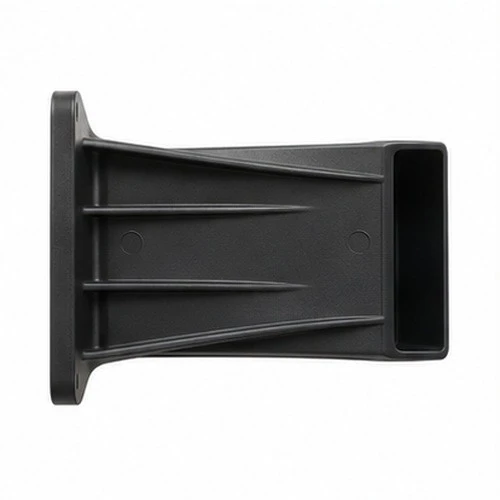
Tianjin SWKS Technology & Development Co.,Ltd is one of the most reliable manufacturers and suppliers of custom abs industrial machine vision edge ai processor fan duct in China. If you're going to buy bulk cheap custom abs industrial machine vision edge ai processor fan duct, welcome to get quotation from our factory. Quality products and low price are available.
Custom ABS Industrial Machine Vision Edge AI Processor Fan Duct
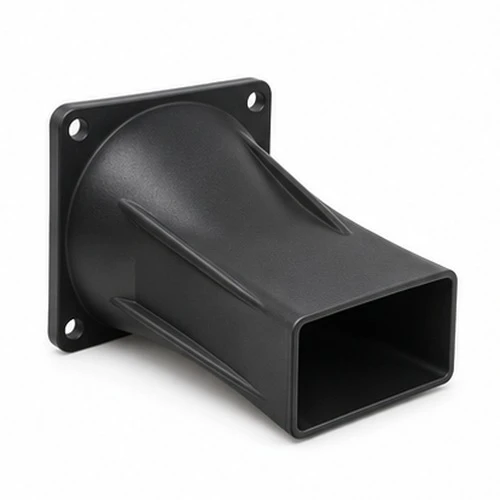
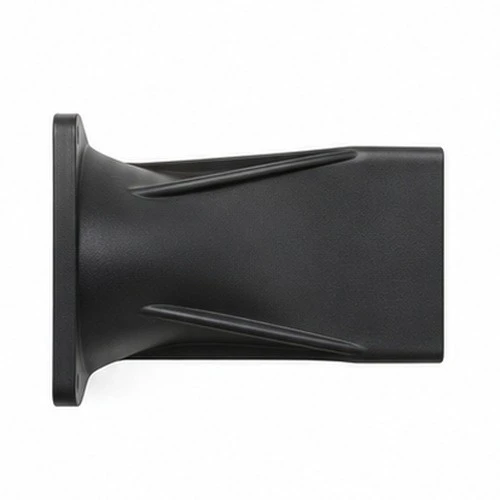
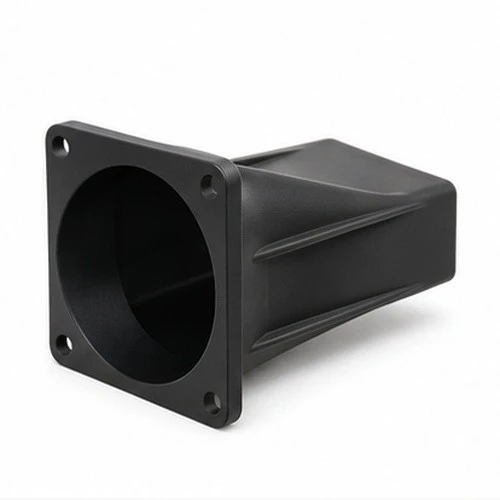
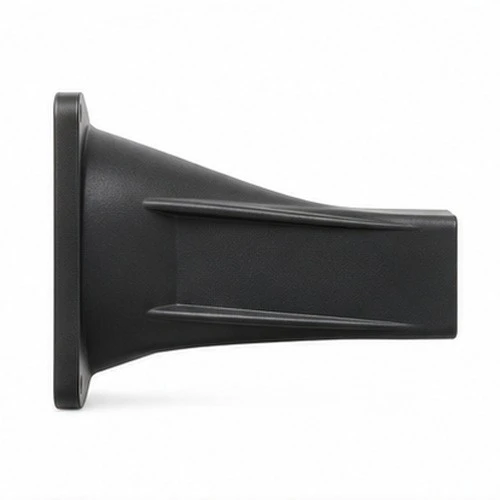
SWKS reviews this molded component from customer drawings for processor airflow ducts in industrial machine vision cabinets. The images show generated examples of the part and its installation. The supplied configuration follows the approved drawing.
Table of Contents
- Follow the air from the fan outlet to the processor area
- Thermal testing uses the approved cabinet layout
- Duct walls, finish and procurement
- Show the transition and the surrounding hardware
- Make each drawing callout testable
- Documenting an RFQ for molded parts
Product specifications
| Material | ABS grade confirmed against project specification |
|---|---|
| Manufacturing process | Custom injection molding |
| Application | Processor airflow ducts in industrial machine vision cabinets |
| Key design inputs | fan flange, outlet orientation and gasket land |
| Drawing files | STP, STEP or IGS with dimensioned PDF |
| Ordering scope | Project-specific tooling, samples and repeat quantities |
Follow the air from the fan outlet to the processor area
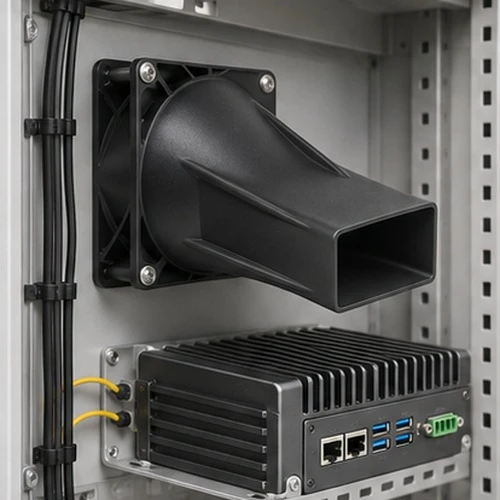
The ABS fan duct forms an air passage within an industrial machine vision processor or its cabinet. The generated illustration represents one molded transition from a fan flange to a rectangular opening. The fan, inlet grille, heat sink and cabinet remain equipment supplied. Provide the drawing that identifies where the air enters and where it is expected to reach the next component. An outlet pointed at a nearby wall can behave differently from a duct exhausting in a clear space. The airflow and thermal result must be validated on the installed equipment.
Show the fan frame, fastening layout and any specified gasket. A thin gasket can sit at the perimeter or inside a recess, and each arrangement affects where the duct seats. The buyer can mark where a surface is located by the fan and where it approaches a second outlet or panel.
Thermal testing uses the approved cabinet layout
A cabinet door or wire bundle can block the space in front of an outlet even if no one notices an interference during a loose fit check. On the assembly section show the available outlet area with the surrounding components in place. If the same fan is installed in different cabinets, track which duct and panel combinations are intended. The equipment owner can provide the thermal acceptance setup, fan selection and relevant operating conditions. A dimensional report on the duct can document the molded geometry and leave thermal qualification to that equipment run.
The outlet should also be accessible if the fan is removed in service. Check the mating flange with the designated fastening hardware and note whether the fan enters before the duct or after it. A bend that makes a compact passage can leave little space for a service tool.
Duct walls, finish and procurement
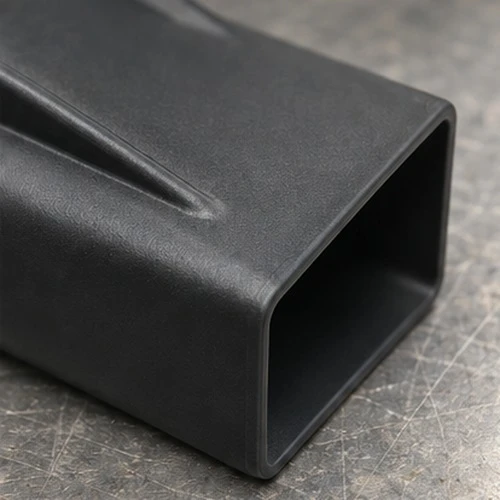
Use the approved ABS grade and note temperature, chemical exposure and any documentation needed. On a broad flange ask which surface is intended to seat on a gasket and which sites can carry ejector marks. An angle section through the transition can show wall changes and assembly clearances. A rib intended only to stiffen the shell can be reviewed separately from a locating stop that sets the flow interface.
Submit the fan and cabinet views, clear outlet space and any gasket mounting, plus the grade and forecast. State who will validate the thermal design and which part of the sample report covers molded geometry. If a prototype has been tried in the cabinet, supply its revision and show where it contacted adjacent components.
A removable duct might be packed with the fan in one project and supplied as a separate service part in another. Add those expectations to the RFQ, including the direction from which the part can be handled and which flange surfaces need protection in shipping.
A ventilation assembly may also include a dust screen or acoustic treatment, which should be visible on the installed drawing if it is present. The duct quote can identify the molded shell on the parts list separately from those bought-in components. When the filter or grille is replaced independently, include its removal direction and whether the duct has to stay fixed during that step. This helps the sample team reproduce the actual service condition.
Show the transition and the surrounding hardware
When we review fan flange, outlet orientation and gasket land, a local section usually resolves more than another general view. The supplier can follow the walls through their thickness and see which adjacent surfaces limit tool access. Add an assembly section that shows the parts that close over the molding and a view of the unassembled parts next to it. Draw any removable support or inspection fixture independently. An opening can look free in a sectional view and still catch on something at the approach angle. A view from the real assembly direction is a better starting point for a question about access.
The quotation review should name any feature that needs a separate tool operation. An edge that will be measured may need clearance for a gauge probe. Thin projecting geometry can require support during ejection and then protection during shipping. Compare options against the drawing, and walk through what happens after changes are made to a radius or a clip. If the geometry belongs to a piece that is already accepted, attach the same model version to the discussion, including the seat that accepts it and the datum that locates it. A stable interface document also helps determine which change will require another customer review.
Areas of different thickness can be marked on the machining section supplied to the tooling team. A thick junction or wall joining a mounting feature can fill and release differently from a thinner area. The purpose of the tooling study is to identify where these differences may affect the dimensional reading, visual surface or contact function. Leave a space on the tooling proposal for the customer to mark where a witness is allowed and where it would matter to installed fit.
Make each drawing callout testable
Read through the surface notes with someone who will actually measure the molded part. A full profile callout can require access the operator does not have after fitting the part to a fixture. An important local gap can go unmeasured because its location is implicit in a section that does not show the final assembly. Decide which faces are measured directly and which are judged by the approved mating equipment or gauge. A pilot can then compare the actual check to the purchase requirement and show which conditions it covers. The findings should travel with the revision and the sample identifiers.
For fan flange, outlet orientation and gasket land, use drawing labels the parties can match across inspection images and the CAD assembly. At an early tryout identify the views in which these features are visible. If an interface will be covered after the next piece is installed, record it while that interface is exposed. An assembled photograph is still valuable for showing final position. Pairing the two views helps explain whether a concern appeared while seating the molding or when a second piece was fitted. It also gives a technician a clearer starting point if the next sample has to be checked several weeks later.
If an OEM changes the mating version, begin by noting which references or acceptance criteria changed. Keep inspection results with the fixture and not only with the manufacturing batch, so the team can tell whether two trials describe the same installed condition. Agree who signs off the sample and what happens if an unanticipated revision appears during pilot production.
Documenting an RFQ for molded parts
Send a three-dimensional part file and dimensioned PDF, along with a local assembly section covering the mating features and access. Include the approved grade if it is already fixed. Where grade selection remains open, describe the working environment, contact conditions and documents that are required. List sample quantity, production quantities and target delivery location. If multiple model revisions are still circulating, attach the intended purchasing revision to the quantities. An existing sample can be useful for appearance and fit if it is identified as new, used or modified and paired with the correct drawing.
The quotation can identify the decisions that remain open before tooling, the checks expected for the first samples and which related components the customer will supply. List any deadlines tied to a fit or pilot review. If one dimension is especially important to the approval, give its acceptance method and condition with the drawing. A number from a reference model can be easy to copy but it does not tell the inspector what must be measured after molding. The correct revision and fixture note let purchasing compare quotations against the same scope.
Pack and label the parts according to how they will be received and used. A protruding feature that fits a tight mating surface can take a load from another part during transport. Stacked pieces may fit together so closely that they are awkward to separate on the line. Discuss separator trays or other packing if the protected surface warrants it. Give the unit count and any lot or part number required on the carton. For a pilot order, identify samples that should remain separated for cavity checks and retain the approved packaging notes for repeat orders.
See SWKS custom plastic injection molded parts for related drawing-based components.
Request a quotation
Send the applicable drawings, initial quantities and expected annual demand to amanda@tjswks.com for a project review.
Hot Tags: custom abs industrial machine vision edge ai processor fan duct, China, suppliers, manufacturers, factory, bulk, cheap, low price, quotation


