


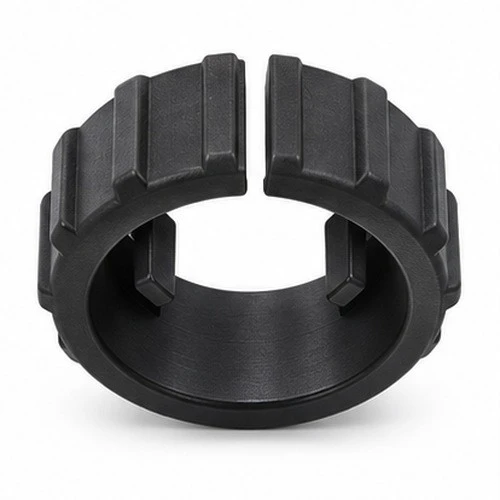
Tianjin SWKS Technology & Development Co.,Ltd is one of the most reliable manufacturers and suppliers of custom pa66 data center liquid cooling quick disconnect locking collar in China. If you're going to buy bulk cheap custom pa66 data center liquid cooling quick disconnect locking collar, welcome to get quotation from our factory. Quality products and low price are available.
Custom PA66 Data Center Liquid Cooling Quick Disconnect Locking Collar
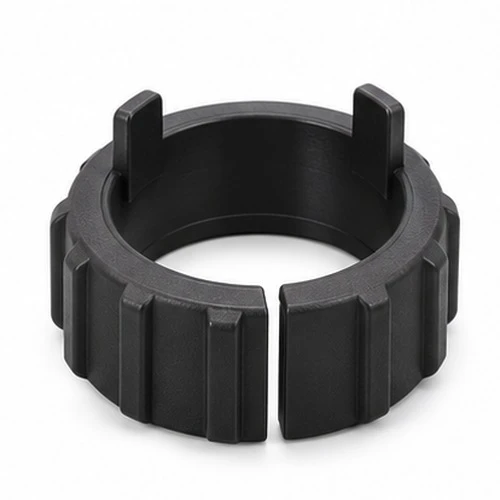
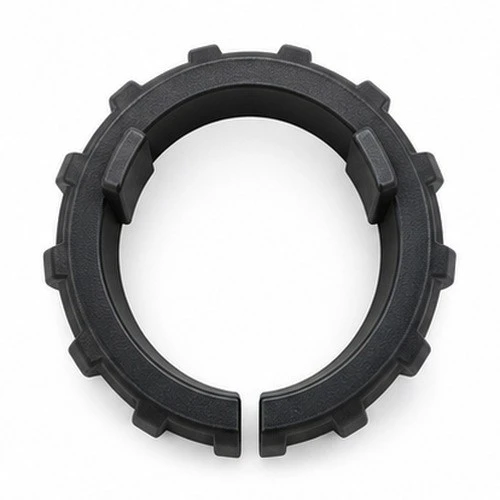
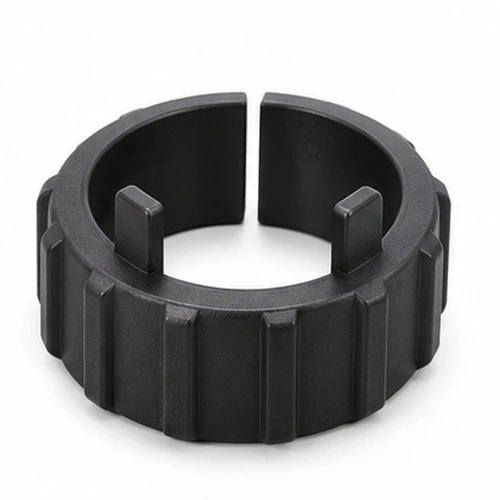
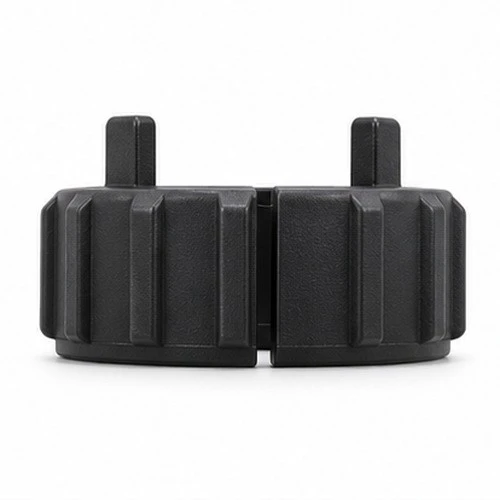
SWKS reviews this molded component from customer drawings for external locking interface of liquid cooling quick disconnects. The images show generated examples of the part and its installation. The supplied configuration follows the approved drawing.
Table of Contents
- The collar is an external component of the coupling
- Grip and travel around the rack
- Check grade and sample fit against the specified system
- Molding review around critical surfaces
- One sample, two ways to read the result
- What belongs in the order package
Product specifications
| Material | PA66 grade confirmed against project specification |
|---|---|
| Manufacturing process | Custom injection molding |
| Application | External locking interface of liquid cooling quick disconnects |
| Key design inputs | collar tabs, travel stops and grip geometry |
| Drawing files | STP, STEP or IGS with dimensioned PDF |
| Ordering scope | Project-specific tooling, samples and repeat quantities |
The collar is an external component of the coupling
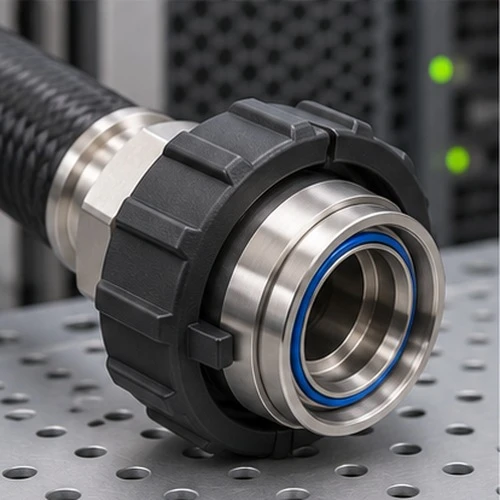
A liquid cooling quick disconnect typically contains several parts that work together during connection and release. The molded PA66 collar is quoted as the external interface identified on the customer's drawing. It is useful to supply the exact mating coupling and revision for the first review. The pictured shell offers an example of grip features and tabs. The actual coupling supplier or system owner defines the sequence, pressure qualification, retention tests and any acceptance limits for the complete assembly.
On an unpressurized assembly, mark the intended starting position, fully seated position and access to release it. A collar can reach an apparently flush position while a neighboring feature obscures the view of a tab. A section showing the fixed stop behind the sleeve is more useful than an outside photograph for discussing where its travel ends.
Grip and travel around the rack
An operator may reach a coupling through a small opening between hoses. The external ribs are easiest to review in the direction from which fingers reach them. The rack mounting and neighboring fittings can affect the available grip even when the collar fits on the coupling on a bench. Draw the largest nearby items and indicate where the coupling can move when the operator handles the sleeve. A separate unpowered service mockup can document where the part is difficult to access.
Rotation and sliding can be independent in some layouts. Show whether the tabs follow an arc, a straight path or a combination determined by the mating coupling. Mark the surface responsible for orientation separately from the one located by the fixed housing. If a coupling version moves the stop or clip, identify the changed hardware before comparing sleeves that use the same diameter.
Check grade and sample fit against the specified system
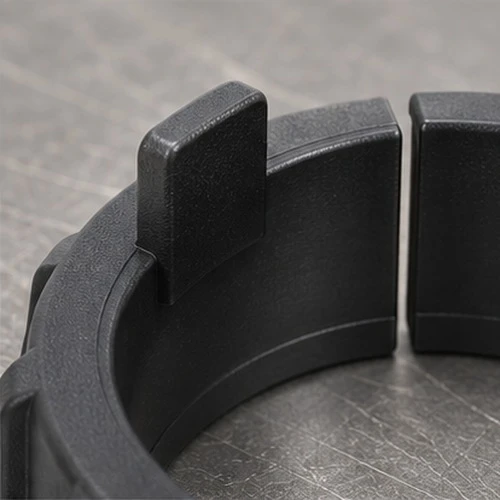
A PA66 grade review should include the area around the coupling, any intended fluid or cleaning exposure, the grade release and relevant conditioning. Any performance limits used for the full quick disconnect are set and verified by the equipment owner. A visual close-up of the collar can show grip structure and the end of a retaining tab. A sample fit inspection should show the mating components and the state in which the fit was checked.
The RFQ should specify whether the collar is replaced separately, which housing styles it matches and what sample fixture or actual disconnected couplings can be sent for review. Give the applicable drawing, photos of the access region and any first-article criteria on the stops or slots. A repeat tooling order should list each coupling revision in use, since a shell that seats correctly over one version may not operate over another.
Molding review around critical surfaces
An early tool review for external locking interface of liquid cooling quick disconnects should start with a section through collar tabs, travel stops and grip geometry. This gives the mold designer a basis for deciding which features can carry draft and where the part opens out of the tool. An outer surface that looks continuous on a shaded model can contain a local undercut that restricts a straight pull. A hole that seems easy to gauge from one side might need to be formed in the opposite direction to preserve an adjoining wall. Bring these details into discussion while the critical interfaces can still be reviewed against the mating model. The drawing should identify which faces are fixed by the equipment design and which may be adjusted for manufacturing.
Surface expectations also belong on the drawing. A gate vestige hidden inside the assembled machine may matter if the part moves through that space during service. Two surfaces adjacent on a drawing can have quite different limits for flash or witness marks. Show the boundary with a shaded view or reference photos. Ribs and bosses should be reviewed in section, especially around thick intersections. Where the buyer already uses a resin grade or texture, supply that reference with the part revision. This makes it easier to compare the proposed tool with the accepted finish and functional fit. If a local change is proposed, keep a marked section that shows the old and new geometry together and record the accepted decision before manufacturing.
For a part with mirror-image variants, label the orientation from a view the first-article team can reproduce. A photograph taken from the back can make an otherwise clear drawing appear reversed. Add the mounting references and any marking requirements beside the variant identifier. Specify where a cavity number or date code can sit if the inspection plan uses those marks. The sample and the receiving report can then be traced to the correct version even after multiple trials.
One sample, two ways to read the result
At first inspection start with the drawing's reference frame and give the technician the appropriate fixture instructions. Once the measured part is installed, look for the specified interfaces again. It is particularly useful to report which of collar tabs, travel stops and grip geometry are already supported by the assembly and which can still shift before a fastener is tightened. Photographs taken from the same reference edge make it easier to compare loose and fitted checks. Include a clear explanation of which dimension belongs to the molding and which gap or motion belongs to the installed condition.
If a sample fails a fit check, mark the exact position where it first contacts and record what happened before that stage. If the approved method permits it, replace the sample or mating piece one at a time. A mark that moves across the fixture after an exchange tells a different story from a mark that remains at a known fixed stop. That observation can point the engineering team toward the proper measurement without ambiguity about which part changed. Keep a revision record and the order of assembly beside the sample number. If the full system has its own validation process, arrange with the equipment owner how its result will be recorded.
The next build should use the same approved check unless the drawing or fixture changes. If a fit criterion is revised after reviewing the first molded pieces, store the fixture and sample record that led to the decision. When the team compares results from the next cavity or run, it can distinguish a difference in molded geometry from a difference in the intended acceptance check.
What belongs in the order package
Send a three-dimensional part file and dimensioned PDF, along with a local assembly section covering the mating features and access. Include the approved grade if it is already fixed. Where grade selection remains open, describe the working environment, contact conditions and documents that are required. List sample quantity, production quantities and target delivery location. If multiple model revisions are still circulating, attach the intended purchasing revision to the quantities. An existing sample can be useful for appearance and fit if it is identified as new, used or modified and paired with the correct drawing.
The quotation can identify the decisions that remain open before tooling, the checks expected for the first samples and which related components the customer will supply. List any deadlines tied to a fit or pilot review. If one dimension is especially important to the approval, give its acceptance method and condition with the drawing. A number from a reference model can be easy to copy but it does not tell the inspector what must be measured after molding. The correct revision and fixture note let purchasing compare quotations against the same scope.
Pack and label the parts according to how they will be received and used. A protruding feature that fits a tight mating surface can take a load from another part during transport. Stacked pieces may fit together so closely that they are awkward to separate on the line. Discuss separator trays or other packing if the protected surface warrants it. Give the unit count and any lot or part number required on the carton. For a pilot order, identify samples that should remain separated for cavity checks and retain the approved packaging notes for repeat orders.
See SWKS custom plastic injection molded parts for related drawing-based components.
Request a quotation
Send the applicable drawings, initial quantities and expected annual demand to amanda@tjswks.com for a project review.
Hot Tags: custom pa66 data center liquid cooling quick disconnect locking collar, China, suppliers, manufacturers, factory, bulk, cheap, low price, quotation


