


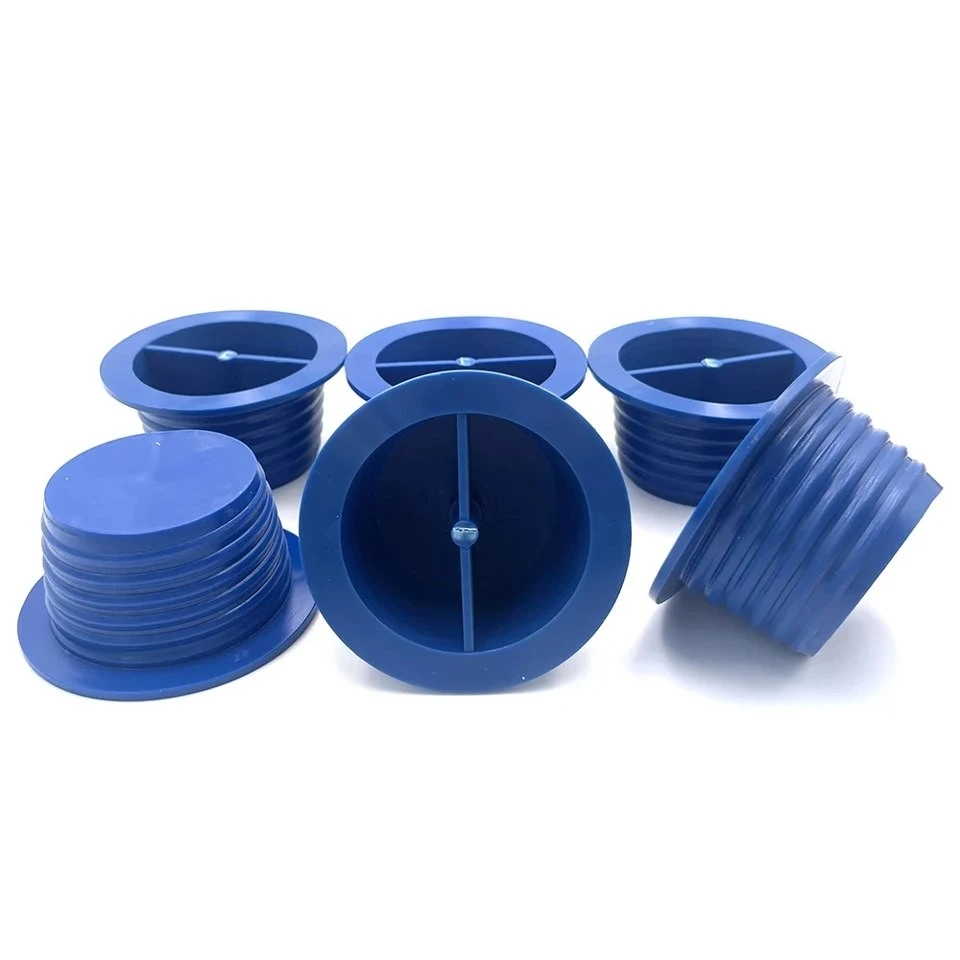
Tianjin SWKS Technology & Development Co.,Ltd is one of the most reliable manufacturers and suppliers of custom flanged plastic protection plugs with grip bar in China. If you're going to buy bulk cheap custom flanged plastic protection plugs with grip bar, welcome to get quotation from our factory. Quality products and low price are available.
Custom Flanged Plastic Protection Plugs With Grip Bar
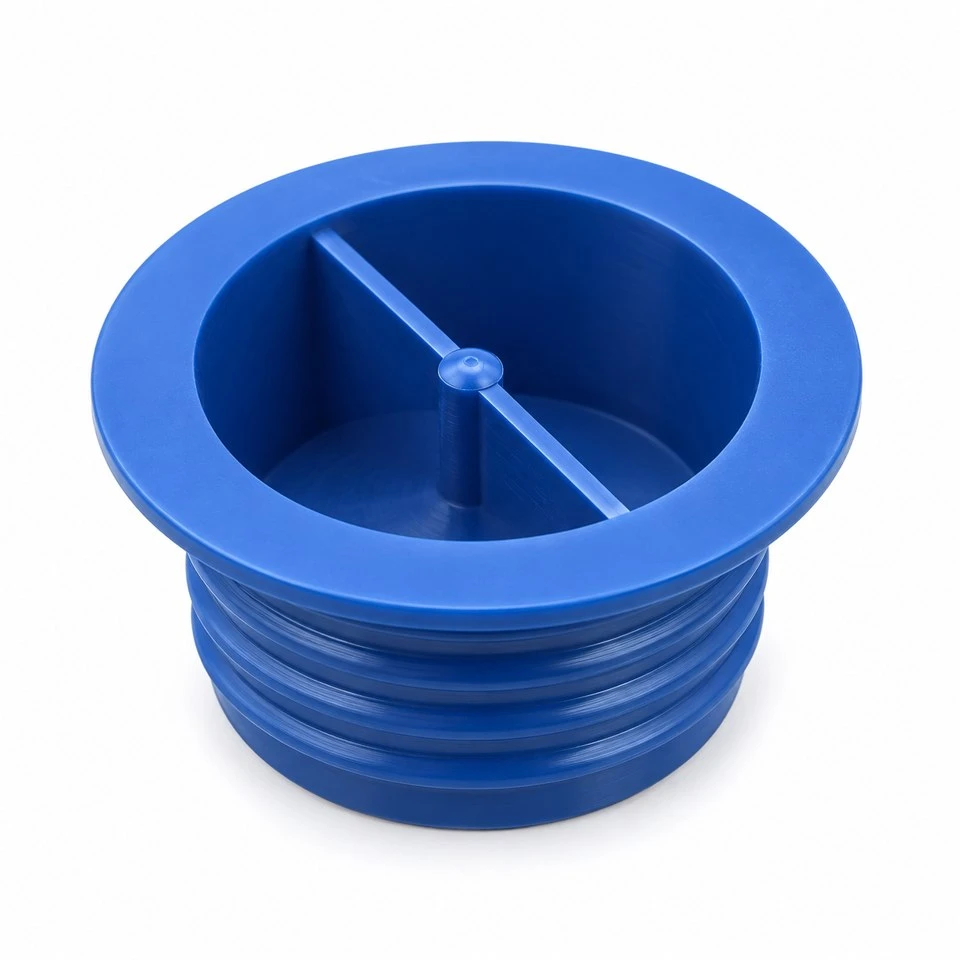
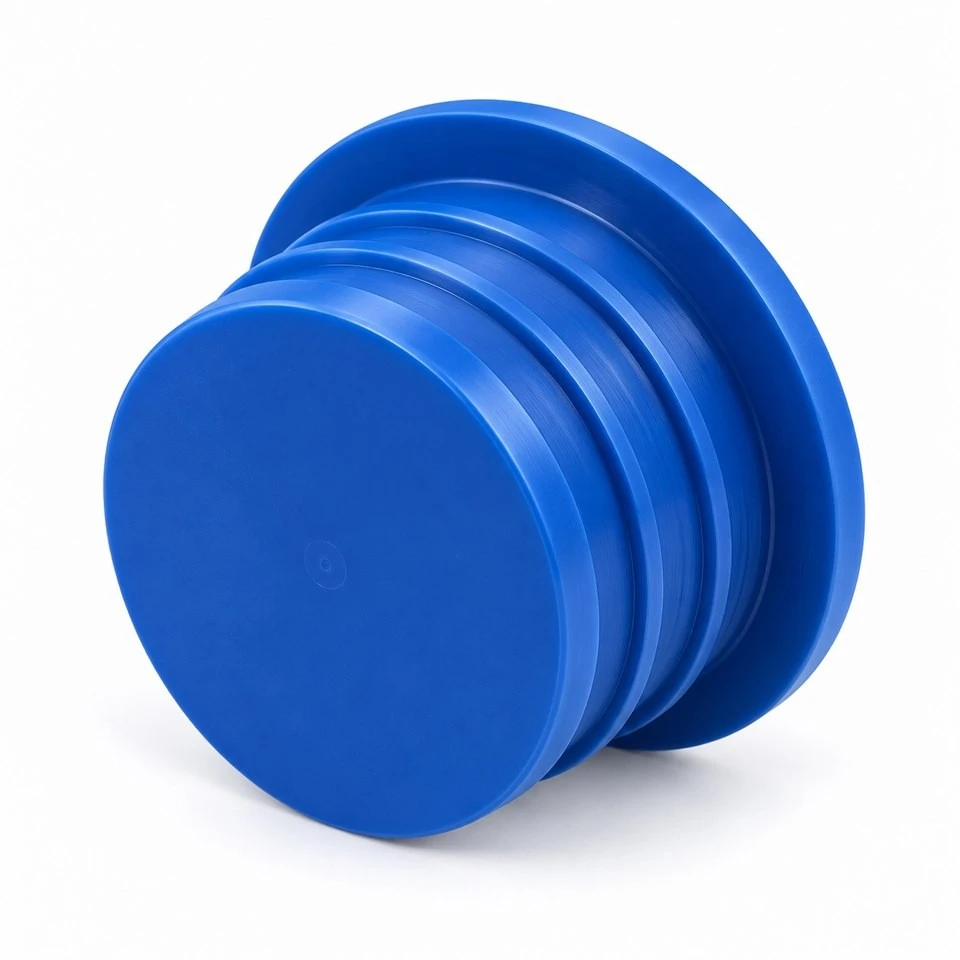
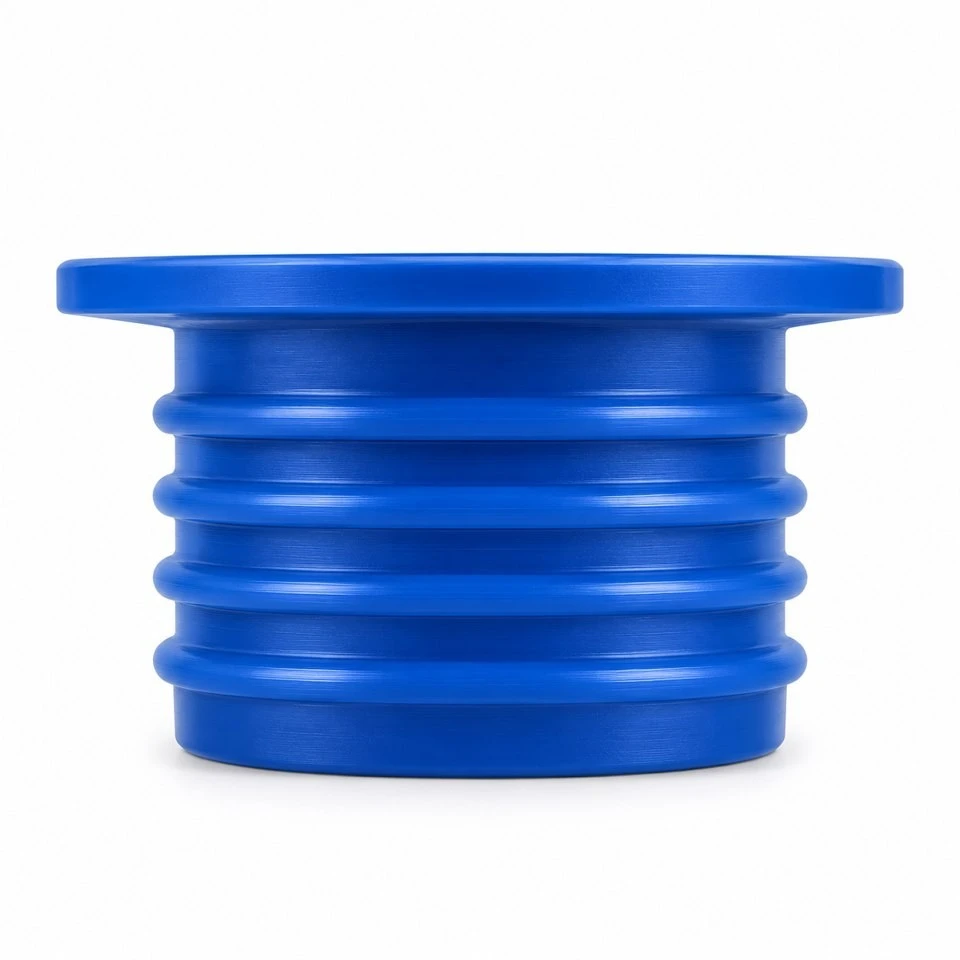
These custom plastic protection plugs use a circular flange, a short cylindrical body and a recessed grip bar to create a compact closure that can be developed around a customer's opening. The blue reference style combines an enclosed end with several raised profiles around the outside of the skirt. We offer this configuration as a drawing-based injection molding project for industrial component protection, with the mating geometry, material and handling requirements agreed before production.
The product illustrations follow the supplied reference appearance. They do not establish a standard thread size, a specific resin or a pressure rating. The external profile must be defined in the drawing: separate retaining ribs and a continuous screw thread require different mating information. When developing a custom plastic injection mold, we review this interface first so the part is quoted for the actual application rather than selected only by its color or apparent diameter.
What is the purpose of the wide circular flange?
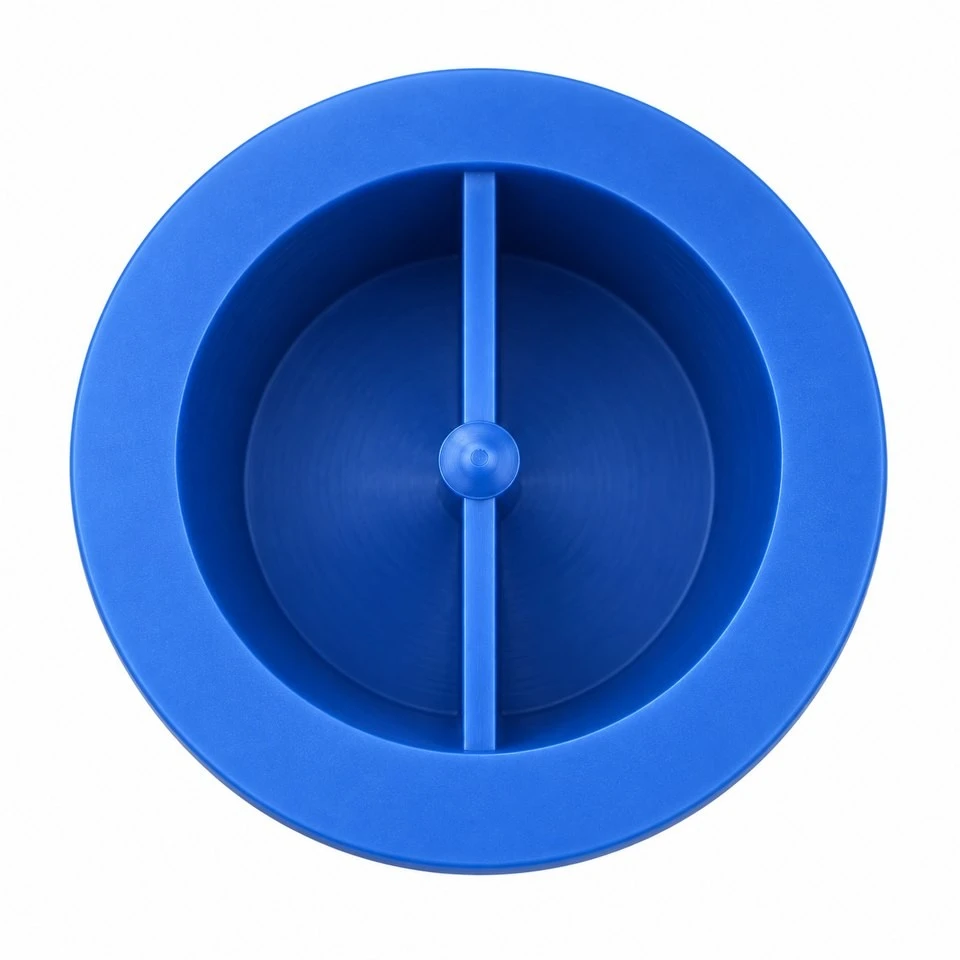
The flange provides a visible end face and an area that can overlap the surrounding opening. Its outside diameter, thickness and underside condition are specified according to the component being protected. Show the available clearance around the opening, including neighboring fittings, fasteners and packing materials. A flange that fits the port itself can still interfere with another feature once the protected component is placed in a tray or assembled into a larger unit.
If the flange is intended to stop insertion at a defined position, identify the seating surface and the required installed depth. State whether full contact is needed or whether a small gap is acceptable. The flange should not automatically be described as a sealing surface. Any requirement to limit leakage, exclude a particular contaminant or withstand a cleaning process must be separately defined and evaluated using an agreed test.
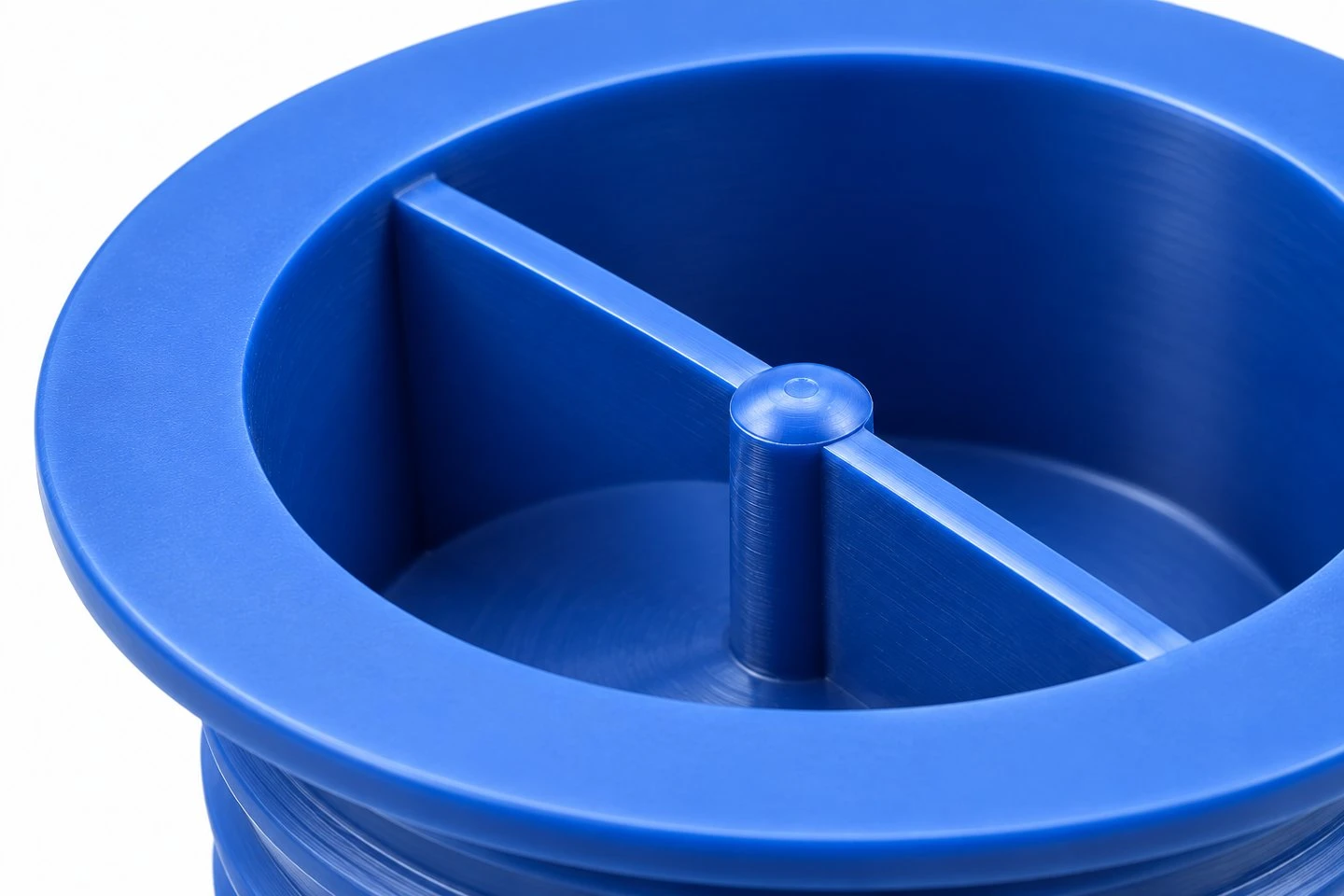
How should the recessed grip bar be customized?
The illustrated grip bar runs across the recessed opening, leaving space on either side for handling. Its width, height and distance below the flange can be adapted to the intended removal method. Tell us whether operators will use bare hands, gloves or a specified tool. Where handling access is restricted, provide the surrounding assembly model or a photograph showing the approach direction.
A grip feature should be reviewed with the required installation and removal effort. If twisting is part of the intended operation, the engagement profile and allowable handling force need to be established together. The bar is not assigned a universal torque capacity based on the image. For repeat-use applications, explain the expected number of handling cycles and the conditions in which the plug will be removed so the sample evaluation reflects the real process.
Are the raised outer profiles ribs or screw threads?
A photograph can show the overall profile without providing enough information to confirm its engagement geometry. For a ribbed design, supply the rib outside diameter, body diameter, spacing, number of ribs and lead-in shape. For a threaded design, supply the complete thread designation, pitch, engagement length and any applicable drawing requirements. If no standard thread applies, a fully dimensioned custom profile or mating model is needed.
These details affect how the plug is installed, retained and removed. Please identify whether the intended method is pushing, rotating or another defined assembly operation. We do not list a standard-size table for the reference part because its actual dimensions have not been provided. A quotation can instead be prepared around your drawing, measured sample or approved custom profile, with the relevant fit checked against the mating component.
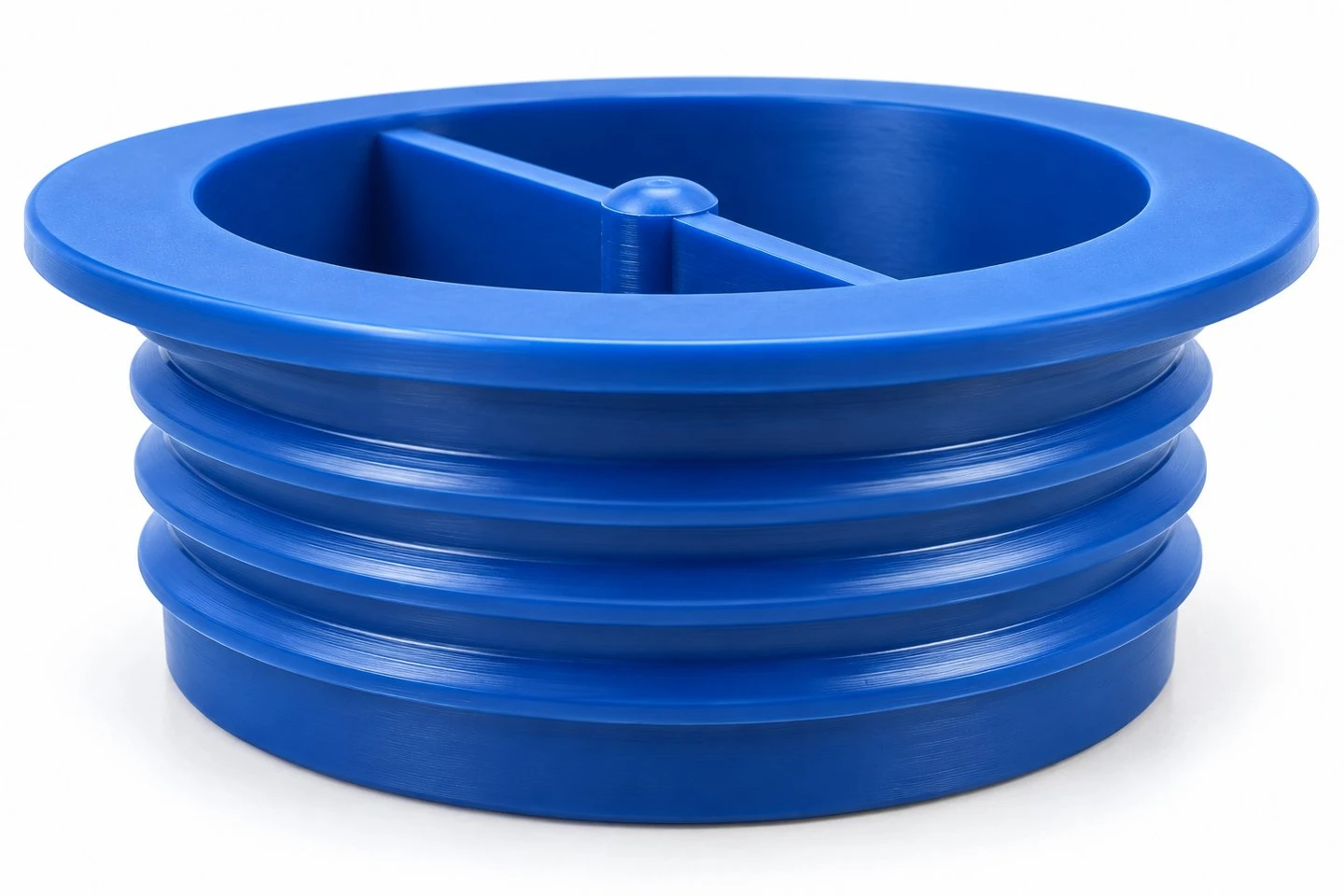
Which dimensions are needed to define the fit?
Begin with the opening or port that the plug must protect. Show its minimum and maximum dimensions, usable depth, entry chamfer and any internal steps. Include surface treatment or coating information where it changes the finished opening. A nominal size alone may not describe the actual space available for the molded body, particularly when several versions of the mating component are purchased from different sources.
For the plug, identify the overall length, flange diameter, body profile and closed-end thickness. Dimension the engagement features from clear reference surfaces. If the plug is being developed from a sample, measurements should include both the free component and its installed condition where relevant. The acceptance criteria should distinguish dimensional conformity from installation behavior, since matching a few outside dimensions is not enough to establish satisfactory handling in every mating opening.
What material information should accompany an inquiry?
The blue color of the supplied photograph does not identify its polymer. Please provide the existing material designation if it is known, or describe the conditions the new plug must meet. Relevant information includes contact with named oils, cleaning agents or other substances; temperatures during use and storage; and whether the plug is disposable or intended for repeated handling. These requirements guide the grade review and the sample plan.
PP, nylon, ABS, POM and other materials can be discussed for a custom project, but a change in polymer may also require a different engagement profile or tooling allowance. Softness, flexibility and handling feel should be described through an approved material or measurable requirement where they are important. If a resin is specified by your customer, send its full grade designation and restrictions on substitution. Material identification should not be inferred from a photograph or from the apparent weight of the sample.
Where can this protection plug configuration be considered?
Typical project discussions may involve temporary protection of industrial openings during storage, handling, assembly or shipment. The suitability of a particular plug depends on the opening and the protection objective. Explain what must be kept away from the component, how long the plug remains installed and at which stage it is removed. Also identify whether the surrounding product is packed individually or transported with other parts.
This listing does not classify the plug as a pressure-containing closure or a permanent safety component. If the application includes internal pressure, vacuum, fluid retention or a required ingress classification, provide the exact conditions for engineering review. The final design and verification need to address those requirements specifically. A closed bottom and a wide flange alone do not demonstrate the performance of an installed assembly.
How can color and identification support your packing process?
The reference blue can be used as a starting point for color discussion. For controlled production, supply a physical reference or agreed color standard rather than relying solely on a screen image. Different colors can be considered for product families or handling stages, provided the ordering information clearly links each color to its corresponding drawing and material. Color should supplement identification, not replace a defined part number.
Molded identifiers, cavity marks or simple orientation features can also be reviewed where there is sufficient space. Tell us which surface remains visible after installation and whether a marking must be read by an operator. Any identification must avoid the functional engagement surface unless the drawing specifically permits it. The location and appearance should be approved as part of the product specification before the tool is finalized.
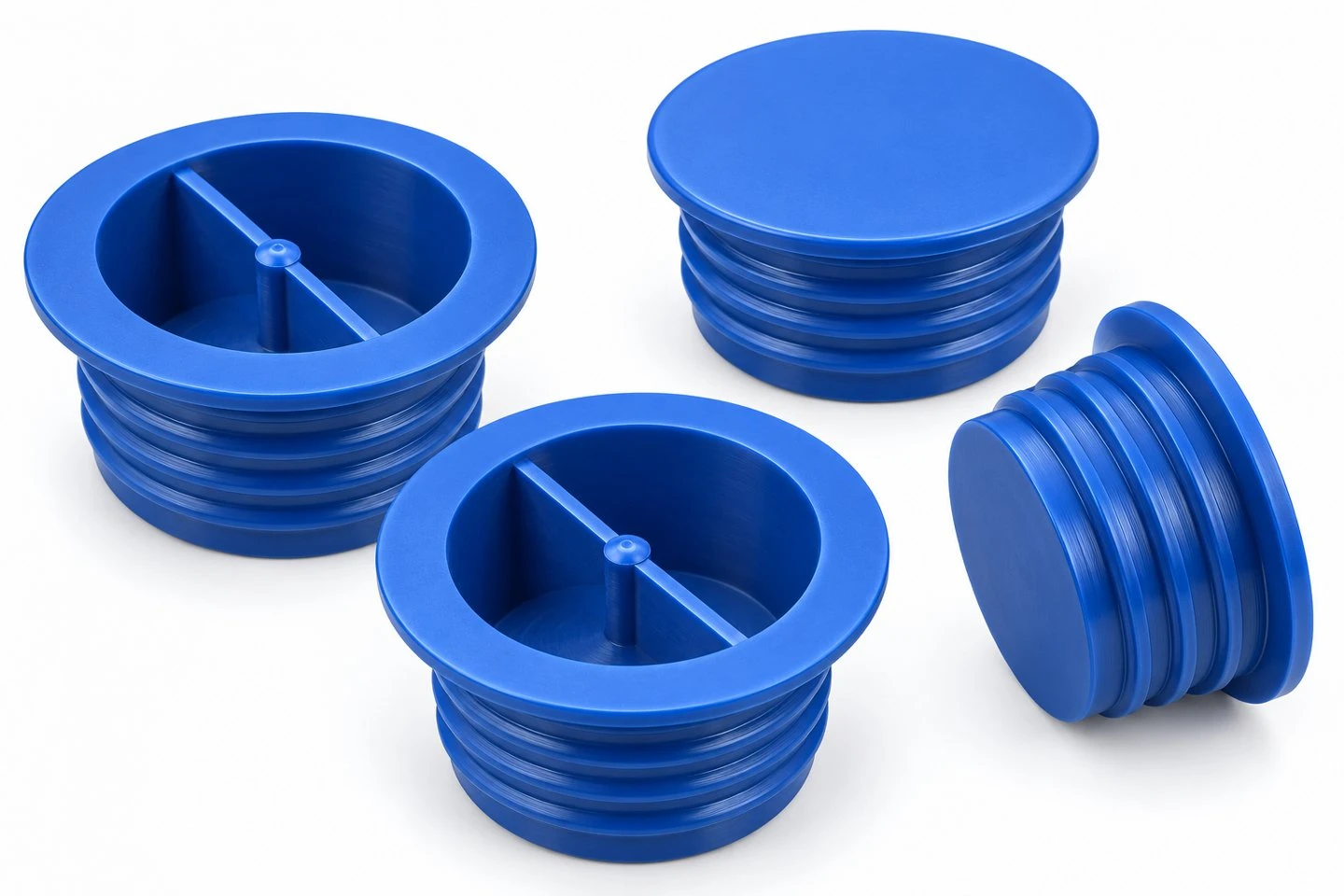
What manufacturing details should be agreed before sampling?
The mold review should identify functional contact areas, cosmetic priorities and acceptable manufacturing marks. Indicate whether the flange underside, raised profiles or closed end have restrictions on gate remnants, flash or parting features. The grip bar should also be checked for any edge condition that would affect handling. Where an existing sample sets the standard, send it with notes explaining which features must be reproduced and which may change.
The tooling proposal is prepared around the approved geometry and the intended production quantity. An external feature that resembles a thread may need a different tooling approach from a simple retaining rib, so the engagement definition should be settled before relying on a price comparison. Sampling arrangements, inspection requirements and any secondary finishing should be included in the agreed scope instead of assumed from the product photograph.
How should first samples be evaluated?
Use representative mating components for the initial fit review. Check installation depth, flange clearance and the agreed insertion or rotation method. Then verify that the grip remains accessible when the component is packed or positioned as intended. If removal effort matters, define how it will be assessed and under which conditions. A free-hand check on one loose opening may not represent the range of production components.
Record dimensions and handling observations against the approved revision. The sample plan can include the specified engagement profile, flange dimensions, body length, color and edge finish. If exposure or repeated use is part of the requirement, the evaluation should include those agreed conditions. Do not treat initial fit as evidence of long-term sealing or pressure performance unless those separate tests have been defined and completed for the finished assembly.
What should you send for a custom protection plug quotation?
Please send your STP, STEP or IGS model and a dimensioned drawing, together with the material preference, color, quantity and expected repeat demand. Include the mating opening drawing and explain the installation and removal method. For a sample-based project, photographs from the top, side and closed end are useful, but the final quotation assumptions should identify any dimensions or material details that still need confirmation.
We can then separate the tooling scope, molded component supply and any agreed packing or inspection work. Minimum order quantity, sample timing and production schedule are confirmed for the specific project. The released drawing and approved sample requirements control production rather than an unverified size inferred from the reference image. We welcome inquiries with drawings, material preferences and quantity requirements. Please send your details to Contact: amanda@tjswks.com.
Hot Tags: custom flanged plastic protection plugs with grip bar, China, suppliers, manufacturers, factory, bulk, cheap, low price, quotation, anti static plastic plug, biodegradable plastic plug, modular plastic plug, smooth plastic cap, tapered plastic plug, uv resistant plastic cap


