


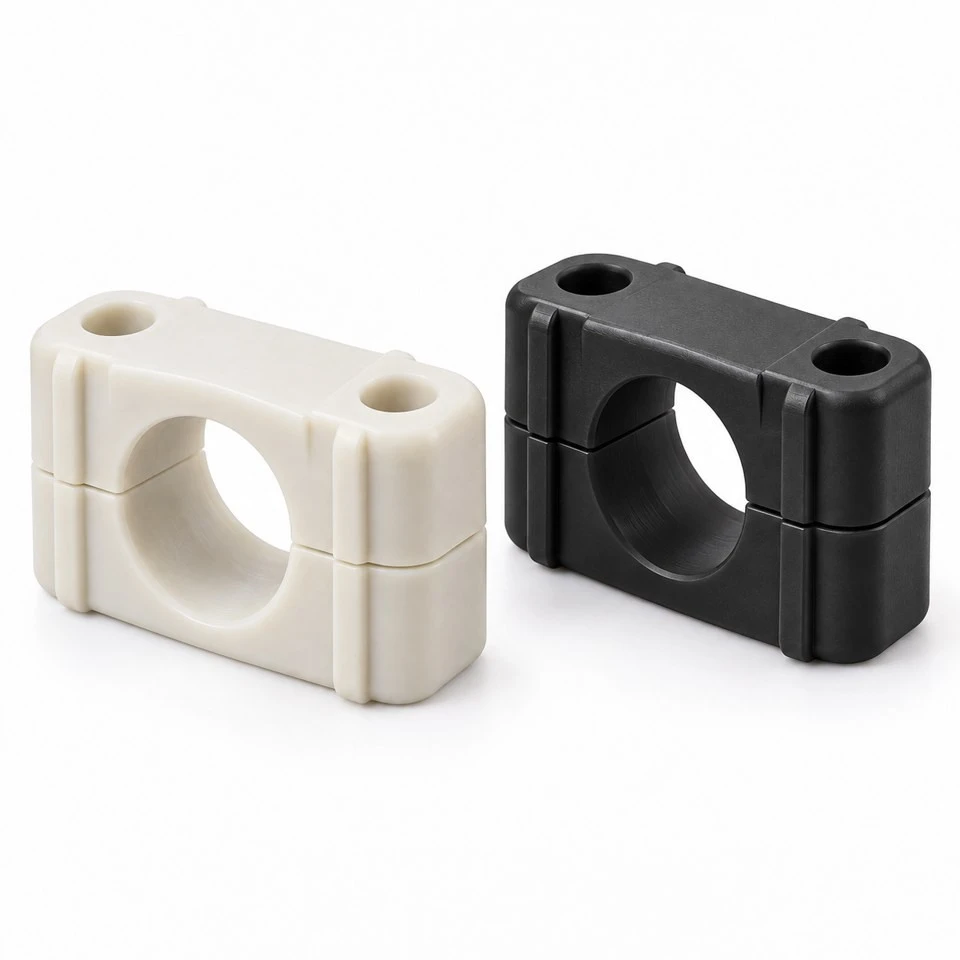
Tianjin SWKS Technology & Development Co.,Ltd is one of the most reliable manufacturers and suppliers of custom injection molded nylon pipe clamps in China. If you're going to buy bulk cheap custom injection molded nylon pipe clamps, welcome to get quotation from our factory. Quality products and low price are available.
Custom Injection Molded Nylon Pipe Clamps
Industrial pipe routing often requires a fastening component that fits the available space rather than a bracket selected from a general catalog. The pipe diameter, nearby structure, installation direction, and mounting points all influence the clamp body. SWKS develops custom injection molded plastic pipe clamp components from customer drawings, with nylon as a material option for projects that require an engineering thermoplastic body.
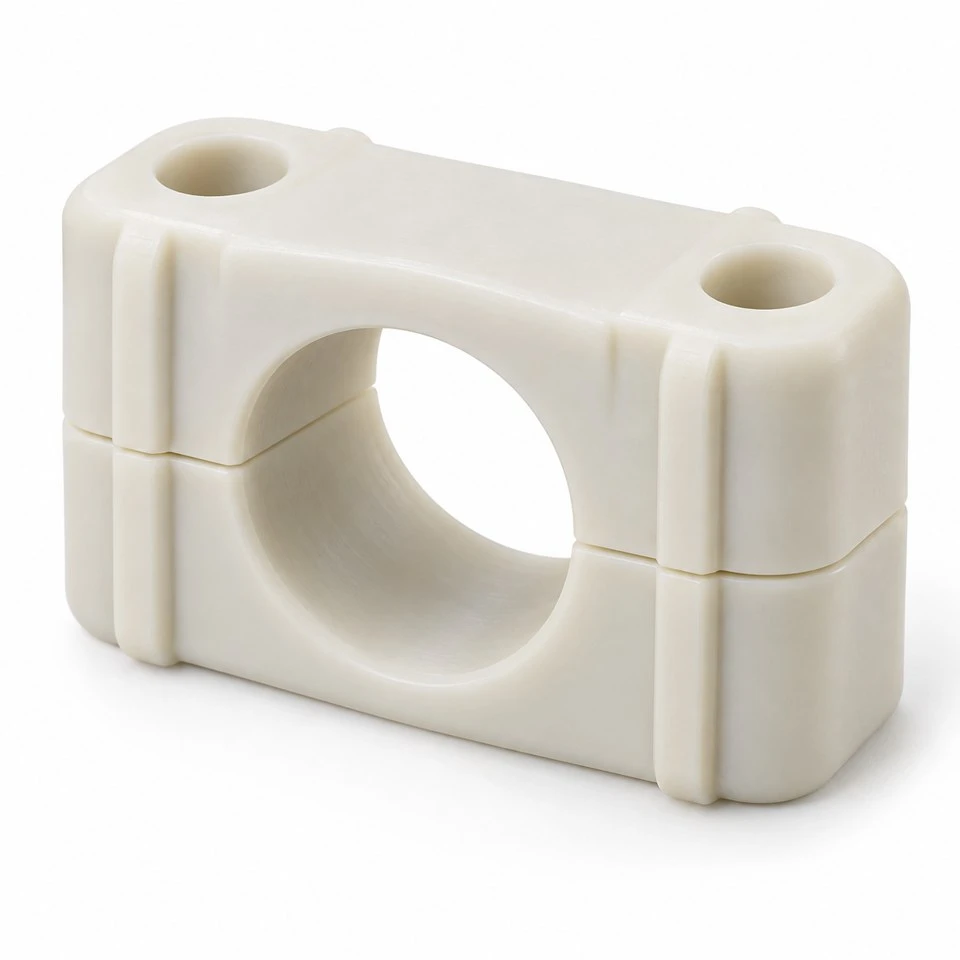
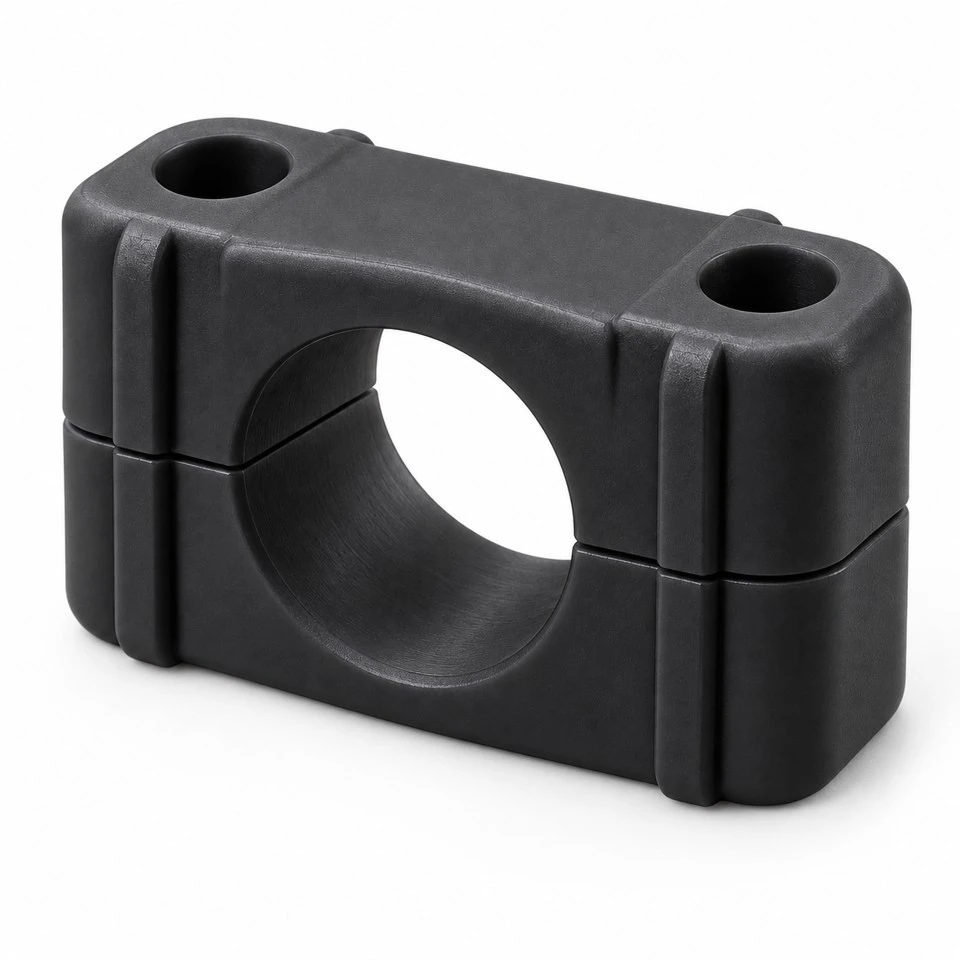
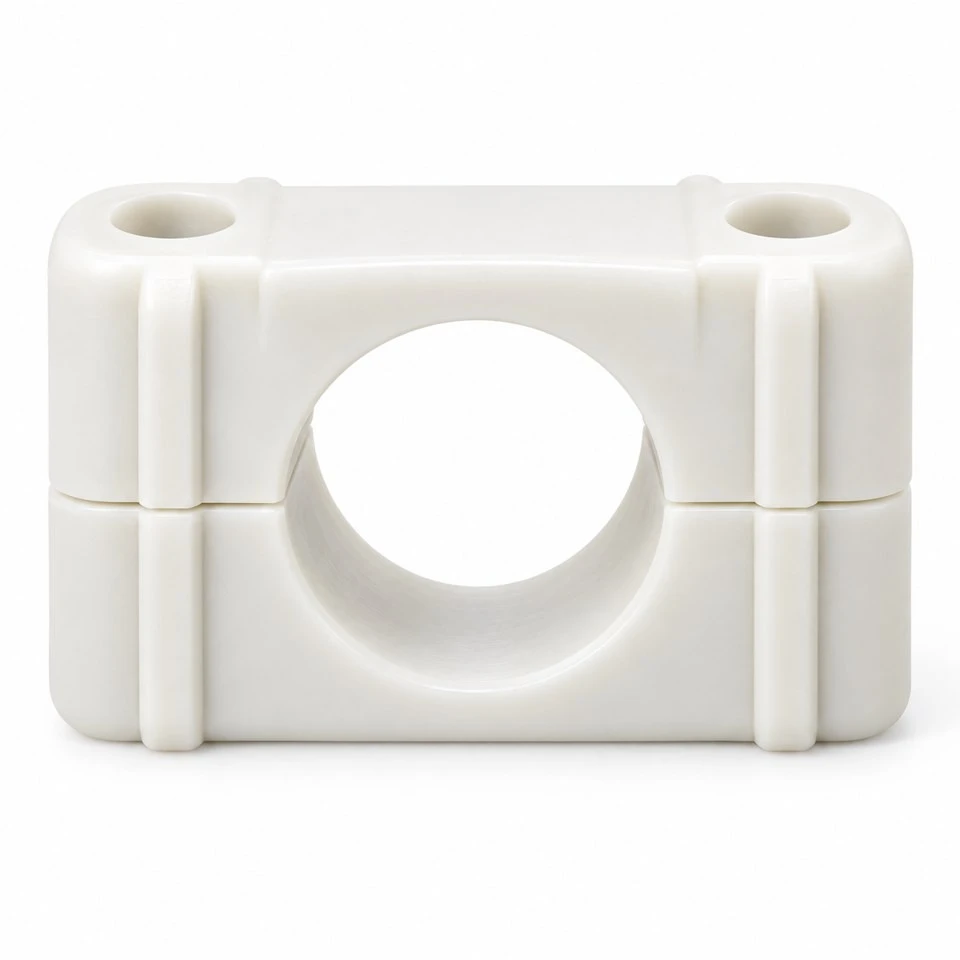
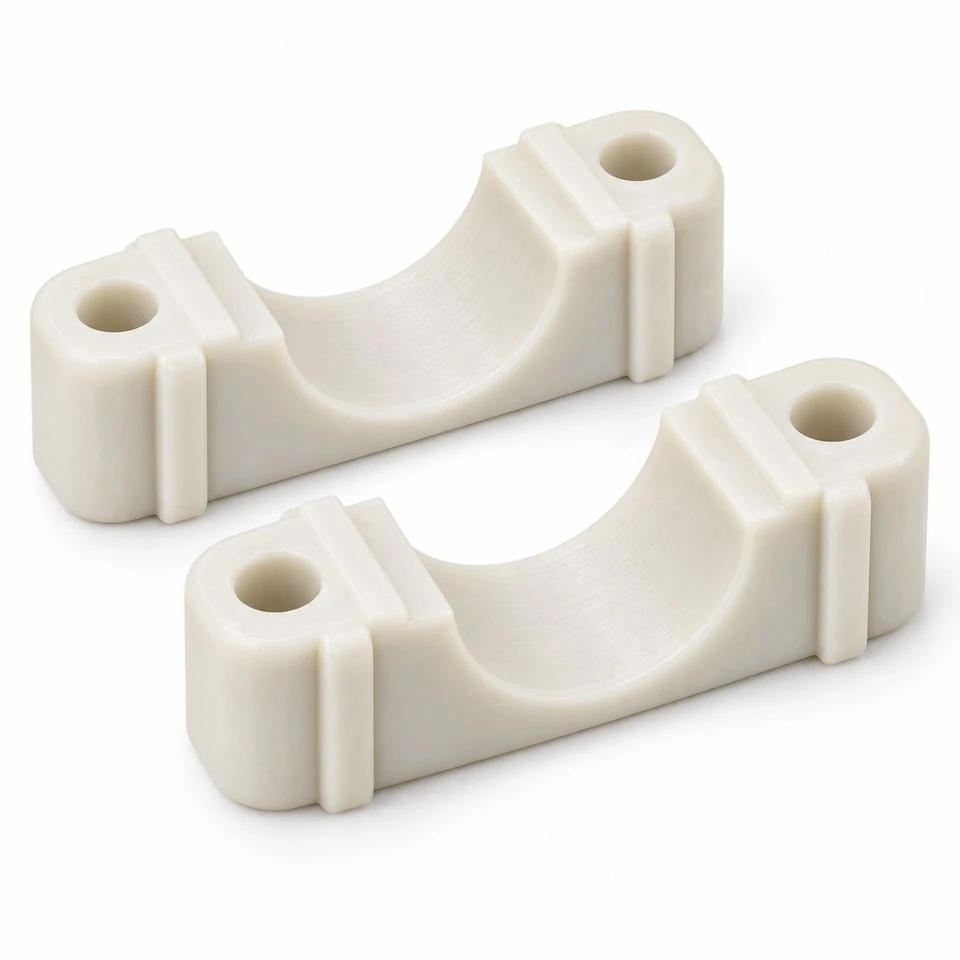
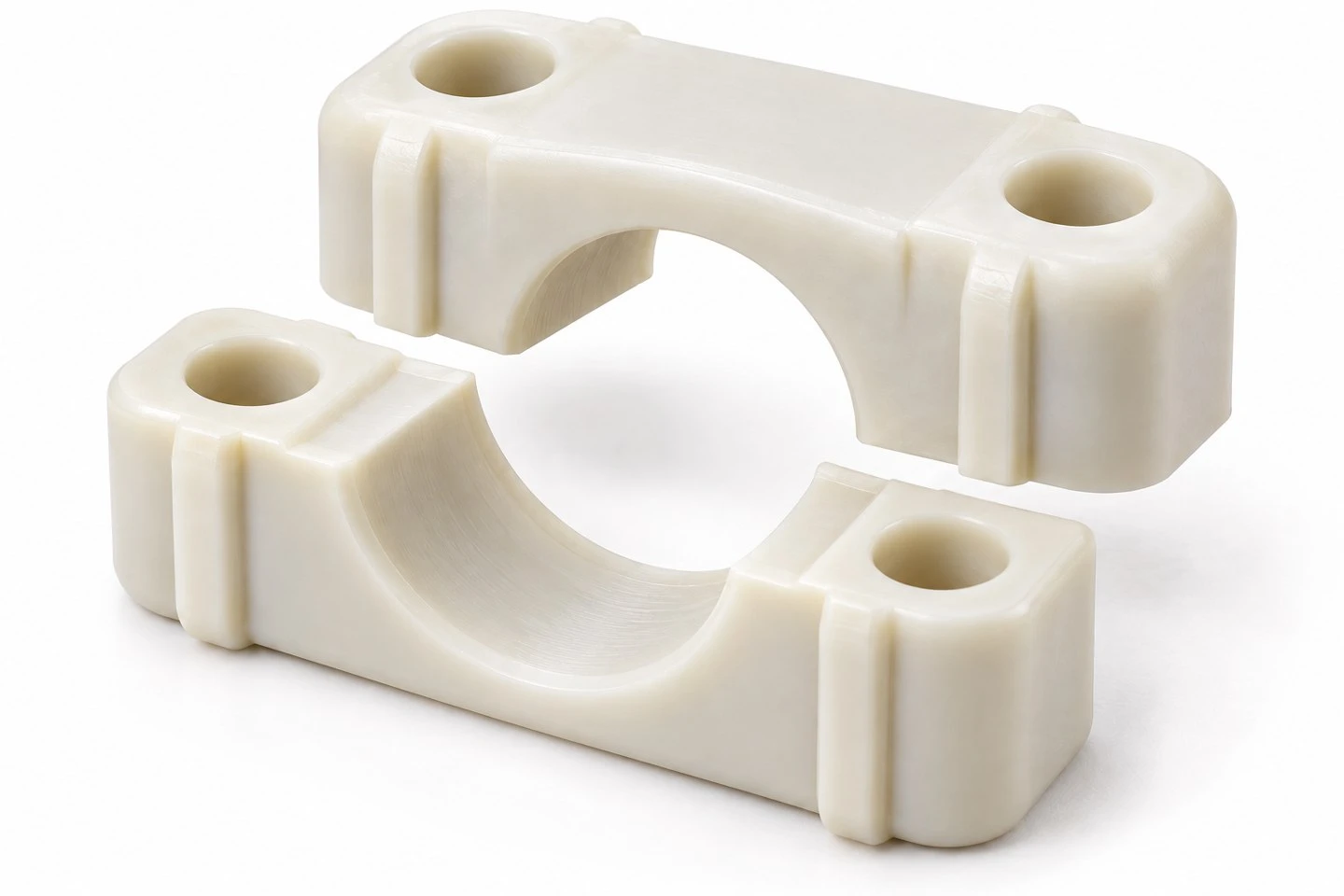
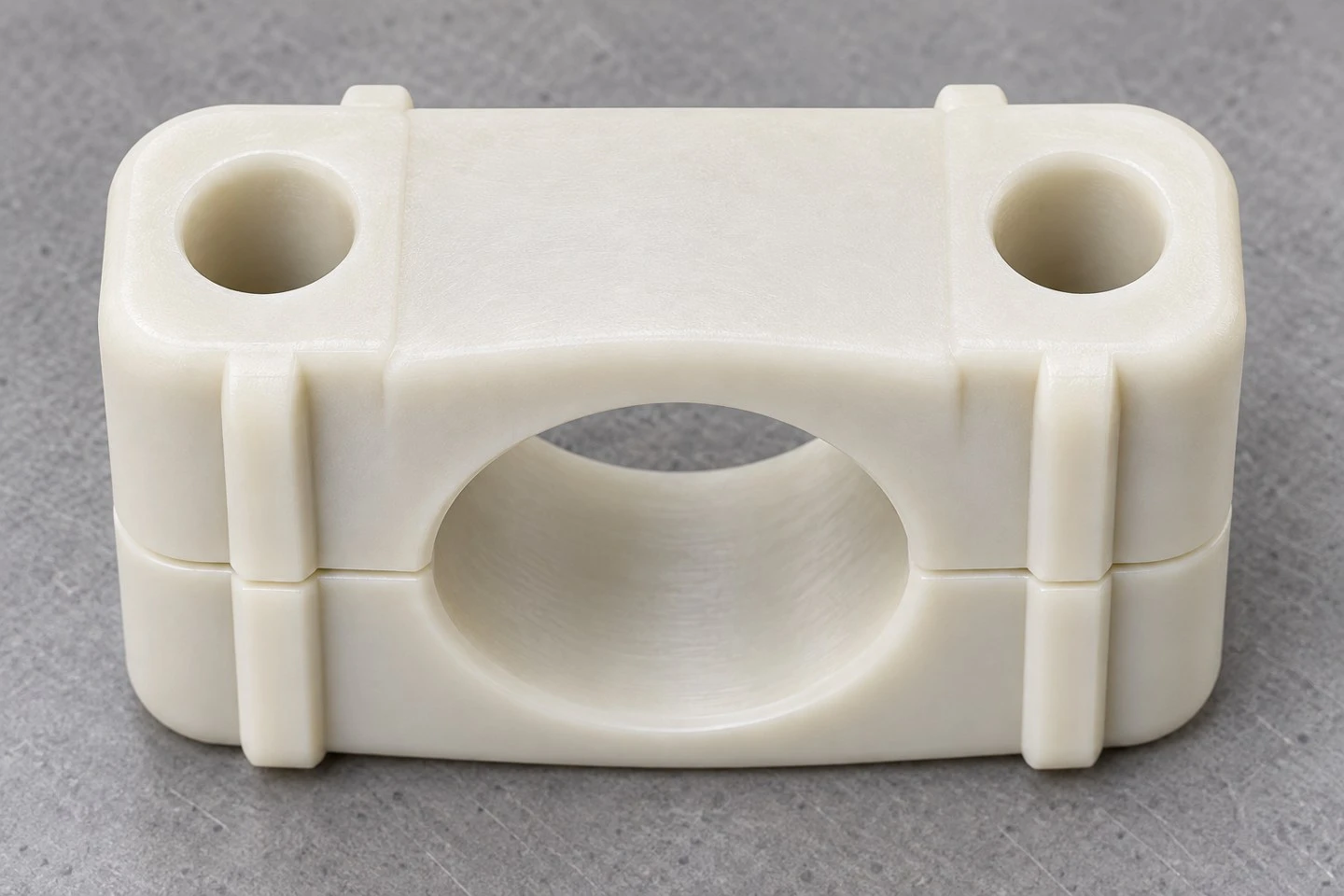
The illustrated concept is a split clamp made from two molded halves. Together they form a circular pipe opening, with mounting holes on either side. This is an example of a custom component, not a dimensional standard or a certified fastening assembly. The body shape, pipe channel, mounting pattern, and external features can be reviewed for a particular machine. Please define whether the required supply is the plastic body only or includes separately specified assembly items.
Where does a custom pipe clamp fit in industrial equipment?
Potential applications include pipe routing along machine frames, equipment service lines, production fixtures, and compact assemblies where a conventional bracket does not match the available mounting space. A custom body can locate the pipe relative to the structure and provide a repeatable interface for assembly. The design must still be assessed against the loads and movement expected in the actual equipment.
Start by identifying the line being supported and the purpose of the clamp. A body intended to hold a rigid tube in position differs from a guide that permits controlled movement. Explain whether the pipe must remain fixed, whether expansion or movement is expected, and which adjacent parts limit access. An assembly drawing makes these requirements clearer than a photograph of an isolated clamp. This information also helps distinguish the required component from a superficially similar catalog item.
How should the pipe channel be defined?
Provide the pipe outside diameter and its tolerance, then define the intended fit within the clamp. The nominal pipe size alone may not describe the actual outside surface. Include any coating, protective layer, or other feature that changes the contact diameter. If the tube is not circular, provide its controlled profile and orientation rather than describing it with one approximate width.
The internal surface can be reviewed as a smooth channel or another specifically drawn profile. State whether the clamp should grip the pipe, guide it, or maintain a clearance. Also define the relationship between the two halves when assembled. Do not assume that closing the outer faces completely will produce the intended contact force. The channel, split gap, and fastening arrangement need to be considered together by the equipment designer and verified during sample evaluation.
What mounting details should appear on the drawing?
Show the mounting hole diameter, center spacing, and location relative to the pipe centerline. Identify the surfaces that contact the machine frame or mating bracket. Where a fastener head, washer, or clamping member needs clearance, provide its envelope and the required seating geometry. A hole that fits the fastener shank does not by itself establish a complete mounting design.
State the available installation space and the direction from which the fasteners are fitted. If tools must reach the assembly through a restricted opening, include that information. Mounting features can be made to match an existing structure, but the structure should be measured or defined by a reliable drawing. Excessive tightening should not be used to compensate for mismatched parts. Tightening requirements and load transfer should be established for the complete installed assembly.
Can the two halves be identical or differently shaped?
Two identical halves can simplify part identification when the geometry and mounting arrangement allow it. Other designs require a dedicated lower body and upper cap because the machine interface or available space is asymmetric. The choice should follow the assembly requirement rather than the appearance of the reference image. Provide separate part numbers and drawings if the halves are different.
Features such as locating steps, orientation marks, or mating details can be discussed where they help repeatable assembly. Their dimensions should be defined so they do not prevent the intended closing movement or create unintended contact with the pipe. If the product is ordered as a pair, clarify how quantities are counted and packaged. One pair of halves and one individual molded component are different purchasing units, particularly when sample and production quantities are compared.
When should PA6 or PA66 be considered?
Nylon selection should begin with the required service conditions and an approved material specification where one exists. PA6 and PA66 are material families rather than complete purchasing grades. The exact formulation, reinforcement, color, and conditioning requirements can influence the finished part. Please identify the required grade or provide the performance requirements so the material discussion is tied to the application.
Moisture conditioning is relevant when evaluating nylon dimensions and behavior. The sample approval condition and inspection method should therefore be agreed where fit is critical. A part measured immediately after molding should not automatically be treated as identical to a conditioned assembly in service. State the operating environment and any dimensional acceptance condition. We do not assign a universal temperature range, load rating, or chemical resistance to all nylon clamp designs.
Could PP, POM, or another plastic suit the project?
Although this product focuses on nylon clamp bodies, a custom project may call for a different thermoplastic. PP, POM, ABS, and other available material options should be reviewed against the contact environment, stiffness requirements, dimensional needs, and assembly conditions. Switching resin is not simply a color change. A geometry approved for one material may need review before being manufactured in another.
For an inquiry involving more than one material option, explain the reason for comparison and identify the properties that matter. Include exposure to oils, cleaners, water, or other substances, together with temperature and duration. Where a particular compliance document or test result is required, specify it before quotation. The fixed material list in the product introduction describes the broader custom molding service; it does not mean every listed resin is suitable for every pipe clamp application.
How can ribs and wall sections support a moldable design?
The external body can incorporate reinforcing ribs or local support features where the design requires them. Their placement should account for the mounting loads, pipe channel, and molding process. A bulky solid section is not automatically the best route to a stronger finished component. The part should be reviewed for wall transitions, local thickness, and the relationship between ribs and functional surfaces.
Draft, parting lines, gate location, and ejection requirements also belong in the manufacturing review. Mark surfaces where a gate vestige or parting witness would interfere with assembly or pipe contact. If a proposed change is needed for tooling, record it in the approved model or drawing. Custom plastic parts manufacturers need a controlled definition of the final component, especially where a cosmetic adjustment can also change a functional interface.
What loads and movement should the clamp review include?
Describe the pipe support arrangement, expected force directions, vibration or repeated movement, and any installation loads. Include the spacing between supports and identify whether the clamp is expected to resist axial movement, lateral movement, or both. Internal pressure in a pipe is not a clamp load rating. The equipment designer should provide the actual forces that the support must accommodate.
Where the line can move with temperature or machine operation, explain how that movement is managed across the complete routing system. A rigidly held location and a guided location may need different details even when they support the same pipe diameter. Sample testing should reflect the intended setup. The illustrative clamp is not presented as a pressure-containing component, a lifting device, or a universally rated vibration isolation system.
What does a useful first sample approval involve?
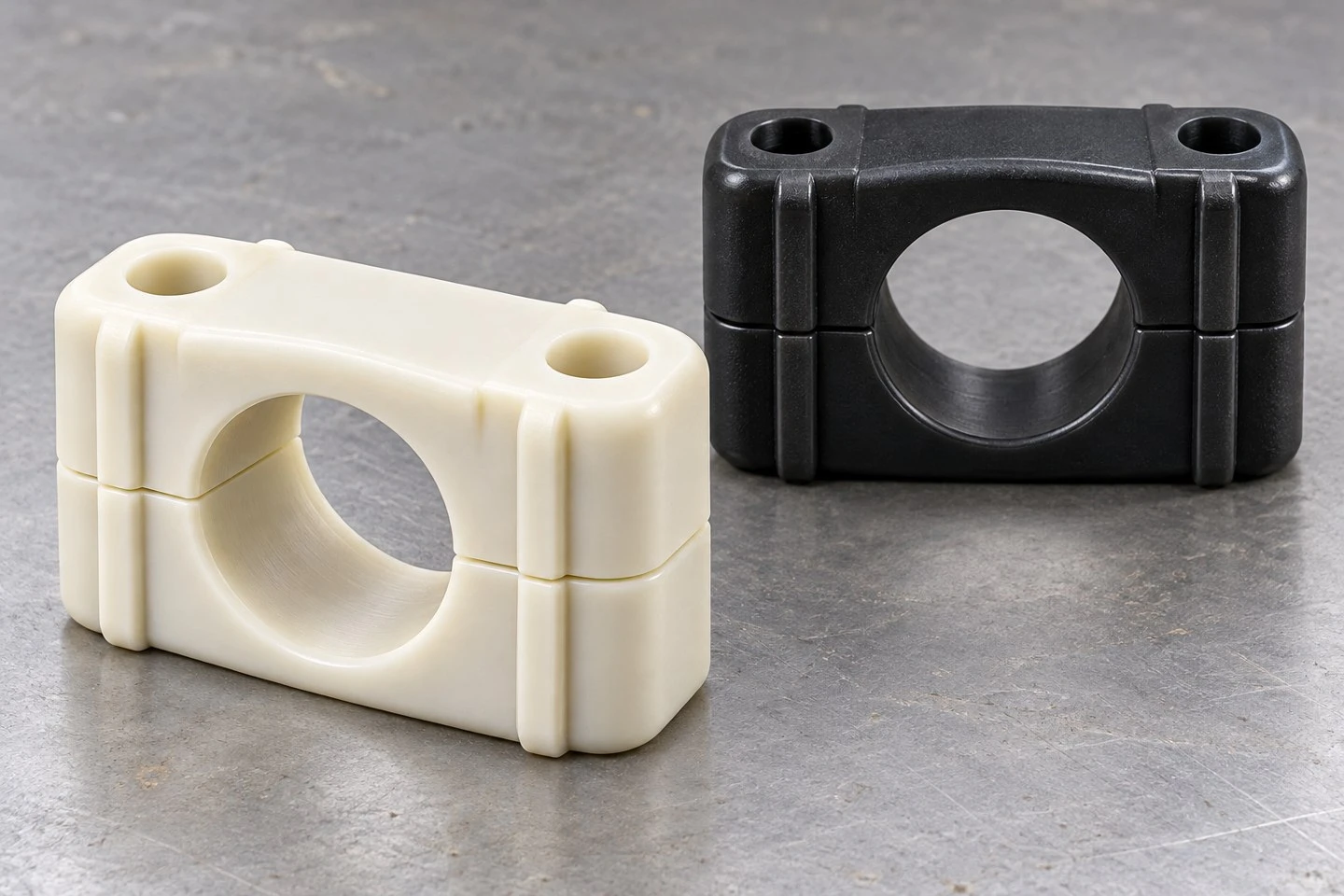
Inspect the pipe channel, mounting pattern, body envelope, and agreed critical dimensions against the released drawing. Check the two halves together rather than evaluating each only as an isolated molding. Fit the sample with the actual pipe and mounting arrangement, then verify that access, clearance, and the intended closing condition are achieved. Document the material and conditioning state used for this evaluation.
A functional trial should use the planned support and representative operating conditions. Observe pipe movement, local contact, clamp deformation, and the condition around the fastener features. If changes are needed, update the drawing revision before approving production. Keep an approved sample or inspection record as a repeat order reference. A successful trial should be interpreted within its tested conditions rather than converted into an unsupported general load or lifetime claim.
What information is needed to start a custom molding quotation?
Please send the 3D model and a drawing identifying critical dimensions, material requirements, and the quantity needed. If only an existing sample is available, provide photographs and key dimensions so the missing information can be identified. Indicate whether the project requires new tooling, a sample evaluation stage, or recurring production. Tooling cost, minimum quantity, and lead time should be confirmed after the design and supply scope are reviewed.
| Requirement | Details to include |
|---|---|
| Pipe interface | Outside diameter, tolerance, surface condition, required grip or clearance |
| Body and mounting | Outline, split arrangement, holes, center spacing, support surfaces, mating parts |
| Material and duty | Resin grade, color, conditioning, environment, forces and movement |
| Production plan | Drawing revision, sample quantity, order unit, initial and repeat demand |
Welcome to send your drawings, preferred material, pipe dimensions, and quantity requirements for a custom injection molded pipe clamp inquiry. Contact: amanda@tjswks.com
Hot Tags: custom injection molded nylon pipe clamps, China, suppliers, manufacturers, factory, bulk, cheap, low price, quotation, custom molded nylon for electrical insulation applications, custom molded nylon for lid applications, custom molded nylon for lightweight applications, custom molded nylon for space saving applications, nylon molded for flexibility applications, nylon tubes


