


Tianjin SWKS Technology & Development Co.,Ltd is one of the most reliable manufacturers and suppliers of custom injection molded nylon ribbed housings in China. If you're going to buy bulk cheap custom injection molded nylon ribbed housings, welcome to get quotation from our factory. Quality products and low price are available.
Custom Injection Molded Nylon Ribbed Equipment Housings
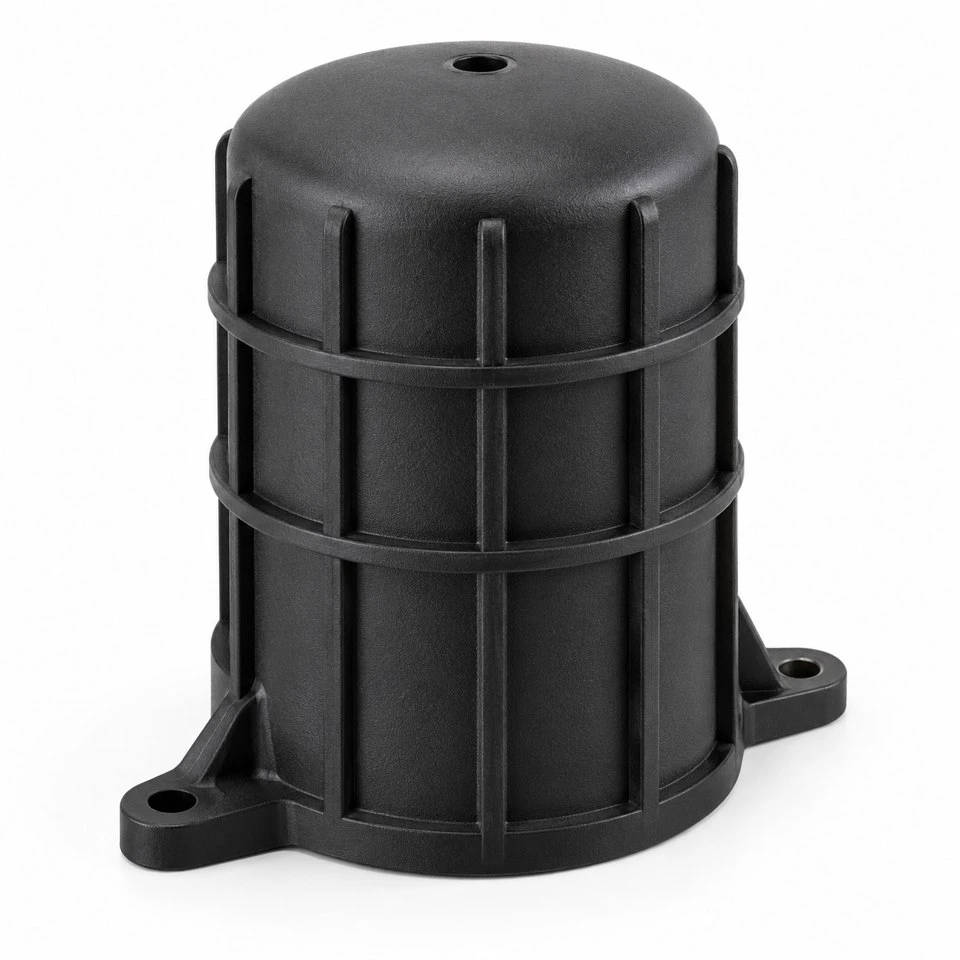
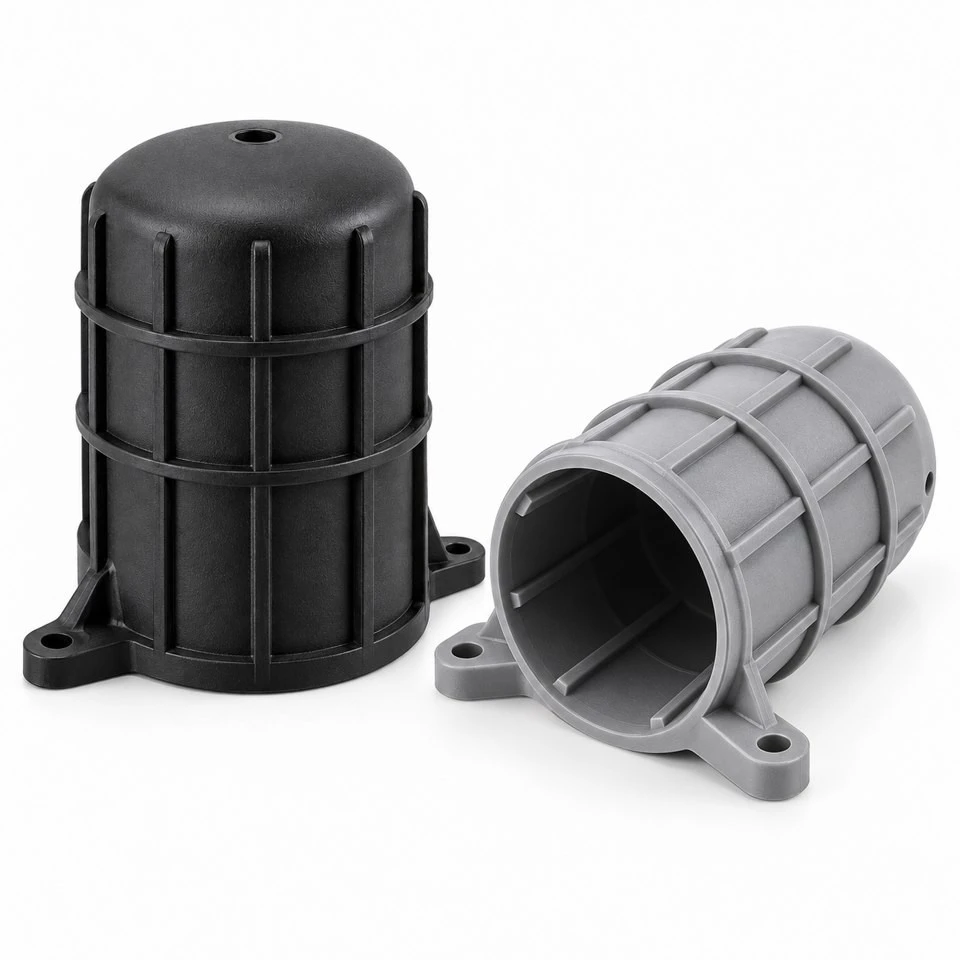
A compact machine assembly often needs a shaped protective body rather than a plain rectangular enclosure. Our custom nylon ribbed equipment housings combine a cylindrical cavity, an enclosed crown, external reinforcement and integral mounting ears in a component developed around your equipment layout. The configuration shown is a manufacturing concept: its diameter, depth, openings and fastening arrangement are defined by your drawing. It is intended for buyers developing industrial equipment covers, actuator shrouds and other mechanical assembly housings where the molded geometry must fit an existing interface.
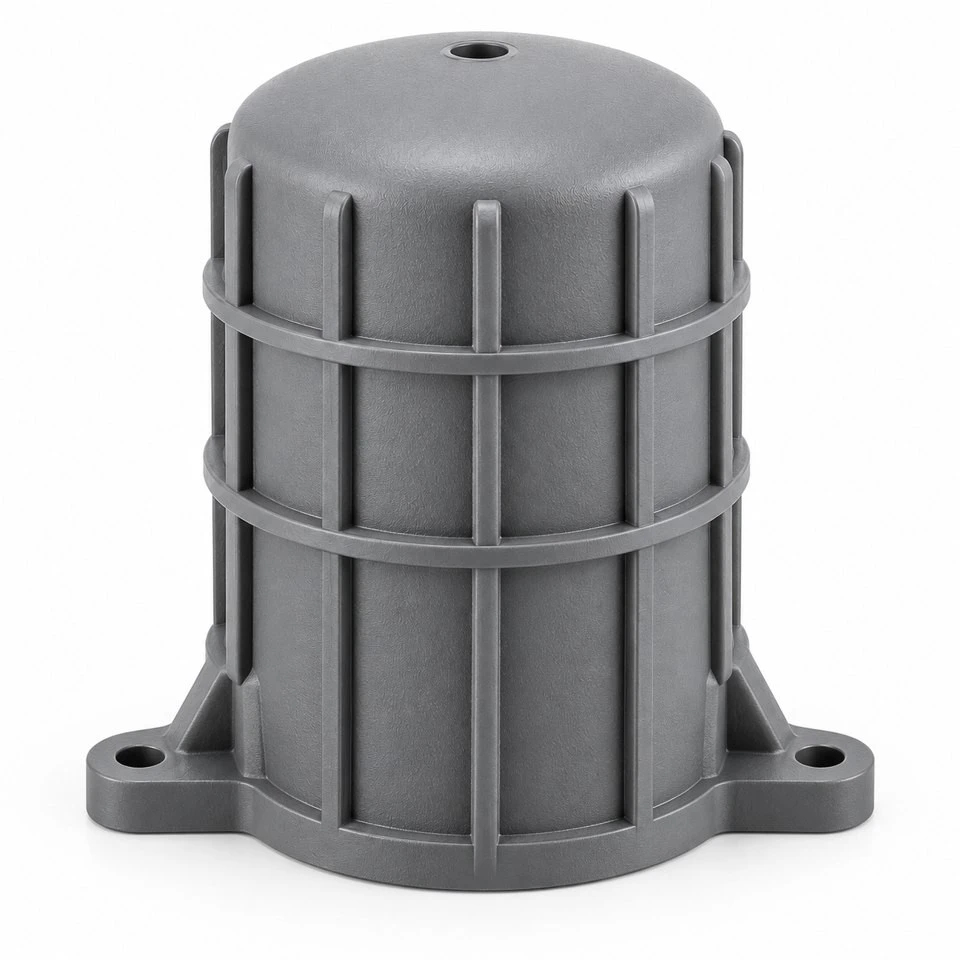
We review injection moulded plastic components as individual projects. A housing that looks similar in a photograph can require a different internal profile, resin grade or mold construction once the mating assembly is understood. Send the part model and the installation conditions so the quotation can address the actual component. The black and gray illustrations show possible appearances, not stocked dimensions or confirmation of a particular machine application.
What makes this ribbed housing different from a general enclosure?
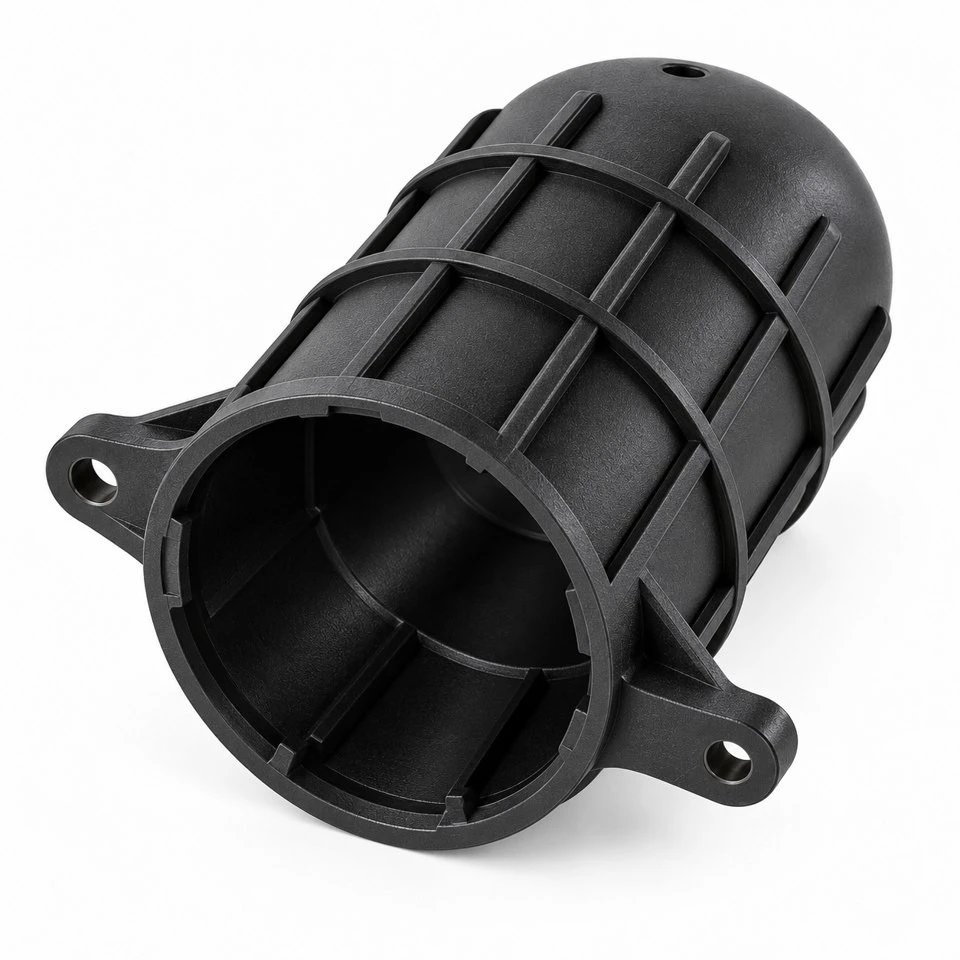
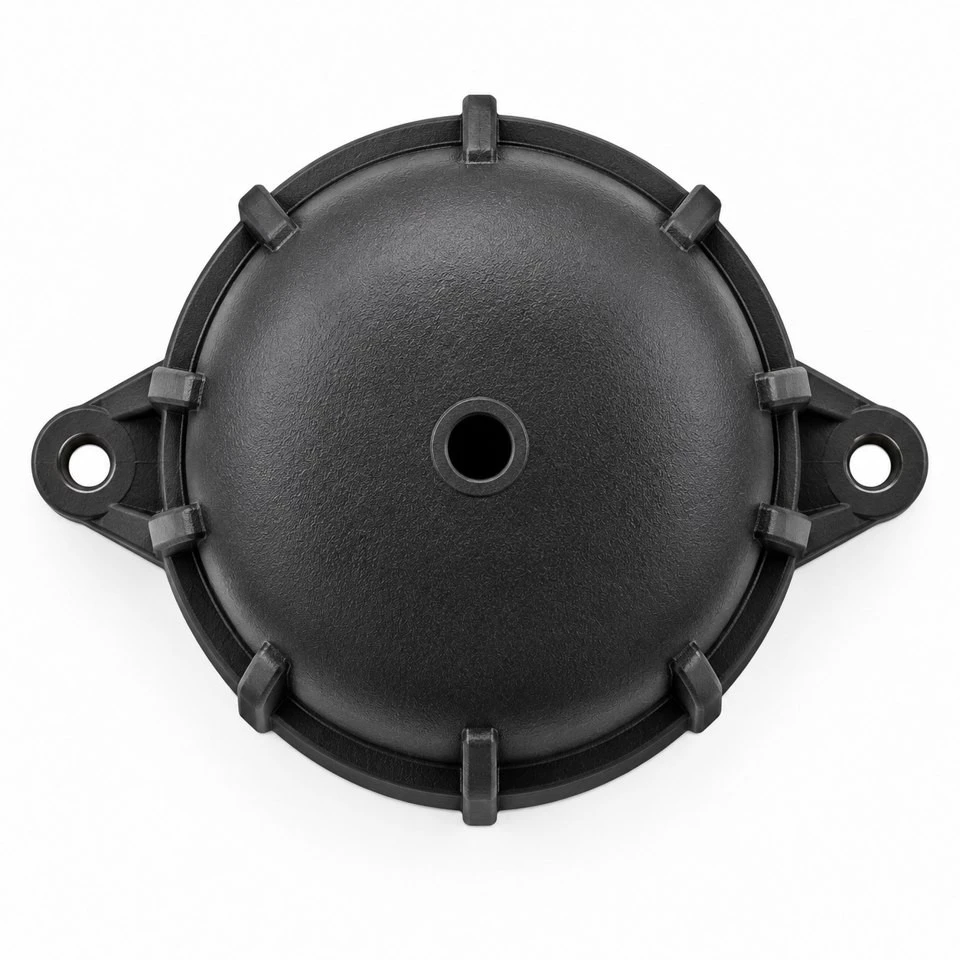
The main feature is an open cylindrical body with a rounded closed end. External ribs divide the outer surface into smaller fields, while opposing mounting ears provide defined attachment points. This arrangement can be adapted when the customer wants the cover to follow a compact circular assembly. A small crown opening may be retained, repositioned or removed according to the approved design. Its purpose must be specified; an opening intended for clearance should not automatically be treated as a bearing seat, vent or sealing feature.
Customization starts with the space the housing must occupy. Provide the maximum outer envelope, the minimum internal clearance and any nearby moving components. If the housing is removed during maintenance, identify the direction in which it must lift away and the access available for tools. These details help distinguish the functional geometry from styling features before the tooling layout is discussed.
How should mounting ears and bolt positions be specified?
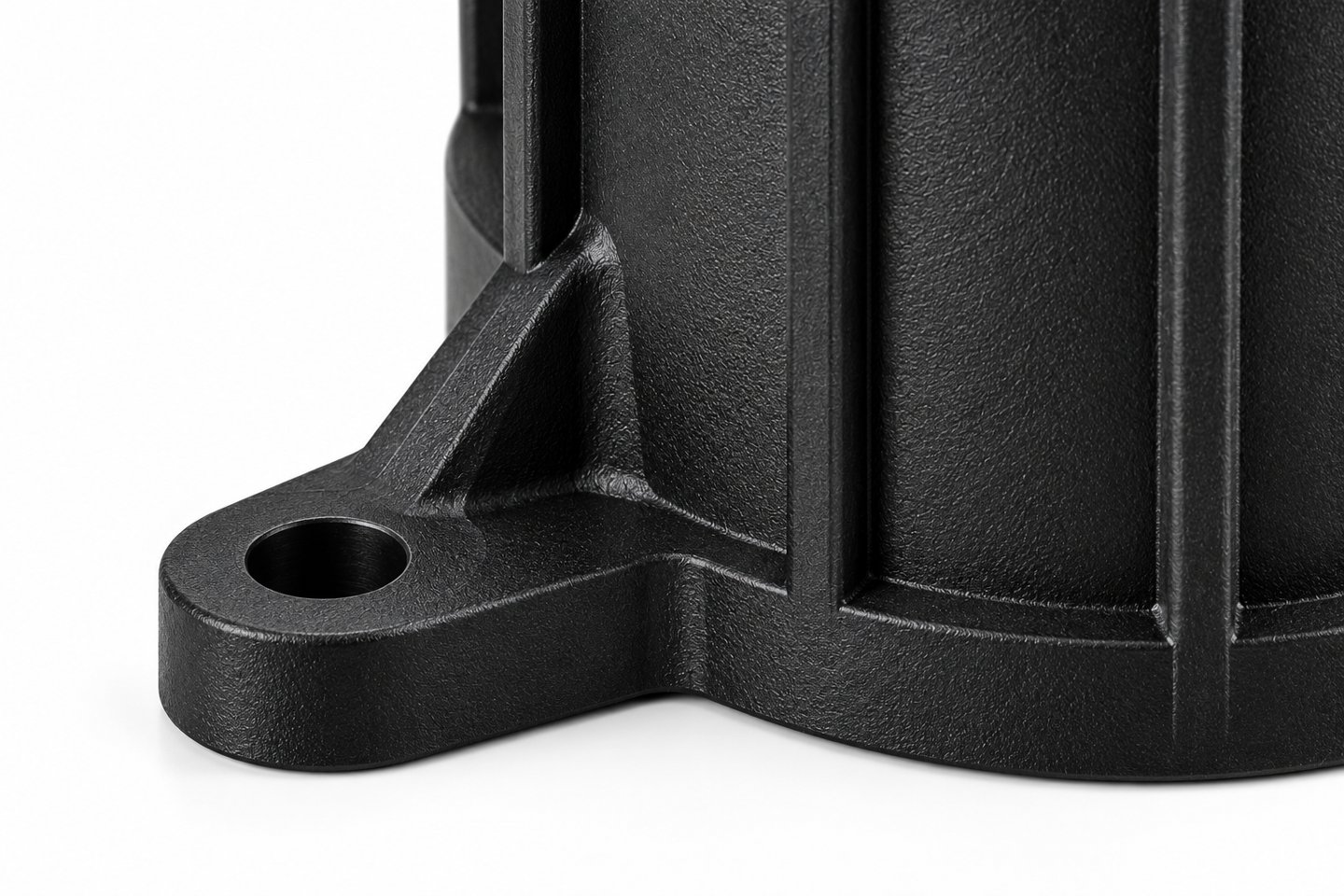
For a two-ear design, show the center distance between holes, their relationship to the housing axis and the surface that rests against the machine. Include the fastener type, washer arrangement and available tightening access. A mounting ear may need a simple clearance hole, a locating shoulder or an additional metal compression sleeve. Those options should be evaluated against the assembly requirements rather than added because they appear on another product.
The mating surface also matters. A housing installed against a flat bracket is different from one attached across two separate supports. Tell us whether both ears must contact at the same time and whether the assembly has a defined clamp sequence. If bolt torque is controlled, provide the specified value for engineering review and sample validation. We do not assign a universal tightening torque or load rating to a custom molded ear without the relevant design and test requirements.
Which cavity dimensions should appear on the drawing?
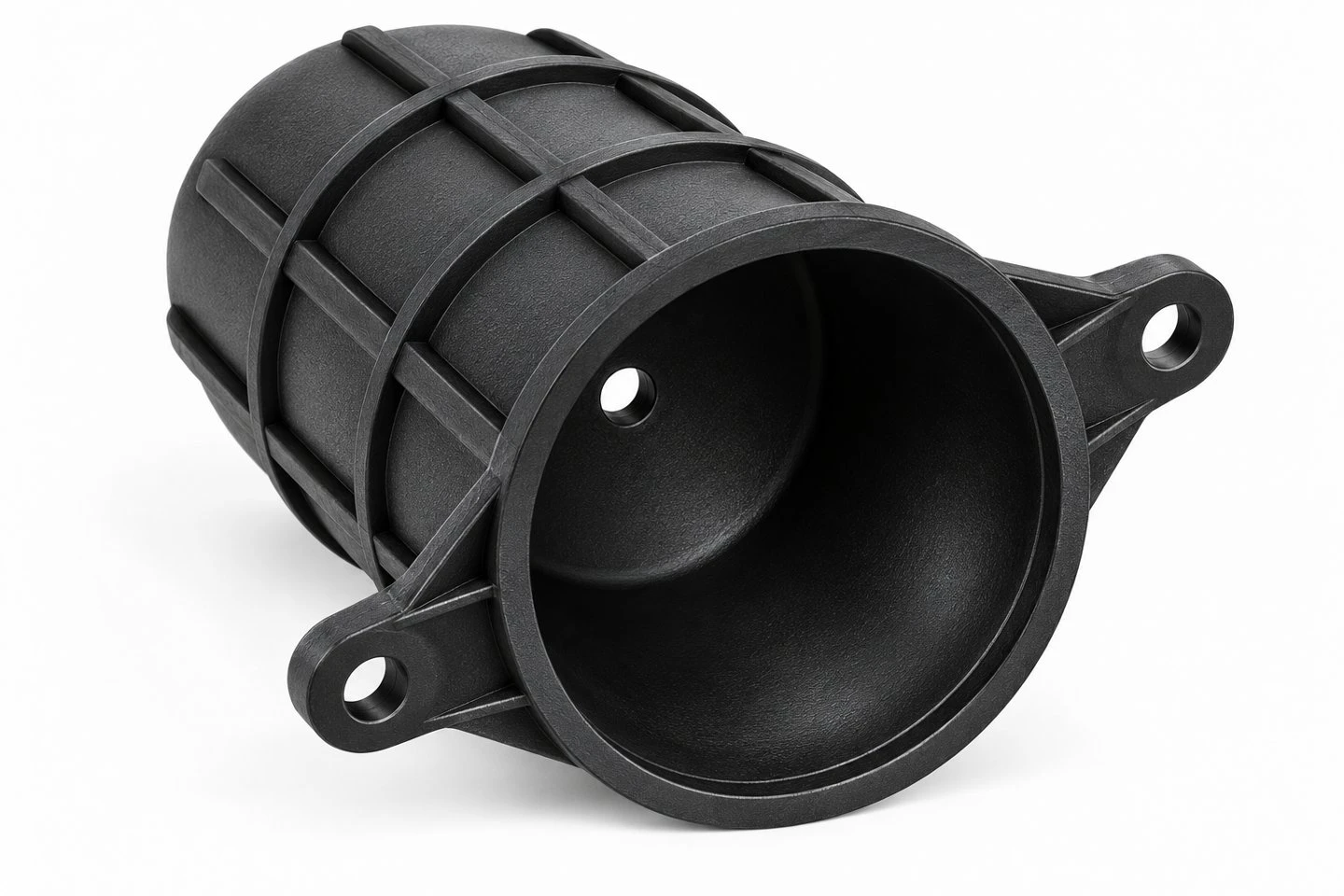
Specify the internal diameter or profile at the locations where clearance matters, together with the usable depth measured from a clear datum. A cylindrical outer appearance does not require a perfectly cylindrical inner cavity. Internal steps, locating pads and relief areas can be considered when the assembly needs them. However, each added feature should have a stated role so the mold and inspection method can be planned sensibly.
If a component passes through the crown, define the opening size, positional relationship and edge condition. State whether contact is allowed or whether the opening must remain clear throughout operation. For housings that surround a moving assembly, provide the movement envelope instead of only the stationary component dimensions. This avoids treating an acceptable static fit as proof that the complete mechanism has adequate operating clearance.
How can the rib pattern be adapted to the assembly?
The illustrated grid is one possible layout. Rib count, direction, height and interruptions can be changed to accommodate mounting access, neighboring brackets or a required external shape. Keep the regions needed for labels, identification marks or handling clear in the model. If a cable or hose must pass beside the housing, show its route so an external rib does not obstruct the installed assembly.
Ribs are reviewed together with the main wall and the transition into the crown and base. Their presence alone is not evidence of a specific stiffness or impact capability. During project review, identify where the housing is supported, where it may be handled and which surfaces must stay within a clearance envelope. The final geometry and selected material should then be checked through the agreed sample and functional evaluation process.
Should this component use PA6, PA66 or another polymer?
PA6 and PA66 are options for a nylon housing project, but the purchasing specification should identify the required grade and any reinforcement. Unfilled and reinforced grades are not interchangeable simply because both are called nylon. Glass reinforcement can change stiffness and molding shrinkage behavior, so its use needs to be evaluated for this geometry. Nylon can also absorb moisture, making the conditioning state relevant when fit and measurements are agreed.
Provide the working environment, expected exposure and any material restrictions already established by your engineering team. We can review alternatives such as ABS, PP, POM or PC where the application calls for a different balance of requirements. A change of polymer may also require changes to geometry or tooling. The material listed in a quotation should therefore be treated as part of the defined manufacturing specification, not an unrestricted substitution permission.
What information is needed about the operating environment?
Tell us where the housing sits in the machine and what it encounters during normal use, cleaning, transport and storage. Useful inputs include temperature conditions, named oils or cleaning agents, outdoor exposure and the possibility of repeated contact with neighboring parts. Give the concentration and contact duration when chemical exposure is important. A general phrase such as industrial use does not provide enough information to select a grade or agree an acceptance test.
If the finished assembly requires flame performance, electrical insulation, ingress protection or another regulated characteristic, provide the exact requirement and the intended verification method before quotation. Those properties cannot be inferred from the black color, the rib pattern or the broad resin family. Any necessary documentation and testing should be specifically agreed for the chosen material and finished assembly.
How are the crown, rim and parting features reviewed?
The closed crown, long sidewall and open base need to be considered as one molded shape. Our review addresses the proposed mold opening direction, access to internal features and the locations available for gates and ejector contact. The customer should identify surfaces that are visible, touch-sensitive or functionally important. This allows manufacturing marks to be discussed before the appearance standard is finalized.
Mark areas where a parting line, gate remnant or ejector mark would interfere with assembly. For example, the bottom rim may need a controlled seating condition, while a recessed external area may be more suitable for a manufacturing mark. The permitted edge condition should be documented with a drawing note or approved sample. Where operators regularly handle the cover, highlight the contact regions and define the expected finishing standard.
What should be checked on the first molded samples?
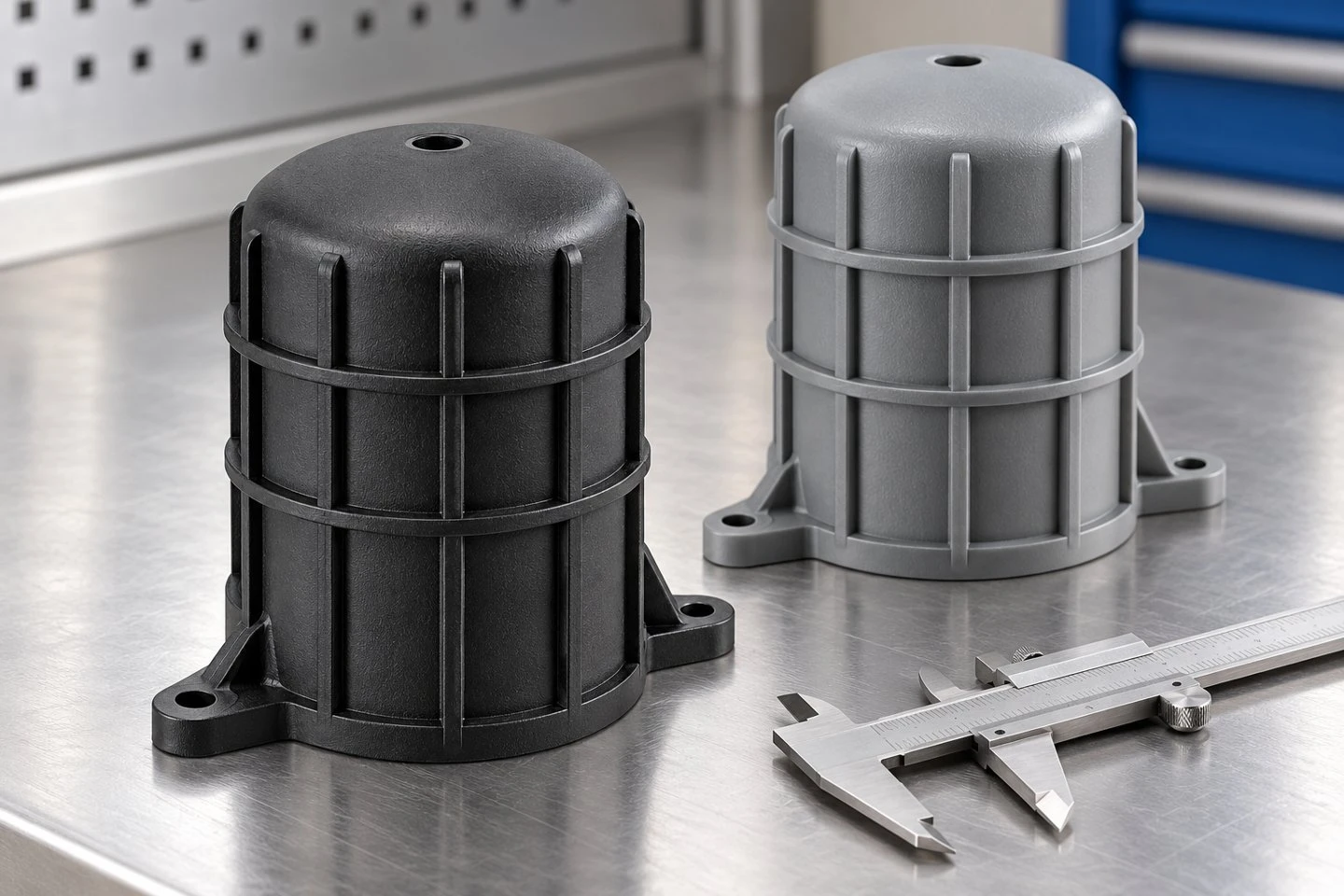
A useful sample review follows the way the part is installed. Start with the seating surfaces and mounting holes, then check the cavity against the mating assembly. Confirm that fastening tools can reach the bolts and that the housing can be installed and removed in the intended direction. If the cover surrounds moving parts, evaluate the agreed movement conditions rather than checking only the loose housing.
The dimensional report should focus on the features identified as important in the drawing. Possible checks include hole spacing, cavity depth, crown opening position, base seating and outer clearance at selected sections. The inspection setup and the material conditioning state should be agreed where they affect the result. Appearance can be compared with an approved reference for color, texture and acceptable molding marks, while functional acceptance remains tied to the specified assembly tests.
Can colors, identification and assembly details be customized?
Black and gray are illustrated here, and other colors can be discussed against a physical reference or an agreed color standard. Texture, molded identification and part revision markings can also be reviewed. Provide the position and minimum readable size of any required marking. A logo or identification feature must be included in the approved artwork and tool specification rather than added informally during production.
If metal sleeves, threaded inserts or separate fasteners are required, list them individually with their dimensions and supply responsibilities. State whether the requested delivery is the molded body alone or an assembly with additional items fitted. This distinction affects the quotation, inspection and packaging plan. Separate components should not be assumed to be included merely because they appear in an application reference photograph.
What should you send for a custom housing quotation?
Please send an STP, STEP or IGS model together with a dimensioned drawing, required material, color, order quantity and expected repeat demand. Add a mating-part model or installation sketch if the fit is difficult to understand from the housing alone. Identify the current drawing revision and highlight any dimensions awaiting confirmation. For a sample-based project, clear photographs of the inside, outside and mounting surfaces help establish what still needs measurement.
The quotation can then distinguish tooling, molded parts and any agreed secondary work. Sample timing, production timing and minimum order quantity are confirmed for the specific design and quantity. If the component is being redesigned, explain the issue with the existing version so the review focuses on the correct interface. We welcome inquiries for custom ribbed nylon housings and related industrial molded components. Send your drawings, preferred material and quantity requirements to Contact: amanda@tjswks.com.
Hot Tags: custom injection molded nylon ribbed housings, China, suppliers, manufacturers, factory, bulk, cheap, low price, quotation, custom molded nylon for branding applications, custom molded nylon for handle applications, custom molded nylon for high performance applications, custom molded nylon with various finishes, Flat Thin Nylon Spacers Washers, nylon molded for space saving applications


