


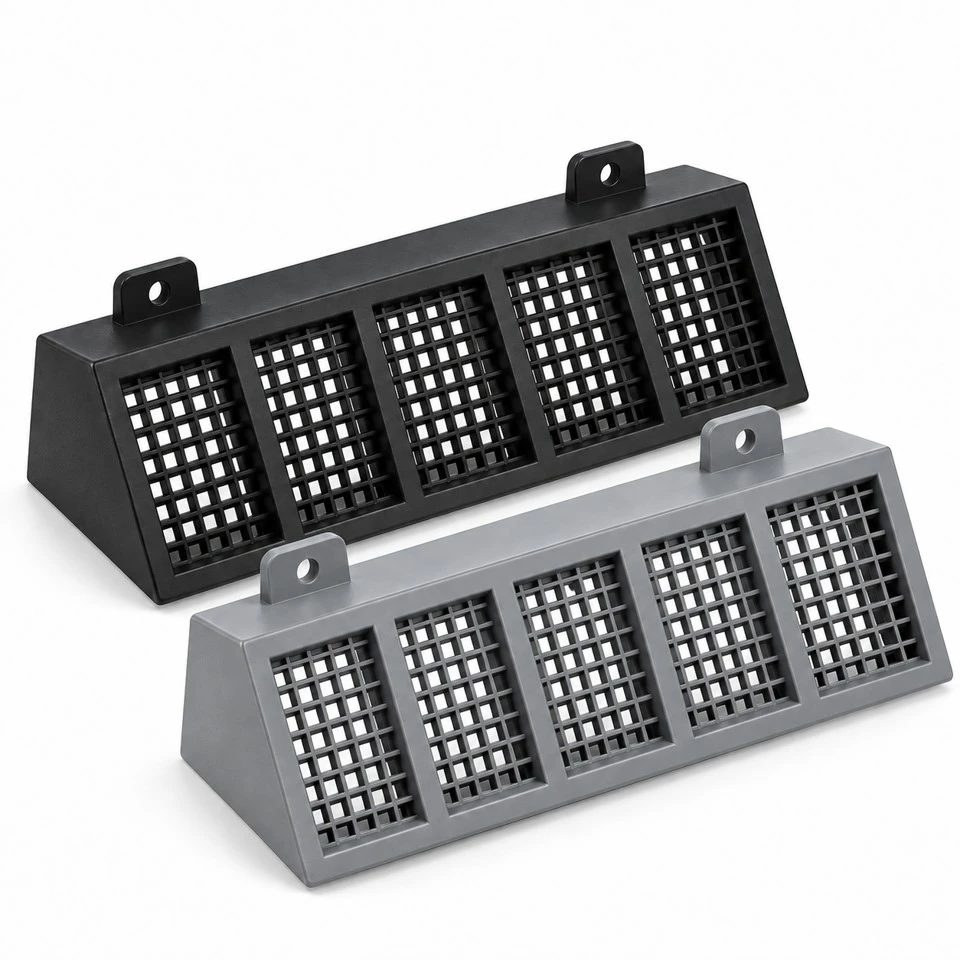
Tianjin SWKS Technology & Development Co.,Ltd is one of the most reliable manufacturers and suppliers of custom injection molded plastic vent grilles in China. If you're going to buy bulk cheap custom injection molded plastic vent grilles, welcome to get quotation from our factory. Quality products and low price are available.
Custom Injection Molded Plastic Vent Grilles
A molded ventilation grille can combine an open face, a shaped frame, reinforcing members, and mounting features in one equipment component. Its design needs to fit the surrounding housing while leaving the intended passage open. SWKS offers custom injection molded plastic vent grilles developed from customer drawings for machinery covers and equipment enclosures where a generic flat grille does not match the assembly.
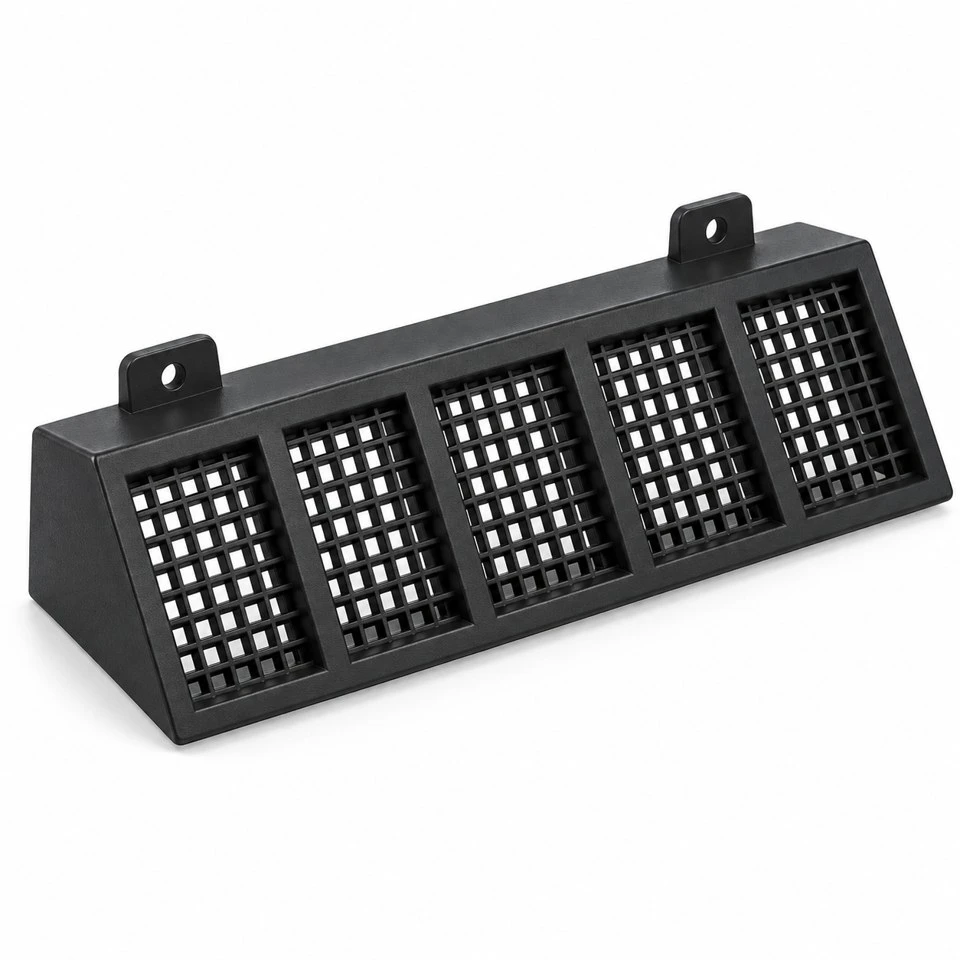
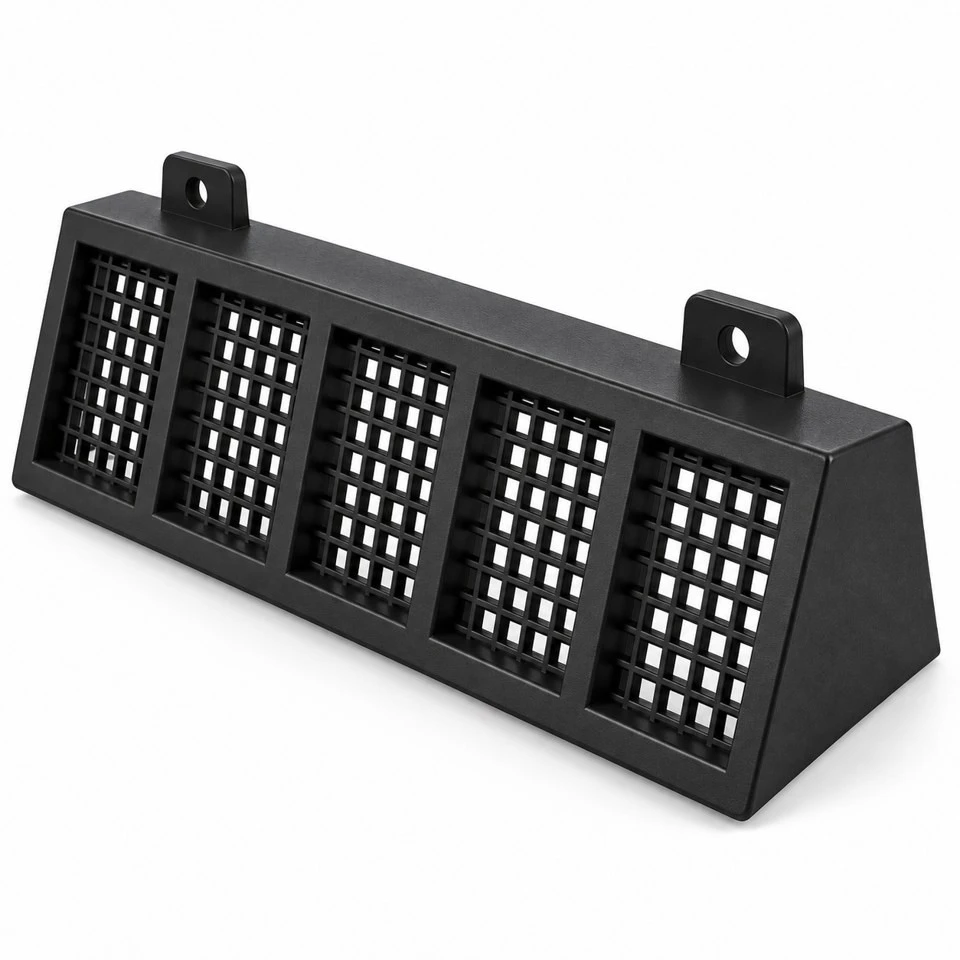
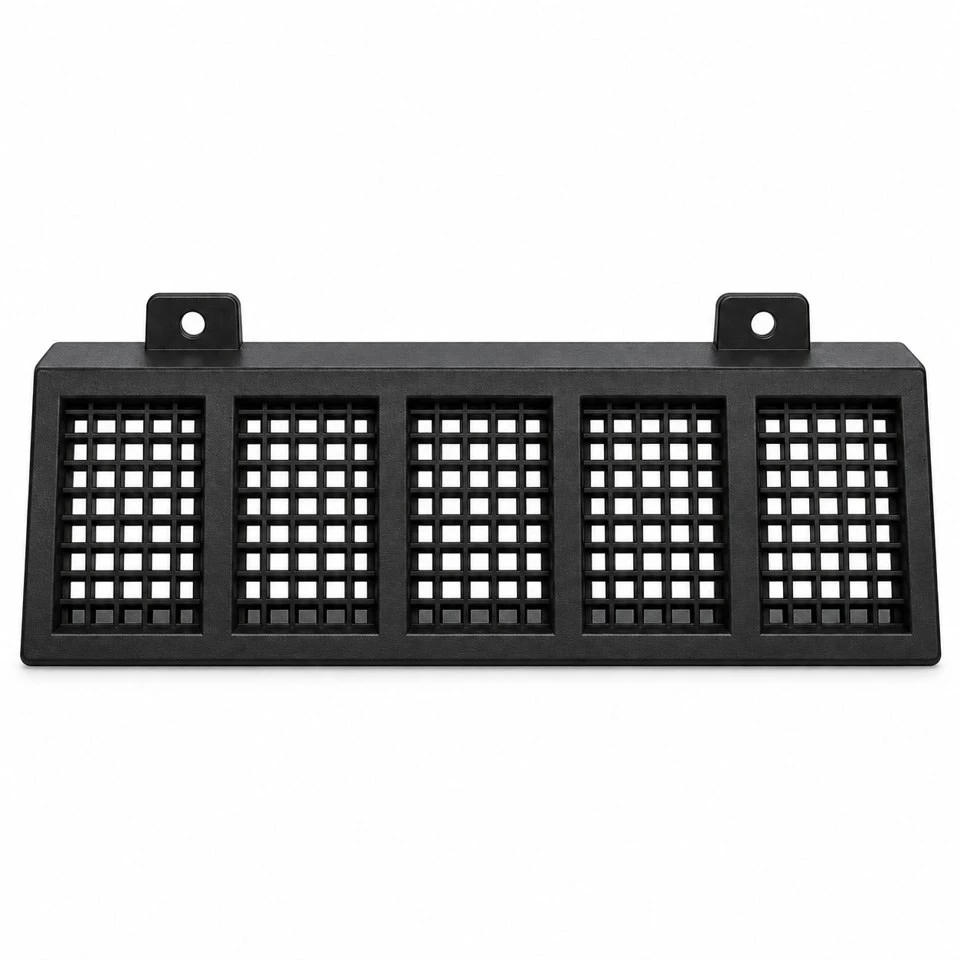
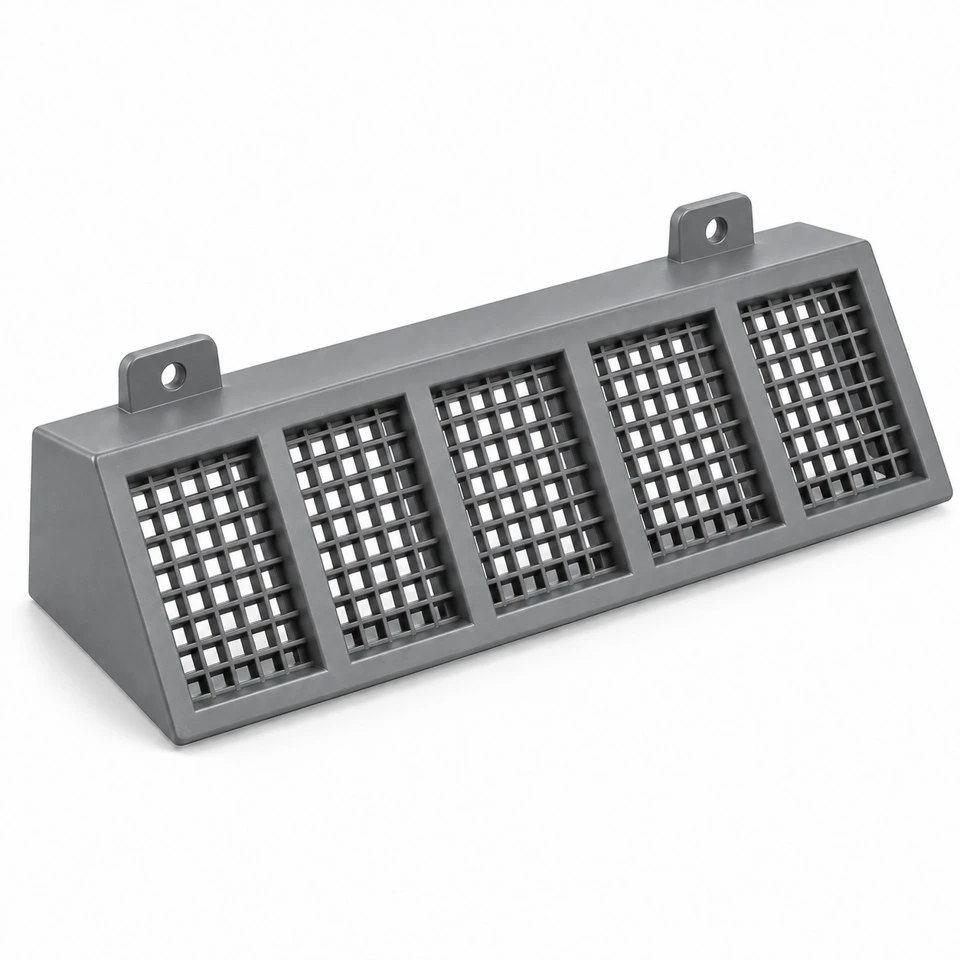
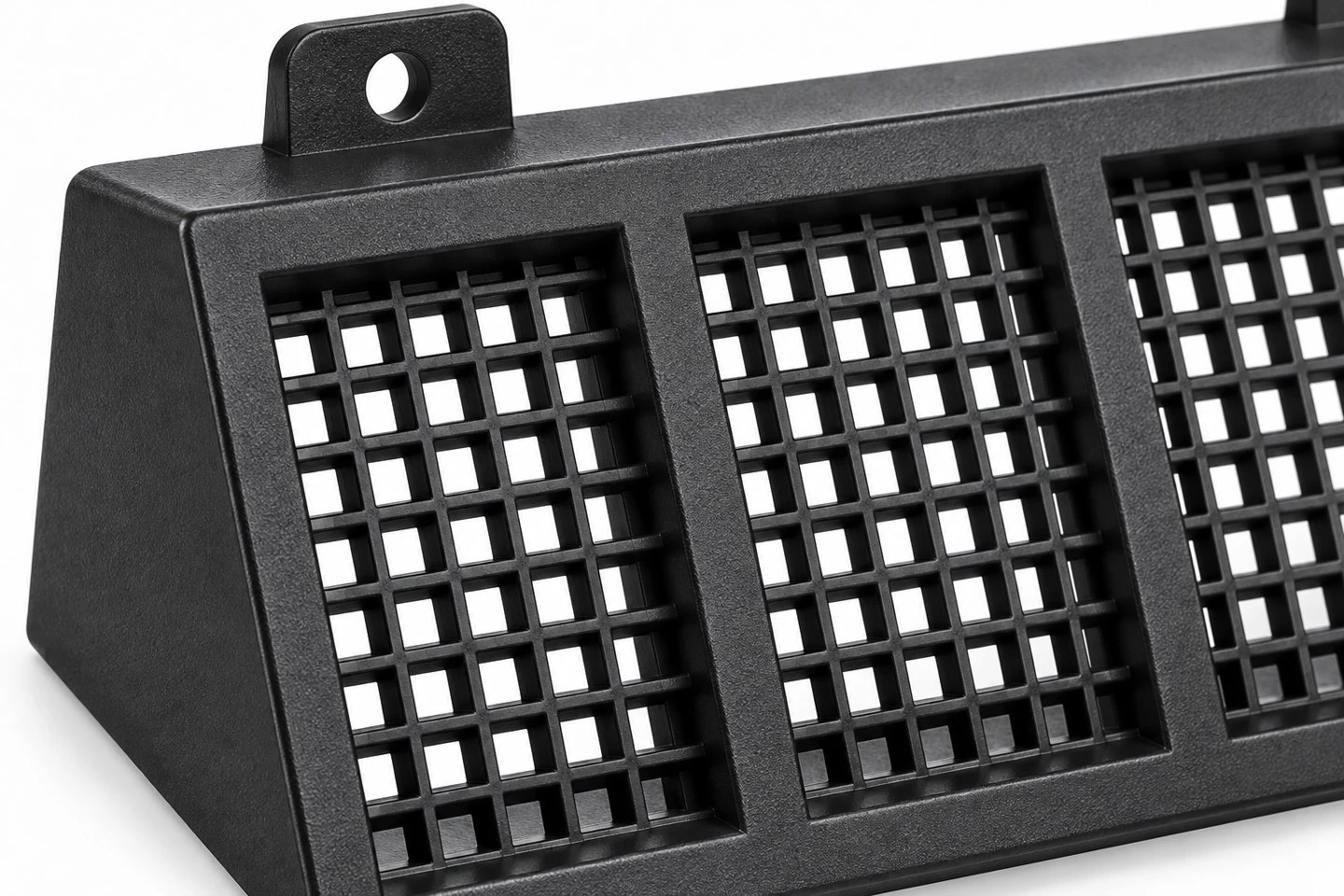
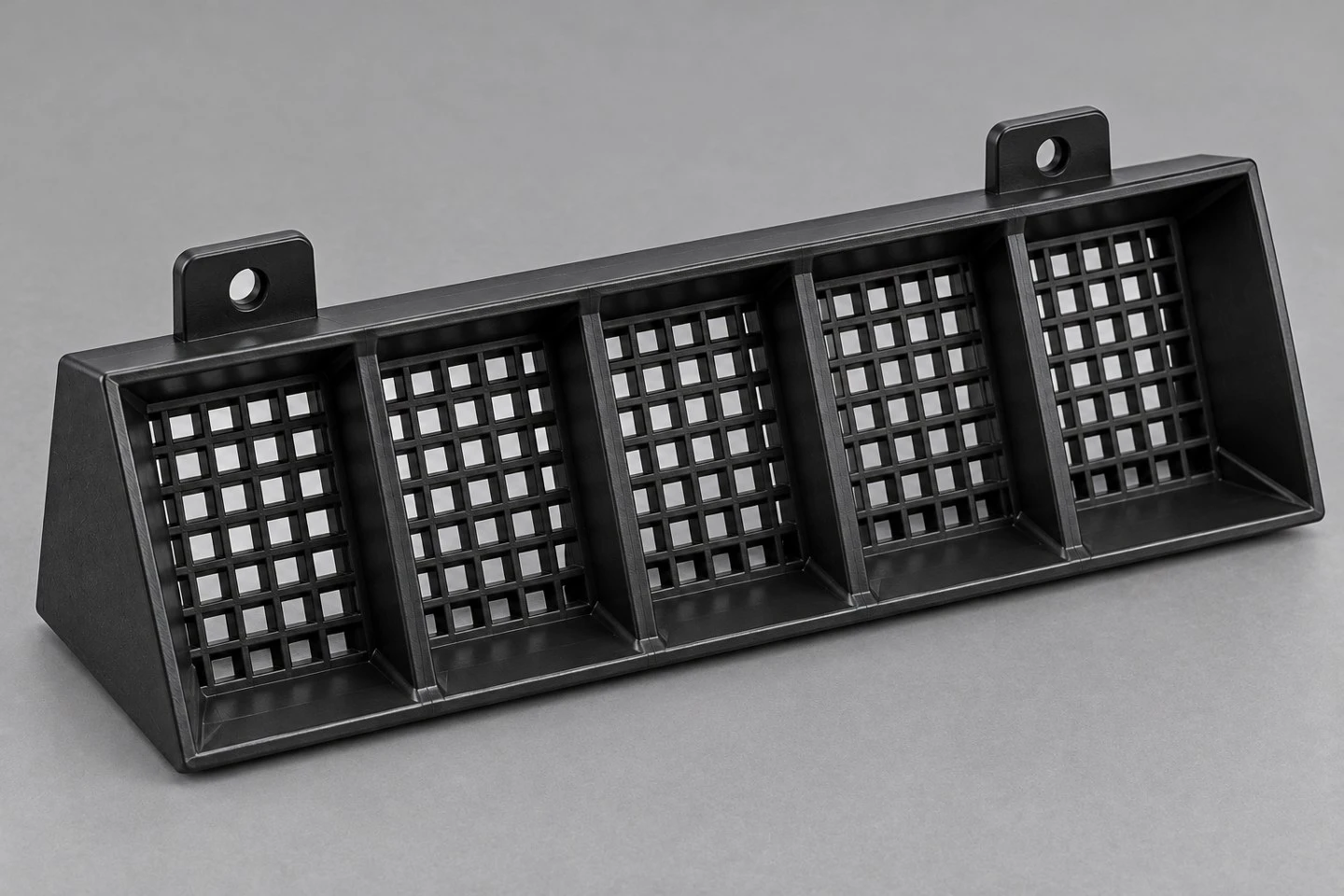
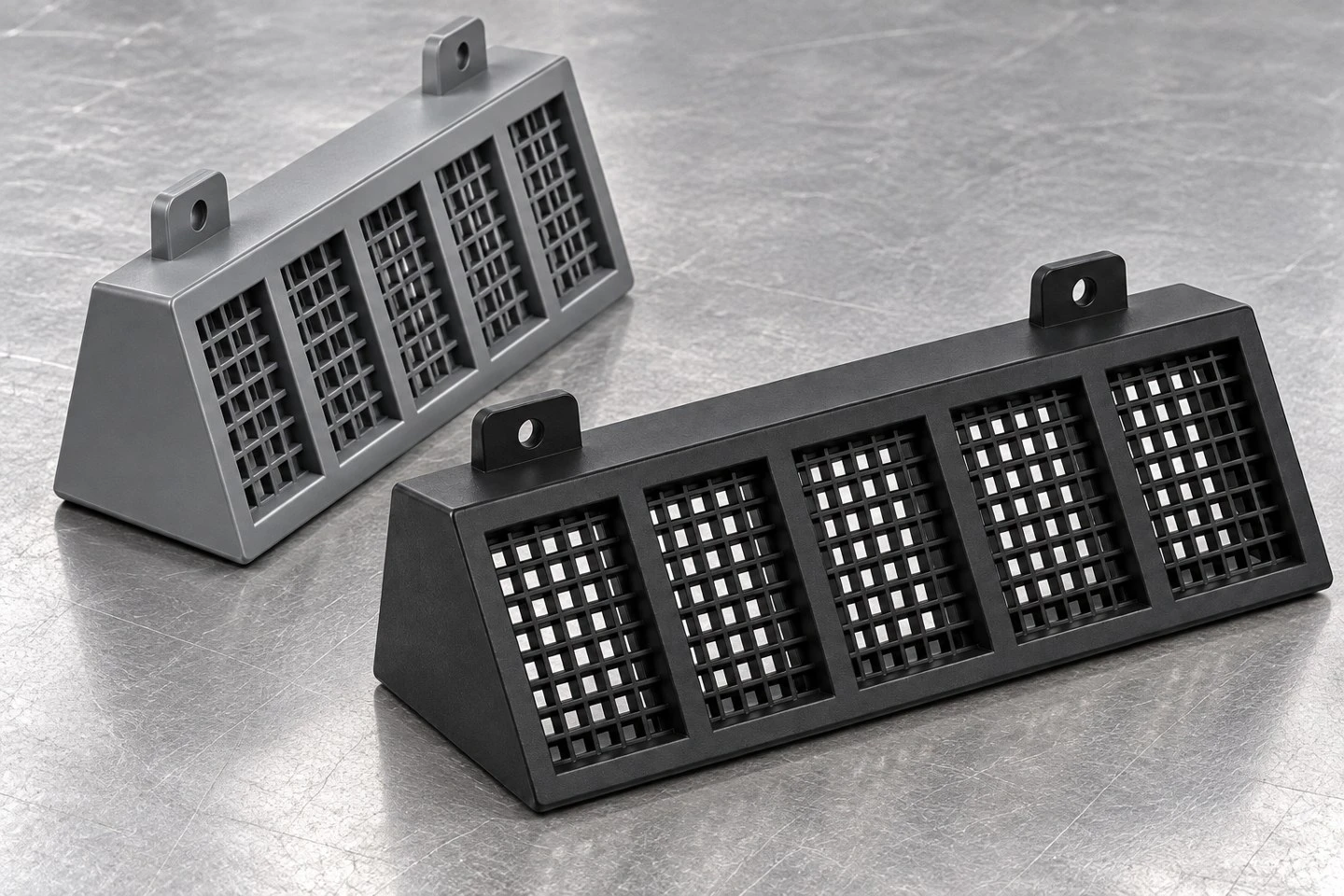
The illustrated concept has a rectangular lattice face divided by reinforcing members, a shallow inclined body, and mounting tabs. It follows the type of shaped molded component shown in our product presentation. It is an example for discussing custom geometry, not a catalog size or an airflow-certified assembly. Frame dimensions, opening pattern, body depth, material, and fastening details are reviewed for the individual project.
Where can a shaped plastic grille be used?
Potential locations include ventilation openings in machine covers, equipment housings, and enclosure assemblies. The grille may provide a defined exterior opening and a mounting interface for the surrounding structure. Its precise role should be specified by the equipment designer. A visible lattice does not by itself establish filtration performance, protection against access to moving parts, or compliance with an equipment safety requirement.
Describe the location and orientation of the component in the installed machine. State whether the opening is on a vertical wall, an inclined cover, or another surface, and identify the space behind it. Include any neighboring fan, filter, duct, or internal structure that affects clearance. The grille drawing should be reviewed alongside the relevant enclosure interface, especially when the component needs to follow a shaped outer surface.
What defines the frame and equipment interface?
Provide the overall length, height, depth, and the shape of the mounting surface. An inclined grille should include the angle or the controlled dimensions that establish the inclination. Show the housing opening and the overlap or seating arrangement around its perimeter. The visible face dimensions alone cannot determine whether the part fits the equipment.
Identify the locating surfaces and any required clearances. If the grille follows a curved or stepped enclosure, include those surfaces in the model. Note which edges must align visually with adjacent parts and which dimensions control assembly. A common reference scheme helps separate the outer appearance from the functional mounting geometry. For a replacement design, confirm the actual enclosure dimensions rather than relying only on the outside measurements of an old grille.
How can the opening pattern be customized?
The open face can be reviewed with a lattice, repeated slots, or another specifically defined pattern. Include the opening dimensions, spacing, and member thicknesses in the drawing. Where the pattern repeats across several sections, show how it terminates near the perimeter and reinforcing members. Small changes at those junctions can affect both appearance and manufacturing.
If a free area or flow-related target is important, define how it is calculated or tested. The percentage of visible openings does not alone establish the performance of the complete ventilation path. A fan, filter, internal obstruction, and duct geometry may all be part of the equipment evaluation. We do not assign an airflow rate, pressure drop, or cooling capacity to an illustrative grille without an agreed design and relevant test conditions.
Why are reinforcing members part of the component design?
A long open face may need supporting sections to connect the lattice to the frame and maintain the intended geometry. Their position should reflect the part layout and mounting arrangement. A thicker grid is not automatically the best answer to every handling or stiffness requirement. The relationship between the frame, cross members, and body walls should be reviewed as a molded structure.
Show areas where the component will be pushed, handled, or loaded during assembly and service. Mark any surface that must remain clear of a supporting rib. Reinforcement should be considered together with wall sections, transitions, and the proposed molding direction. If a design change is suggested for manufacturing, its effect on opening area, appearance, and mating clearance should be checked before it is accepted.
Which mounting features suit the enclosure?
Possible features include plain mounting tabs, through holes, locating details, or another interface defined in the customer model. State how the grille is installed and removed. If screws are used, provide the relevant mating hardware and seating information. If a clip or snap feature is required, define the mating wall and intended assembly direction rather than adding a generic latch without an interface.
Tool access matters when a fastener sits near a sidewall or behind a projecting frame. Include the available space for installation and any surrounding parts that must remain in place. Identify whether the component is removable for cleaning or maintenance. The illustrated tabs are custom geometry examples; they do not establish a standard hole spacing or imply that screws, inserts, or another mounting accessory are included with the plastic component.
How should ABS or another resin be chosen?
ABS can be evaluated as a candidate for an equipment grille where its specific grade meets the project requirements. Nylon, PP, PC, or another thermoplastic may be considered when the operating conditions call for a different material. The correct choice depends on the environment, appearance, geometry, and required documentation. A material family name should be followed by a controlled grade or agreed performance specification before production approval.
Provide normal and occasional temperatures, exposure to oils or cleaning agents, indoor or outdoor conditions, and any special appearance requirements. If the design needs a documented flame classification, UV performance, or another test result, state that requirement at the beginning. No such classification is implied by the black color or the appearance of the grille. The fixed material list in the introduction describes the broader custom molding service, not equal suitability of every resin for this component.
What appearance details should be controlled?
Identify the visible face and the viewing conditions used to accept its appearance. A textured black finish may be suitable for one enclosure, while another project needs a different color, gloss, or surface texture. Provide a physical reference or a controlled appearance requirement where consistency is important. Screen images can help communicate a direction but are not a reliable production color standard.
Define acceptable gate vestiges, parting witnesses, and other process marks by location. The back of the frame may have different cosmetic requirements from the front face. If a logo or part identifier is needed, provide its artwork and the intended position during tooling review. These features should be designed into the approved component rather than assumed from a sample photograph. Avoid applying the same cosmetic requirement to every hidden and exposed surface without a functional reason.
What needs attention when molding an open grille?
Repeated thin members and a surrounding frame create a geometry that should be reviewed for filling, cooling, ejection, and dimensional consistency. Draft, transitions, and the tool opening direction influence the final proposal. Functional openings must be formed as intended, without flash or obstructions that interfere with their defined purpose. Mark the critical members and surfaces so inspection can focus on the actual requirements.
The manufacturing review should also address flatness or profile requirements at the mounting interface. A component can look acceptable from the front while failing to seat correctly against its housing. Agree on the drawing references and measurement conditions for these features. Where a model is changed to improve moldability, retain the released revision as the common reference for tooling, first samples, and repeat production.
How should first samples be checked in the equipment?
Begin with the overall envelope, opening pattern, mounting locations, and the other agreed critical dimensions. Inspect the grille for unintended blockage of the openings and check the visible surface against the appearance reference. Then install it in the intended enclosure. Verify seating, clearances, tool access, and the planned removal method rather than evaluating the plastic molding only on a bench.
Any equipment-level performance requirement should be tested with the relevant surrounding components. A standalone grille inspection cannot verify cooling, noise, ingress protection, or the safety of the complete machine. Record the configuration and acceptance criteria used for the trial. If the evaluation identifies a required change, update the drawing before production release. Keep the approved sample and resin reference with the inspection record for subsequent orders.
What makes a quotation ready for custom production?
Send the grille model, a drawing with critical dimensions, the mating enclosure interface, and the quantity needed. Include the material specification, color, visible surface requirements, and any tests or documentation required. If the project starts with a sample or concept sketch, share photographs and key dimensions so the information still needed can be identified.
State the initial order, sample needs, and expected repeat demand. These details help define the tooling and production scope for custom injection molded plastic components. The quotation should distinguish the component from any filter, fan, gasket, or mounting hardware that is separately specified. Tooling cost, minimum quantity, and lead time are reviewed after the geometry and material requirements are understood.
| Design area | Details requested |
|---|---|
| Frame and fit | Overall envelope, inclination, enclosure opening, seating surfaces, clearances |
| Open face | Pattern, opening dimensions, spacing, reinforcing members, relevant acceptance criteria |
| Mounting | Tabs, holes or clips, mating structure, installation direction, service access |
| Production | Resin grade, color, texture, drawing revision, sample and production quantities |
Welcome to send your drawings, material preference, enclosure details, and quantity requirements for a custom injection molded plastic vent grille inquiry. Contact: amanda@tjswks.com
Hot Tags: custom injection molded plastic vent grilles, China, suppliers, manufacturers, factory, bulk, cheap, low price, quotation, abs automotive components, abs complex fittings, abs injection molding components, abs purple components, abs textured fittings, abs transparent components


