


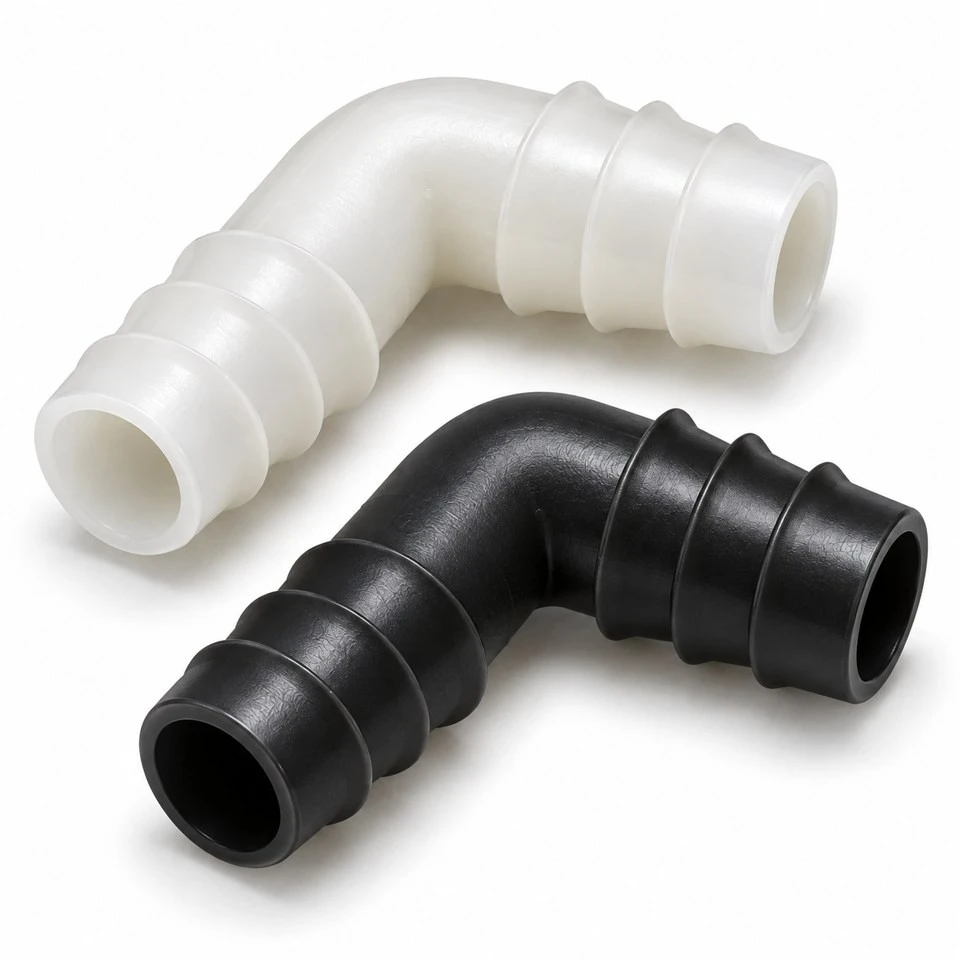
Tianjin SWKS Technology & Development Co.,Ltd is one of the most reliable manufacturers and suppliers of custom injection molded pp hose elbow connectors in China. If you're going to buy bulk cheap custom injection molded pp hose elbow connectors, welcome to get quotation from our factory. Quality products and low price are available.
Custom Injection Molded PP Hose Elbow Connectors
A hose connection often needs more than a nominal size. In a compact machine, the connector has to turn the line in the right direction while leaving enough room for hose insertion, a retention method, and access during assembly. SWKS offers custom injection molded polypropylene hose elbow components for projects where the interface and installation envelope need to follow a customer drawing.
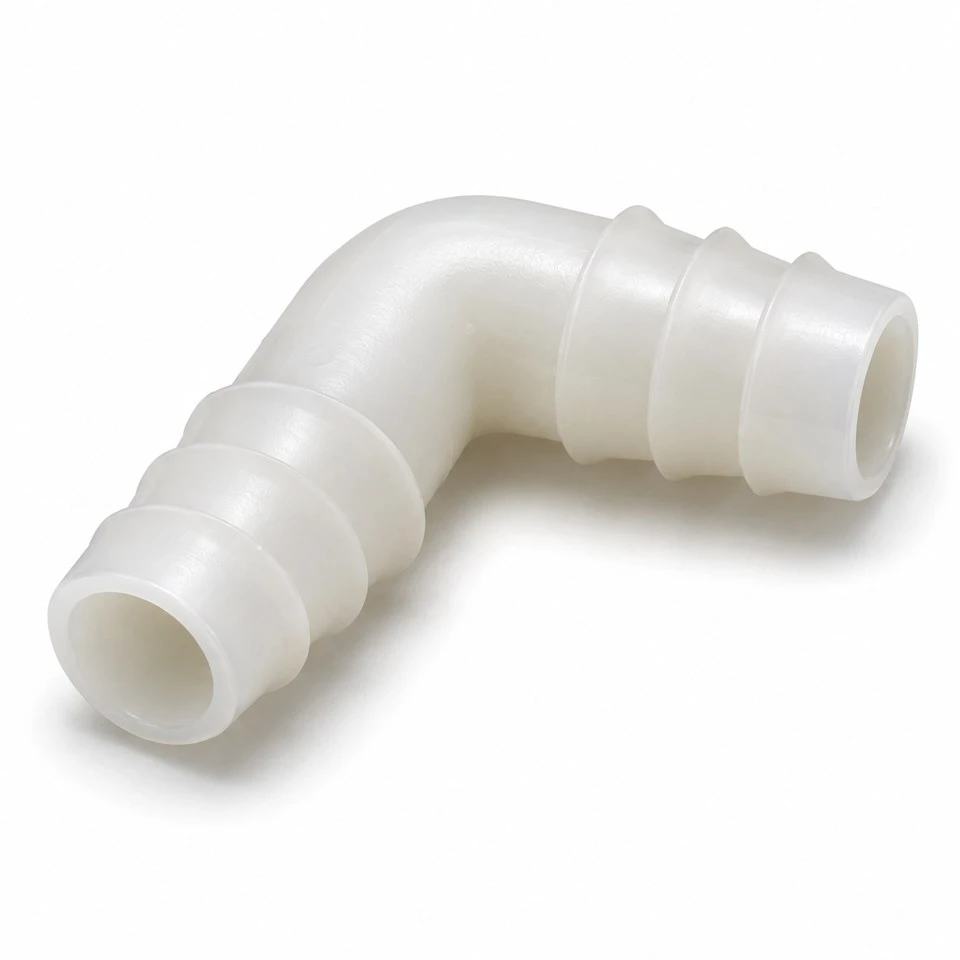
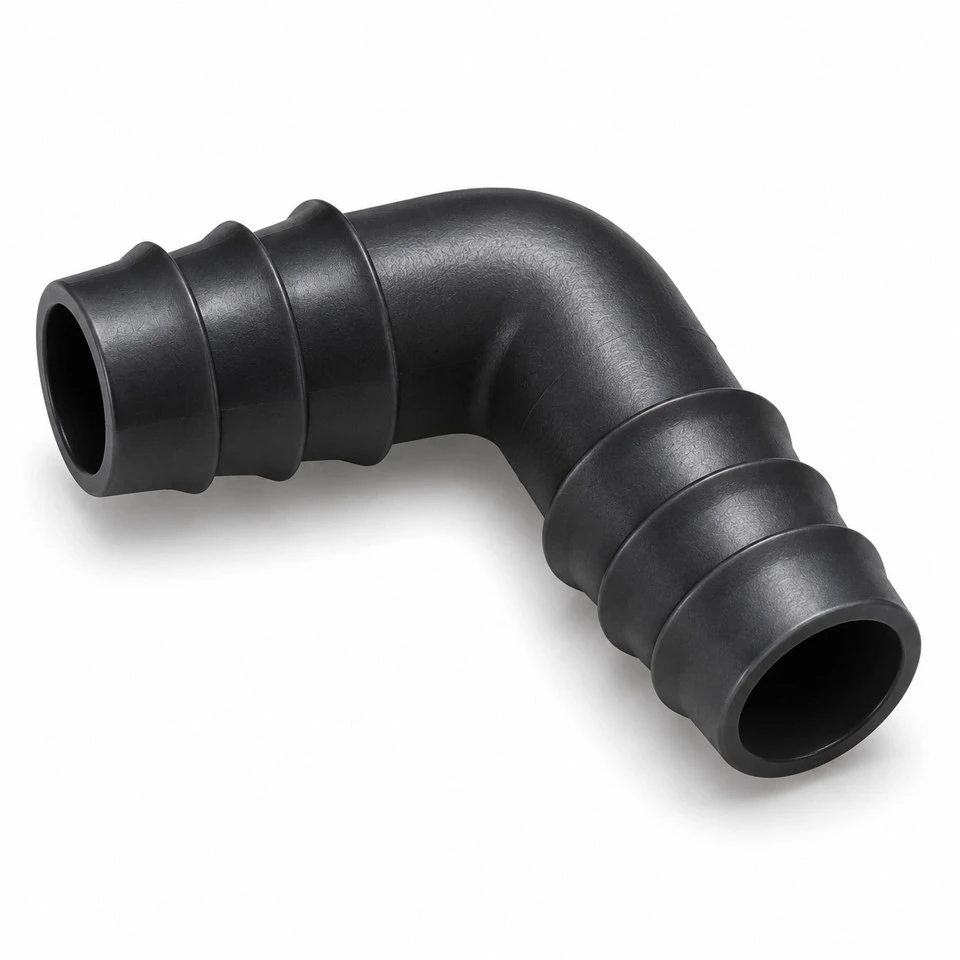
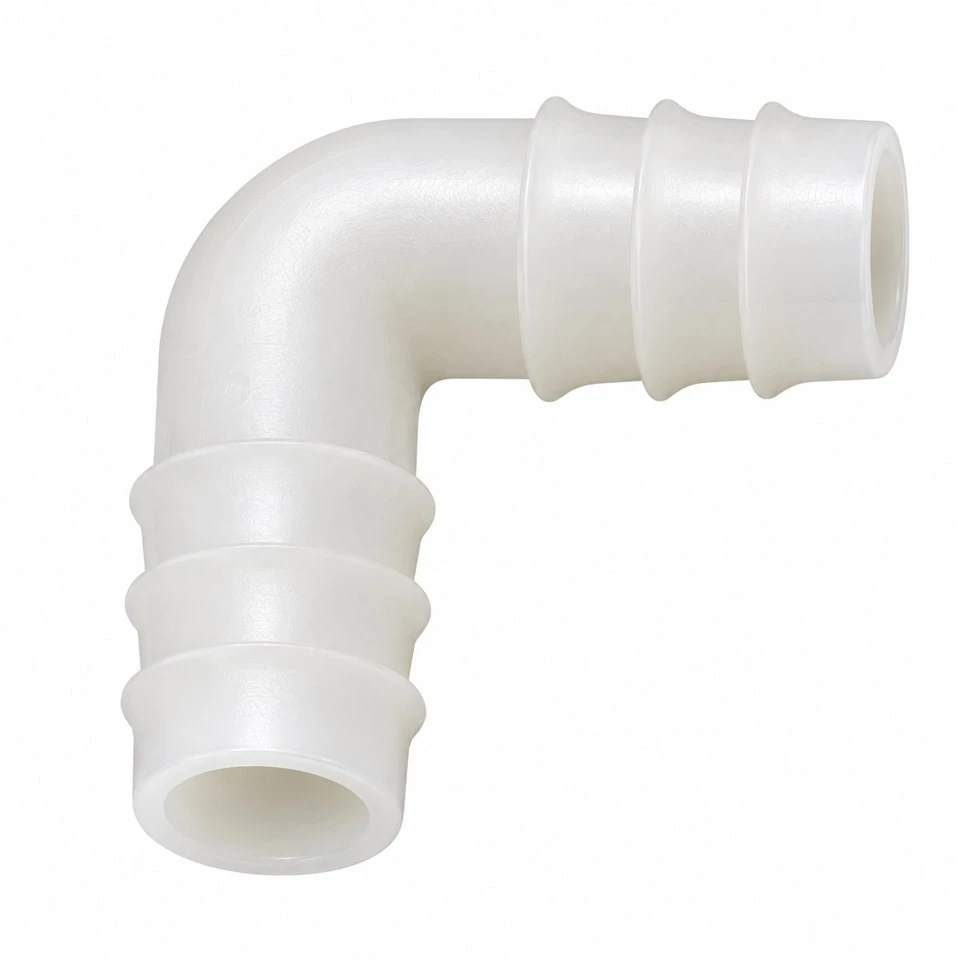
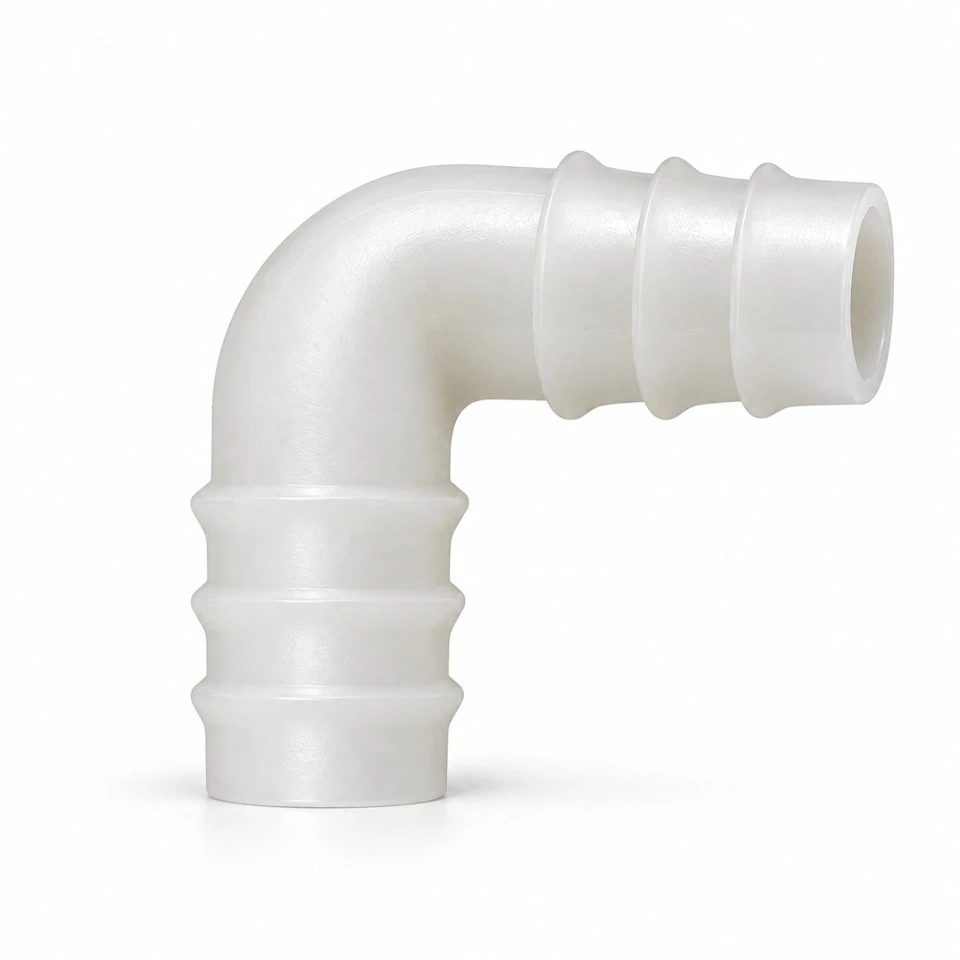
The illustrated part is a hollow elbow with two barbed hose tails. It represents a custom design concept rather than an approved catalog fitting with a published working pressure. Tail diameter, insertion length, barb profile, passage geometry, and overall size can be reviewed for your assembly. Please provide the mating hose information and operating conditions so the component can be specified as part of a complete connection.
Why develop a custom elbow for an equipment hose line?
A change in direction can help route a hose around adjacent structures without relying on a tight bend in the hose itself. However, the connector must fit the space available and cooperate with the actual hose. A catalog elbow may have the right nominal diameter but an unsuitable tail length or outside envelope. Custom molding allows these features to be reviewed together instead of treating them as unrelated dimensions.
Potential projects include service lines and hose routing within industrial equipment, dispensing mechanisms, and machinery assemblies. Suitability depends on the medium and operating conditions. Describe the purpose of the line and whether the connector will be accessible after the machine is assembled. If the design replaces an existing connection, identify the problem being addressed, such as restricted access, an awkward routing direction, or an interface that needs a controlled custom size.
Which hose dimensions are needed before defining the barb?
Provide the hose inside diameter, outside diameter, tolerances, material, and any reinforcement information. The hose material influences how the connection can be assembled and retained. Two hoses with the same nominal bore may behave differently when pushed onto a fitting. A product description that lists only a nominal hose size leaves important details unresolved.
The drawing should define the tail profile against the intended hose rather than simply copying the outside diameter of an old fitting. Include assembly temperature or preparation requirements if they form part of the process. Explain whether installation is manual or uses a fixture, and whether the hose must be removed during maintenance. The fitting, hose, and retention arrangement need to be evaluated together before the connection is approved.
How can the hose tail geometry be customized?
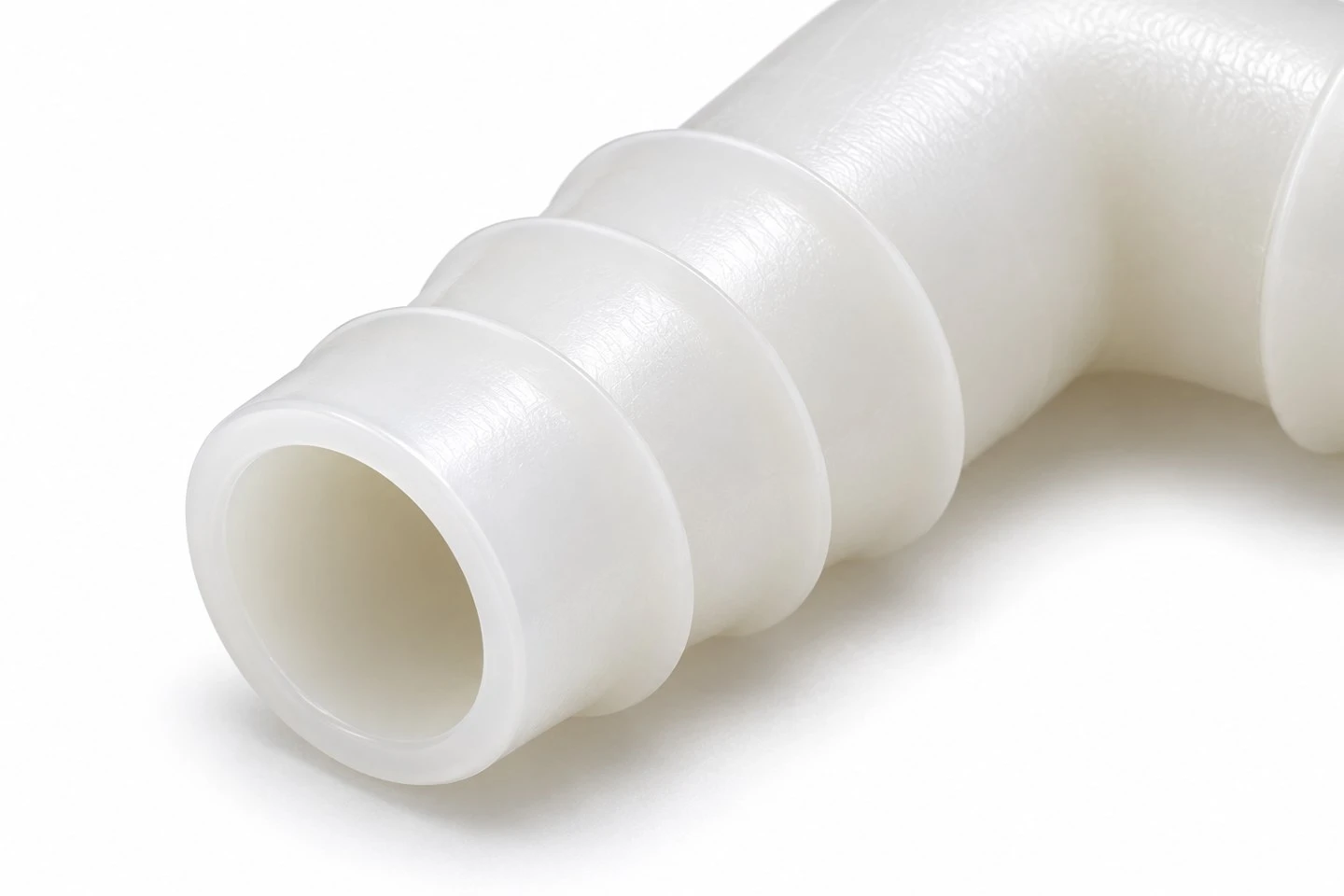
Important features include the lead-in, maximum barb diameter, barb spacing, tail length, and the region where the hose is expected to seat. The number of barbs is a design choice that should follow the connection requirement. More barbs do not automatically establish a better seal or greater retention. The relationship between the barb and the hose wall must be assessed for the selected materials.
State the required insertion depth and any stop feature that controls assembly. Where a clamp or other retaining device is used, show its intended position and clearance. Identify the surfaces that need to remain free of interfering gate vestiges or sharp flash. A reference image can communicate the general style, but a controlled profile drawing is required to define the dimensions that determine assembly and contact.
Does the elbow require equal or different interfaces?
A custom elbow can be reviewed with equal hose tails or different interfaces at its two ends. If the ends differ, label them clearly on the drawing and define each separately. Include the required orientation when a feature is not rotationally symmetric. This avoids confusing an elbow that reduces between hose sizes with one that simply changes direction.
For the bend itself, specify the included angle and the dimensions that locate each connection centerline. Show the outside envelope and any surrounding parts that limit it. A change in tail length can affect both hose routing and tool access. If the assembly is constrained in three dimensions, provide a model of the installed condition so interference can be reviewed before the final component drawing is released.
What should be specified about the internal passage?
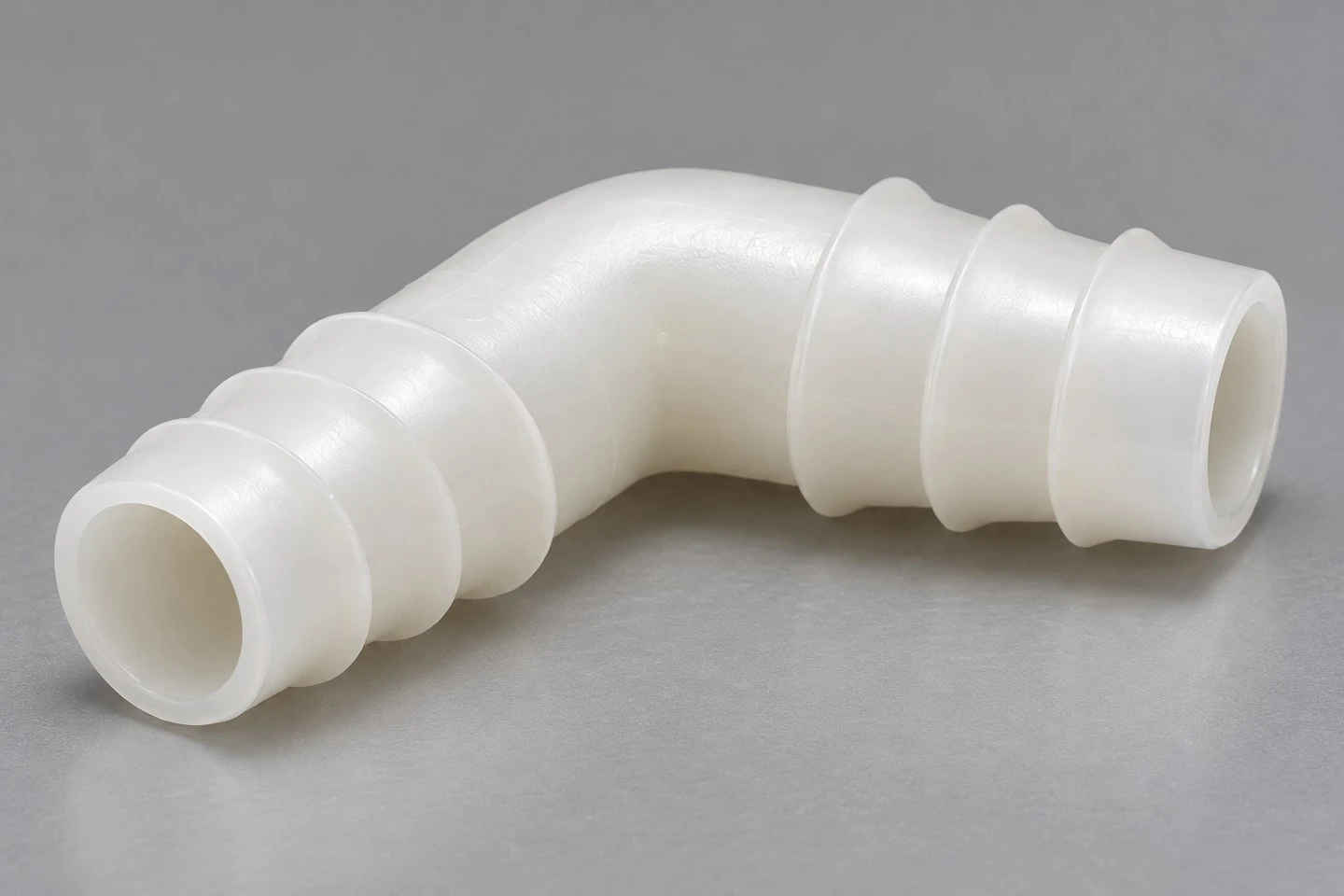
Define the bore size at each interface and identify the minimum passage requirement through the bend. The external size does not reveal every internal feature. Section views can clarify transitions, wall sections, and areas where the passage changes direction. Where the application is sensitive to internal restrictions, include the relevant acceptance requirements rather than asking for unrestricted flow without a defined test condition.
The internal geometry also affects tooling. Intersecting cores or another suitable tool arrangement may be needed to form the passage. Manufacturing review should address the resulting geometry and inspection access. Do not assume that the molded elbow will have an identical internal path to a bent tube. If flow testing is needed, agree on the method, medium, and acceptance criteria before sample approval.
How is the polypropylene grade selected?
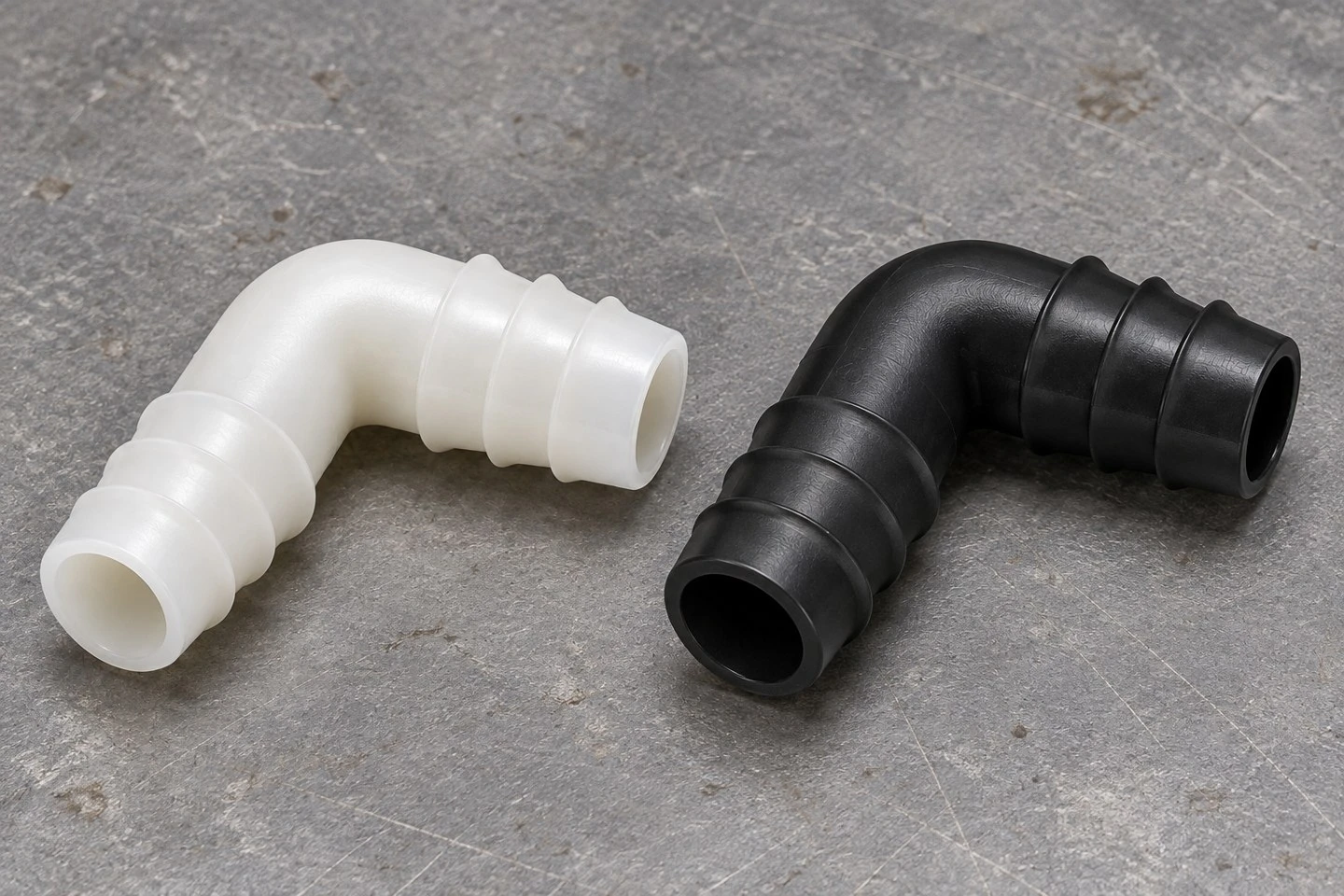
Injection moulded polypropylene components can be produced in different resin grades, so a production order needs a specific material requirement. Provide an approved grade where one exists. Otherwise, state the service conditions, appearance needs, and required documentation so the material can be reviewed for the project. Natural and colored versions should be treated as controlled material choices rather than interchangeable appearances.
Explain which liquid or gas contacts the fitting, including concentration and exposure duration where relevant. Include normal operation, cleaning, and any occasional conditions that may be more demanding. A generic PP description does not establish compatibility with every medium. If another resin such as nylon or POM is being considered, compare it against the same application requirements and review whether the geometry needs changes for the alternative material.
Which service conditions must be confirmed for a hose connection?
Provide the expected operating pressure or vacuum, temperature, cycling, and any external loads on the connector. Explain whether the line experiences pulsation, movement, or repeated assembly. The equipment designer should define the conditions that the complete hose connection must meet. A fitting photograph cannot establish a working pressure or prove that a connection will remain secure under those conditions.
Testing should include the actual hose and retention method. A dimensional inspection of the plastic fitting alone cannot confirm the performance of the assembled connection. If the application requires leak, retention, burst, or vacuum testing, identify the method and acceptance criteria. No pressure rating, leak-free guarantee, food contact approval, medical suitability, or certification is implied by the illustrative custom part on this page.
What molding features deserve attention during design review?
The bend and barbed tails should be reviewed for wall thickness, transitions, draft, parting lines, and the proposed gate and ejection arrangement. Functional hose contact surfaces need particular attention because local defects may affect assembly or the connection. Mark surfaces where a gate mark or parting witness would be unacceptable and define how critical features will be inspected.
Design changes proposed for molding should be recorded in the approved model or drawing. A small change in a barb profile may affect the hose interface, while a change to the outer bend may affect nearby clearance. Separate cosmetic preferences from functional limits so the review focuses on the requirements that matter. Tooling scope and feasibility should be confirmed after the final geometry and expected production quantity are understood.
What should happen before approving production samples?
Check the tail diameters, barb profile, bore, angle, and overall envelope against the released drawing. Verify the connection with representative hose from the intended source. Record how far the hose is inserted and which retention arrangement is used. Where installation force matters, evaluate it with a consistent method rather than comparing samples assembled under different conditions.
The functional trial should reflect the defined operating environment and any required connection tests. Inspect for interference, local deformation, damage during assembly, and the condition of both fitting and hose after the trial. If a change is needed, update the drawing revision and repeat the relevant checks. Keep the approved resin reference and sample record with the production specification so repeat orders can be assessed against the same baseline.
What information helps us prepare a useful custom quotation?
Send the component model and drawing together with the hose specification, operating requirements, and quantities. Indicate whether the order covers the molded elbow only or includes another agreed item. If a physical sample is the only reference, provide photographs and key dimensions first so missing information can be identified before quotation. Avoid assuming that a worn or modified sample defines all production tolerances.
State the sample quantity, initial production quantity, and likely repeat demand. These details help determine the appropriate tooling and production proposal. A custom molding quotation should distinguish tooling from component pricing and identify any inspection or validation work included in the scope. Minimum order quantity and delivery timing are confirmed after the design and material requirements have been reviewed.
| Specification area | Information to send |
|---|---|
| Hose interfaces | Hose material, ID and OD, tolerances, tail profile, insertion depth, retention method |
| Elbow geometry | Angle, centerlines, bore, outside envelope, critical dimensions, drawing revision |
| Operating conditions | Medium, concentration, pressure or vacuum, temperature, cycles and movement |
| Order scope | PP grade, color, sample needs, initial and repeat quantities, required tests |
Welcome to send your drawings, preferred material, hose specification, and quantity requirements for a custom plastic elbow connector inquiry. Contact: amanda@tjswks.com
Hot Tags: custom injection molded pp hose elbow connectors, China, suppliers, manufacturers, factory, bulk, cheap, low price, quotation, pp flexible parts, pp plastic cutting parts, pp plastic drilling parts, pp plastic machining parts, pp plastic turning parts, pp rigid parts


