


Tianjin SWKS Technology & Development Co.,Ltd is one of the most reliable manufacturers and suppliers of custom polyurethane buffer blocks for machinery in China. If you're going to buy bulk cheap custom polyurethane buffer blocks for machinery, welcome to get quotation from our factory. Quality products and low price are available.
Custom Polyurethane Buffer Blocks for Machinery
A moving machine component often needs a defined contact point at the end of its travel. A metal-to-metal stop may transmit an abrupt impact, while a generic rubber pad may not fit the available space or mounting arrangement. SWKS offers custom polyurethane buffer blocks developed around the contact geometry and working conditions of industrial equipment. The shape, thickness, mounting details and material hardness are reviewed together so that the component can be evaluated as part of the actual mechanism.
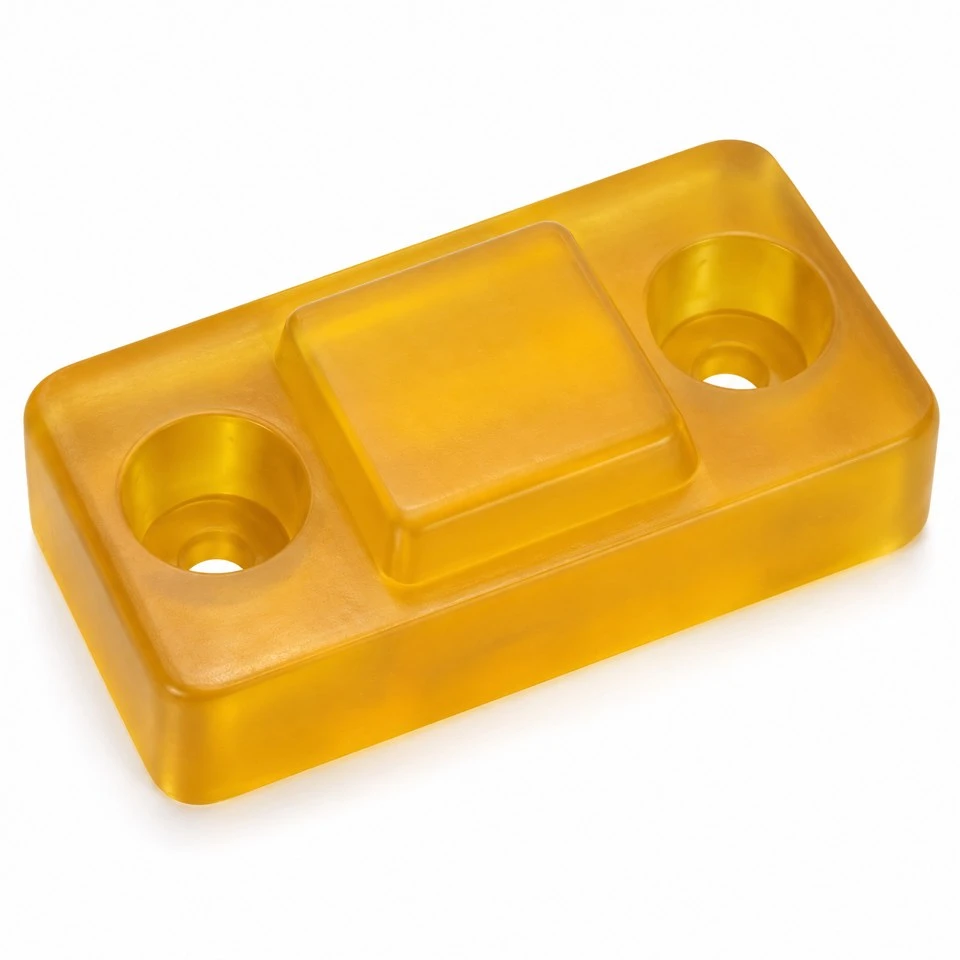
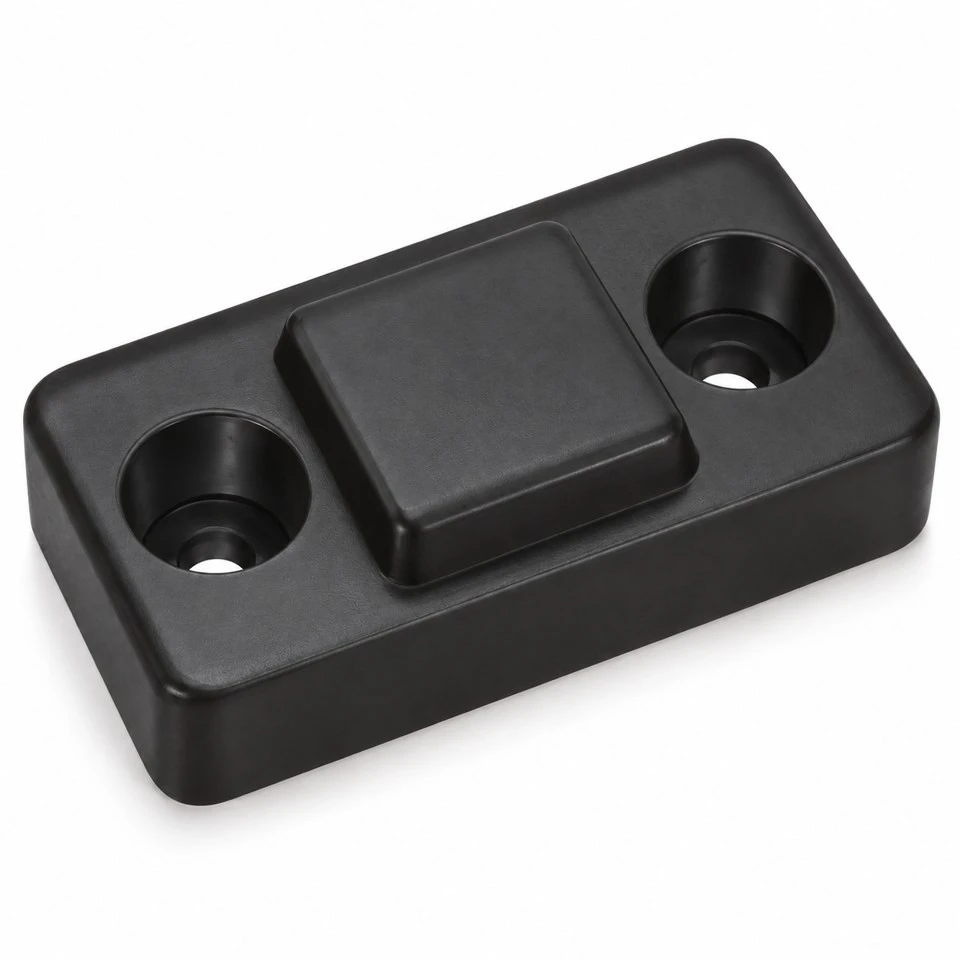
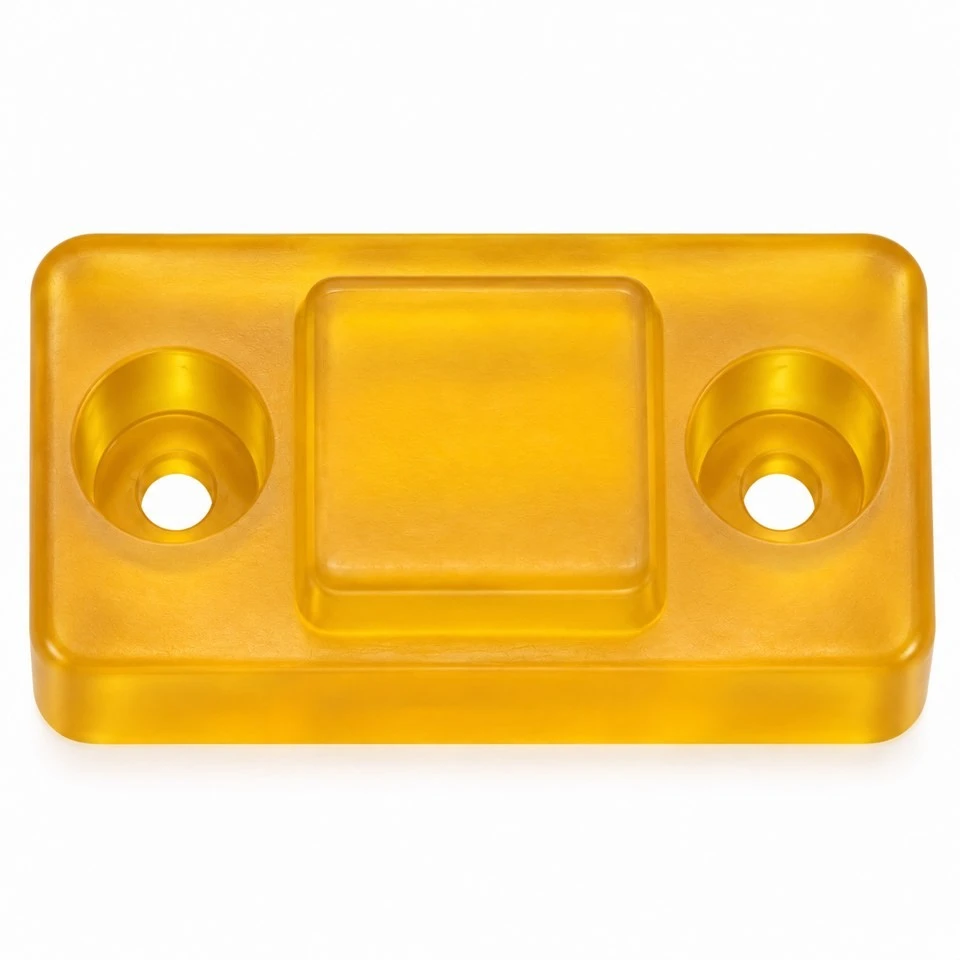
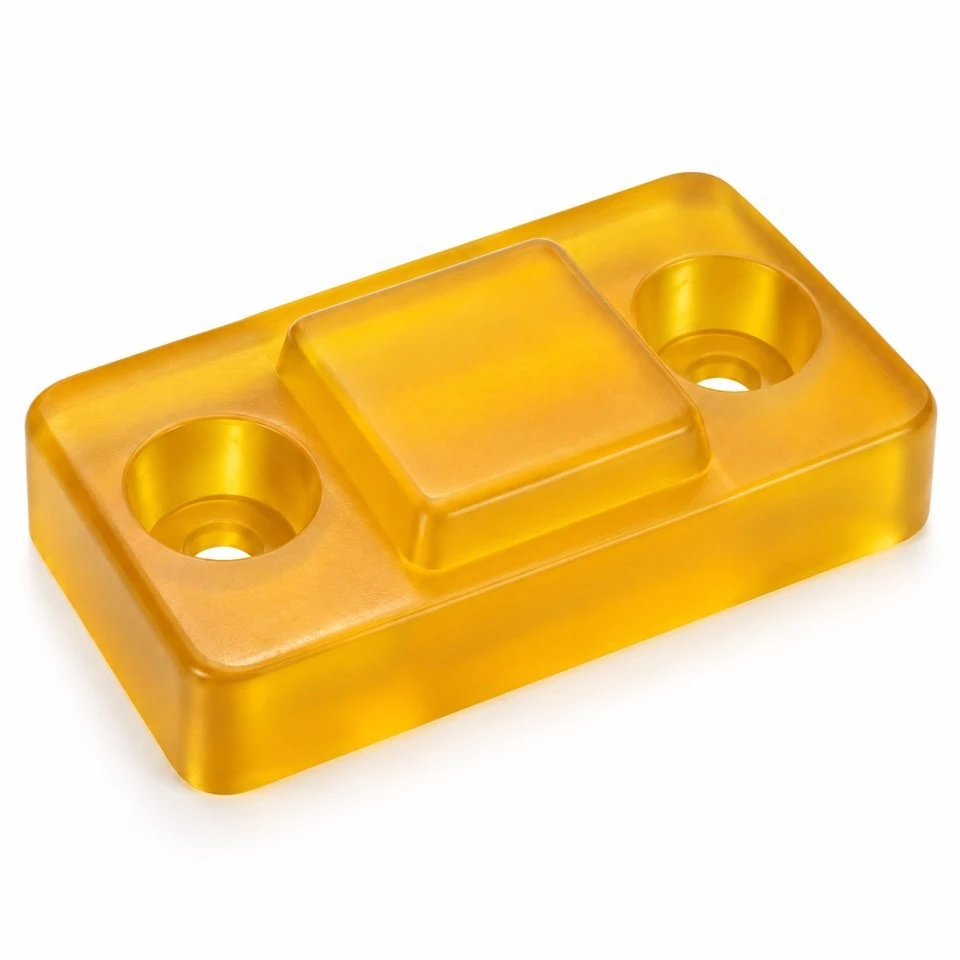
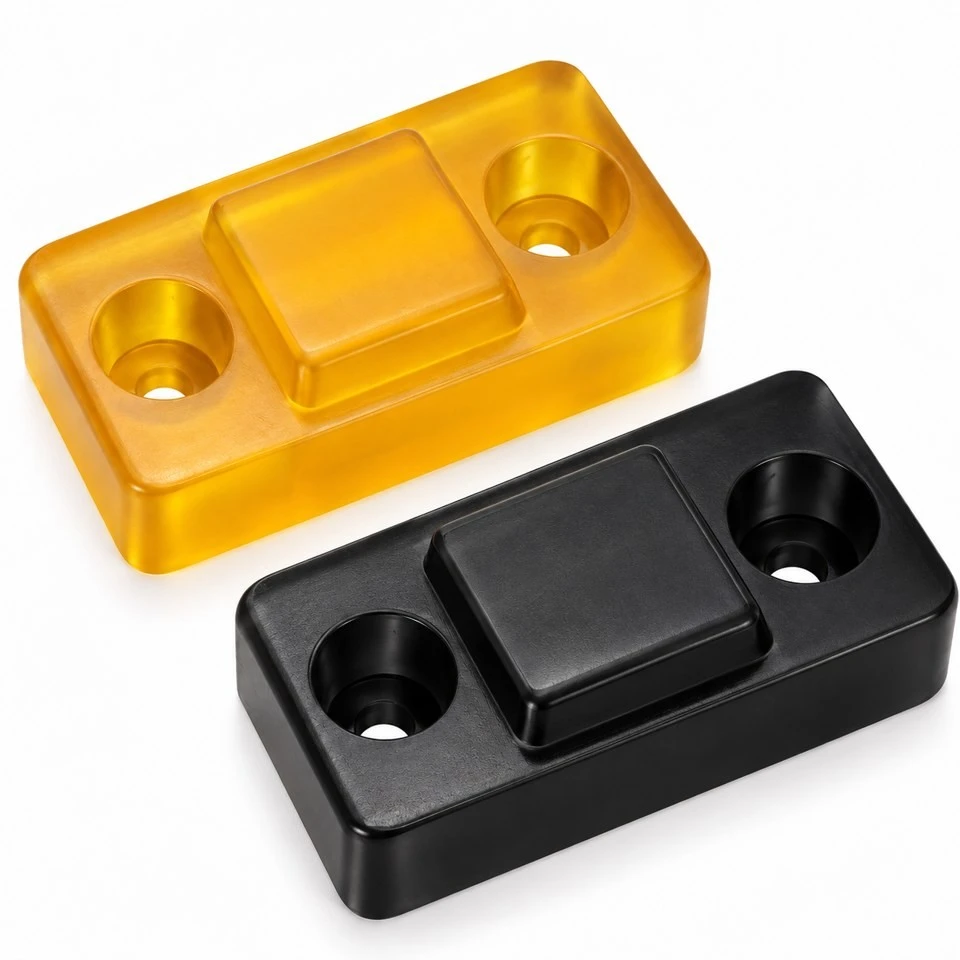
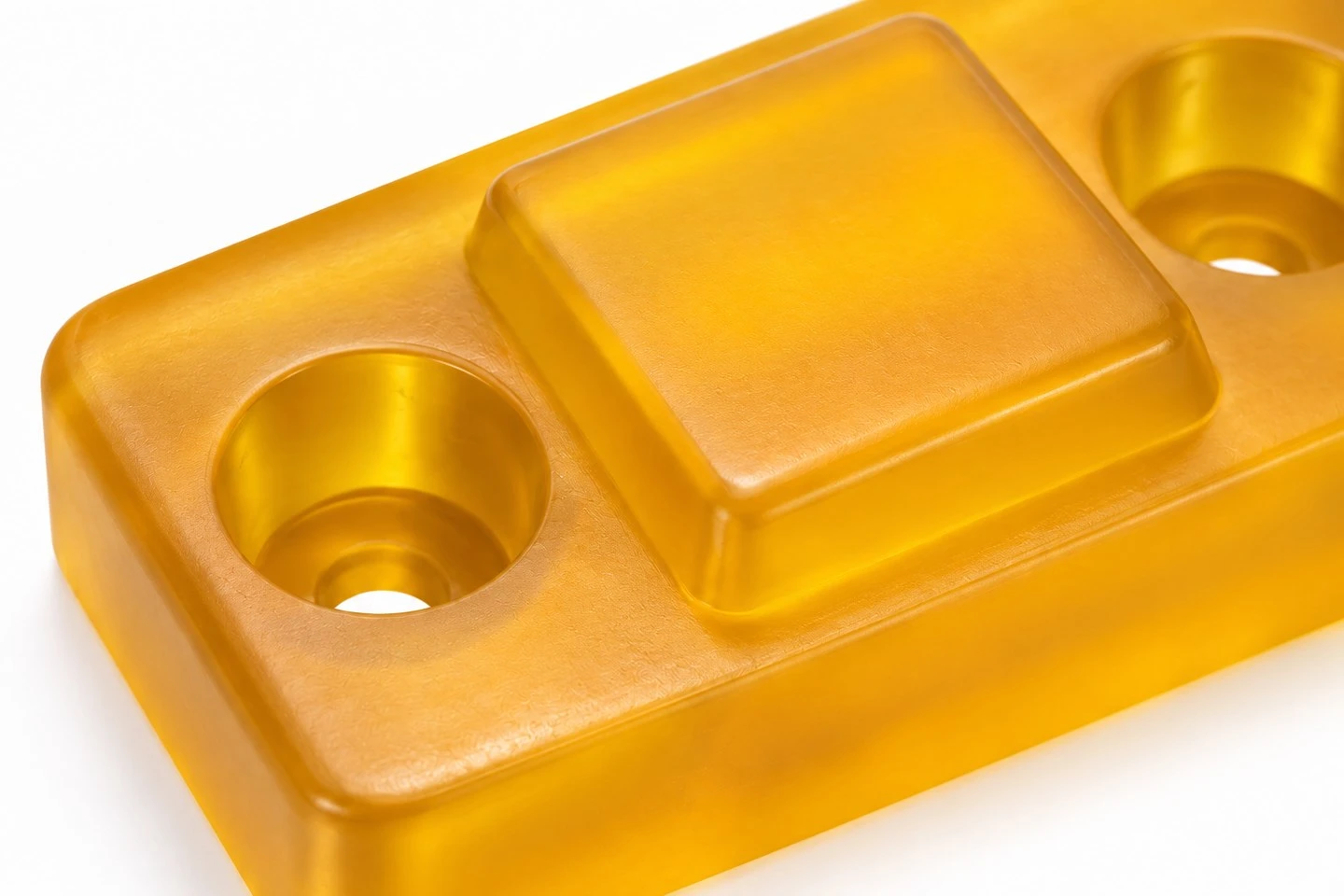
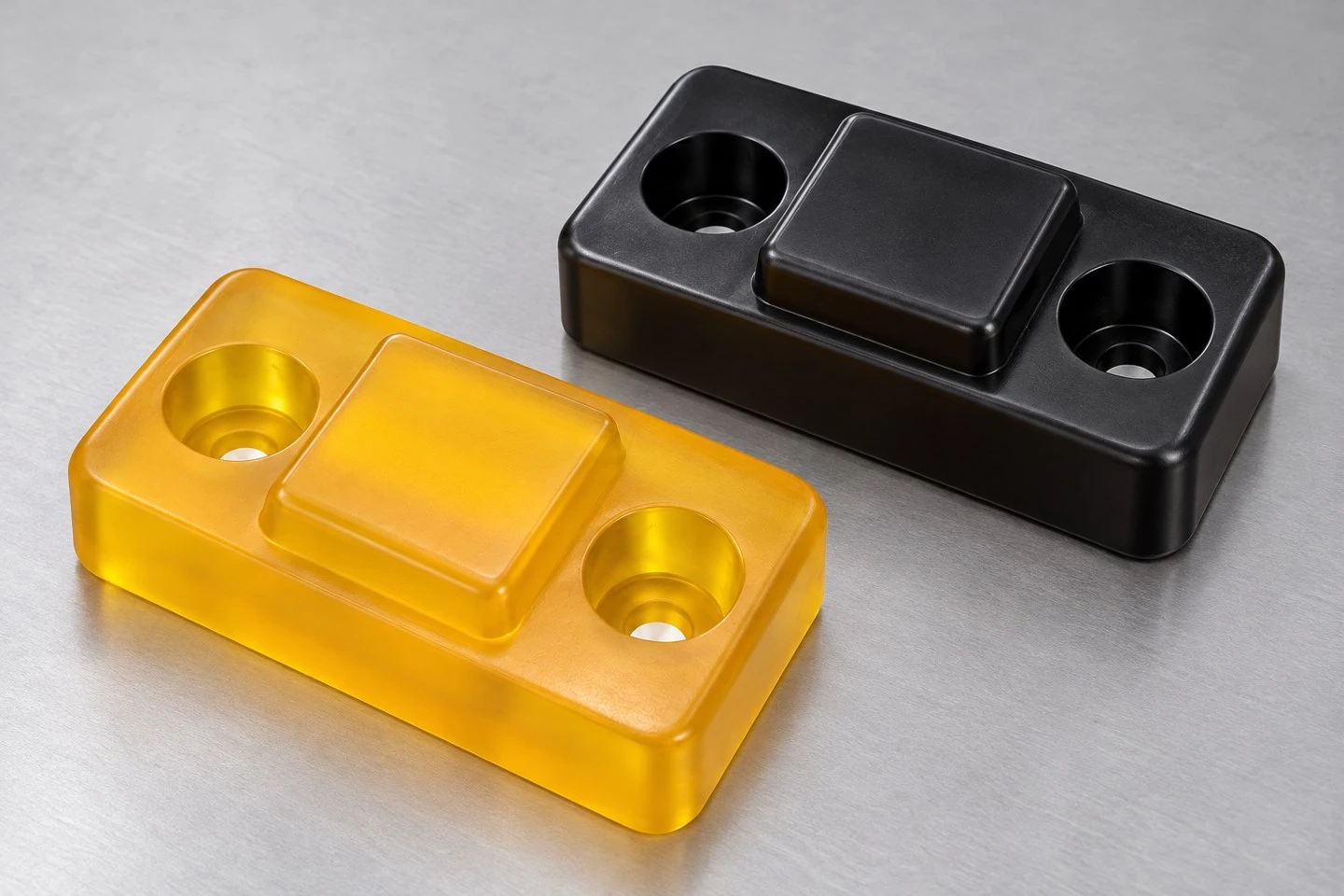
The illustrated part is a solid polyurethane block with recessed mounting holes and a raised contact pad. It shows one possible drawing-based structure for equipment stops and contact protection. Other profiles can be discussed from your design. Color, transparency and appearance do not establish the block's hardness, force response or permissible impact energy. Those requirements are defined in the project specification and checked using the selected material and representative samples.
Where can a custom polyurethane buffer block be used?
Possible applications include machine slide stops, positioning fixtures, transfer equipment, material-handling mechanisms and contact pads between moving assemblies. The buffer may provide a replaceable contact surface at a travel limit or help separate surfaces that would otherwise strike each other directly. A custom outline allows the part to fit around brackets, fasteners and other features that make a standard pad inconvenient.
The application should identify whether the block receives occasional contact, repeated compression, sustained loading or a combination of these conditions. A pad used to protect a finished surface has different requirements from a stop that absorbs repeated motion. Please describe the equipment and the role of the component instead of relying only on the word "buffer." This gives the design review a clear functional target.
What can be customized in the block geometry?
Overall length, width, thickness and the shape of the contact face can be developed from your drawing. Mounting holes can be recessed where the fastener heads need to remain below the working surface. Steps, reliefs, locating shoulders and shaped contact areas can also be evaluated. The illustrated two-hole design is a concept rather than a fixed standard model; the final hole sizes and positions are agreed for the order.
Geometry should reflect how the block deforms as well as how it fits before use. The contact footprint, free side area and available compression space can influence its response. A deep recess or a narrow web around a fastener also changes the local structure. We review the drawing with the mating component and mounting arrangement so that useful features are distinguished from details that could complicate production or concentrate loading unnecessarily.
How should hardness be specified?
Provide the required hardness value, scale, tolerance and test method when these are already defined. Shore A and Shore D values are different measurements, so a number without the scale is incomplete. If you have an approved sample, tell us whether its hardness has been measured and under what conditions. Hand feel alone is not a reliable specification for a repeat production order.
Hardness is useful, but it does not completely describe cushioning behavior. Two blocks with the same nominal hardness can respond differently because of their formulation, dimensions, contact conditions and loading rate. If you need a particular compression response, specify the force and displacement relationship or the relevant acceptance test. The component should be selected to meet its functional requirement, rather than assuming that a harder or softer grade is always better.
What load and movement information is needed?
For a travel stop, identify the moving assembly, its approach speed, the direction of contact and the maximum available stopping distance. State how frequently contact occurs and whether the mechanism can strike the block at an angle. An impact load cannot be defined solely by the static weight of the moving component. If an equipment calculation or test requirement is available, include it with the inquiry.
For a continuously compressed pad, provide the installed compression, contact area, sustained load and duration. The mounting should show whether the block is free to expand laterally or constrained by surrounding hardware. These details help define a representative sample evaluation. We do not assign a universal load capacity or impact-energy rating to all custom polyurethane blocks based on their appearance or overall size.
How is the polyurethane material selected?
Polyurethane elastomers are available in different formulations, including cast systems based on different raw-material combinations. The selected system affects properties relevant to wear, resilience, permanent deformation and environmental exposure. A generic PU designation is therefore a starting point rather than a complete material specification. The material discussion should be linked to the working conditions and acceptance requirements of your component.
Please identify water exposure, cleaning fluids, oils, outdoor conditions and the expected temperature range. Moisture and chemical exposure need to be considered for the particular formulation; properties should not be assumed identical across all polyurethane materials. If a specific material grade or approved source is required, state it before quotation. If the formulation is open, we can review the application information and discuss suitable candidates for evaluation.
Are cast polyurethane and injection molded TPU interchangeable?
Cast polyurethane elastomers and thermoplastic polyurethane are different manufacturing routes and should not be treated as automatic substitutes. The most practical route depends on the geometry, quantity, selected material and required properties. A custom buffer block may be reviewed for casting or another suitable molding approach, while additional finishing may be considered for defined features. The proposed process is confirmed during quotation.
If you are replacing an existing component, provide any available material and manufacturing information. A visually similar replacement does not necessarily reproduce the original response. A change in process or material needs to be evaluated against the same functional criteria. This is particularly useful when a project aims to resolve cracking, excessive permanent deformation or an unsuitable contact response rather than simply copying an external shape.
| Custom requirement | Information to provide |
|---|---|
| Dimensions | Overall envelope, contact face, mounting-hole centers and recess depths |
| Material and hardness | Required PU grade or application conditions, hardness scale and acceptance tolerance |
| Loading | Impact or sustained compression, force, movement, frequency and available deformation space |
| Environment | Temperature, water, oils, cleaners and outdoor exposure |
| Attachment | Fasteners, mating plate, support area and any metal components |
| Production | Drawing revision, first order quantity, repeat demand and inspection requirements |
How should mounting holes and support surfaces be designed?
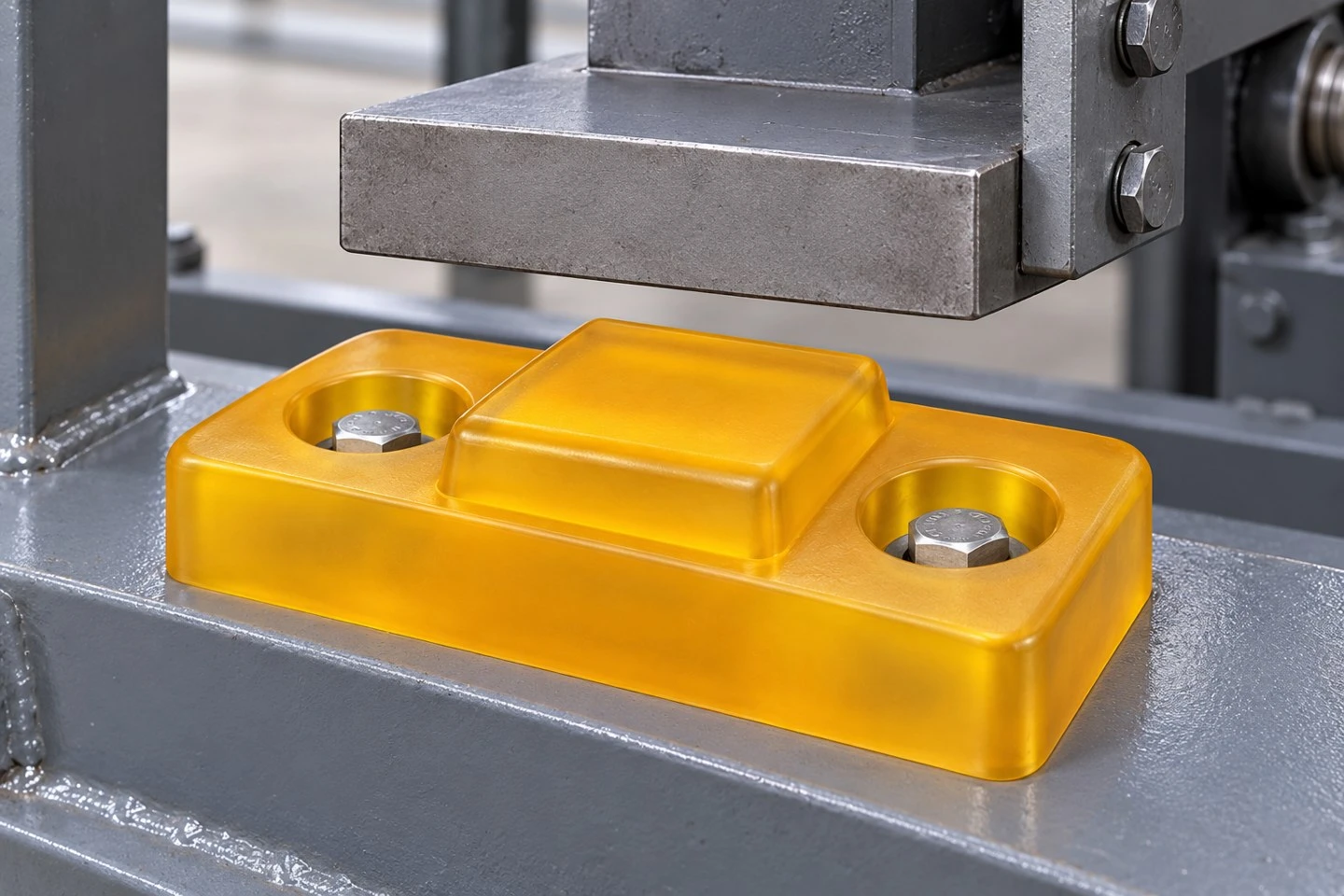
The block should be supported in the way intended by the equipment design. Define the mating surface and the fasteners, including any washers or sleeves. A recessed mounting hole can protect a screw head from direct contact, but it also reduces the remaining material in that area. The available bearing area and the surrounding section should be reviewed with the load direction and the expected deformation.
Specify how the part is retained and whether the fasteners clamp the elastomer directly. If the application requires an insert, a bonded plate or another metal element, identify it separately. Such hardware is not included merely because a concept image shows mounting holes. The attachment method and tightening requirements should be confirmed during assembly evaluation, including any repeated maintenance or replacement operations.
Can color and surface finish be customized?
Natural amber, black and other colors can be discussed subject to the selected material system and production requirements. Please provide a color reference and explain whether color is functional identification or mainly appearance. Transparency can vary with formulation and section thickness. A color or visual match should not be used to identify hardness or chemical composition.
For contact surfaces, define what matters to the application: surface condition, permissible marks, edge finish or restrictions on contact with the mating part. Mold parting lines and finishing requirements should be agreed where they influence function. If the block touches a painted, polished or delicate surface, evaluate representative samples against that surface under the intended load and movement. Appearance approval alone does not confirm compatibility in service.
What should be checked on first samples?
Start with the drawing dimensions and the agreed material checks, then install the part on the actual or representative mounting fixture. Confirm that the holes align, fasteners remain clear of the working face and the mating component contacts the intended area. Observe whether the block has enough room to deform without rubbing an adjacent feature or shifting out of its intended position.
Functional evaluation should reproduce the relevant load, movement, frequency and environment. Define the acceptable response and any limits on permanent deformation, damage or change after cycling. These criteria should be agreed for the project rather than taken from an unrelated product. Once approved, retain the drawing revision, material specification, hardness requirements and sample conditions as the reference for subsequent production.
How are tooling and production quantities reviewed?
Tooling requirements depend on the part shape, manufacturing route, number of versions and expected demand. A simple block with straight holes differs from a component with complex recesses or bonded hardware. If several sizes share a similar shape, send the complete size schedule so that the tooling approach can be reviewed as a group. Avoid assuming that one mold can produce every thickness or mounting pattern without changes.
Minimum order quantity and delivery time are quoted for the specific polyurethane part. Tell us the initial quantity and likely repeat demand, along with the planned sample approval schedule. Pricing also depends on material selection, finishing, inspection and packaging. Where a custom mold is required, the quotation should distinguish tooling from the production component so that the project scope is clear.
What is needed for a custom polyurethane buffer block quotation?
Send a STP, STEP or IGS model and a dimensioned drawing when available. Include the required hardness, preferred material, color, quantity and a short description of the equipment function. An assembly image showing the contact direction and mounting arrangement is useful. If you have only a sample, provide photographs and measured dimensions, identifying any worn or damaged areas that should not be copied.
SWKS can review custom polyurethane buffer blocks, contact pads and related molded PU components for industrial machinery. Dimensions and performance requirements are agreed from your application, with no fixed standard size implied by the concept images. Welcome to send your drawings, material and hardness requirements, and required quantities for an inquiry. Contact: amanda@tjswks.com
Hot Tags: custom polyurethane buffer blocks for machinery, China, suppliers, manufacturers, factory, bulk, cheap, low price, quotation, polyurethane fabrication, polyurethane high quality parts, polyurethane molding, pu high quality parts, pu plastic parts, pu products


