


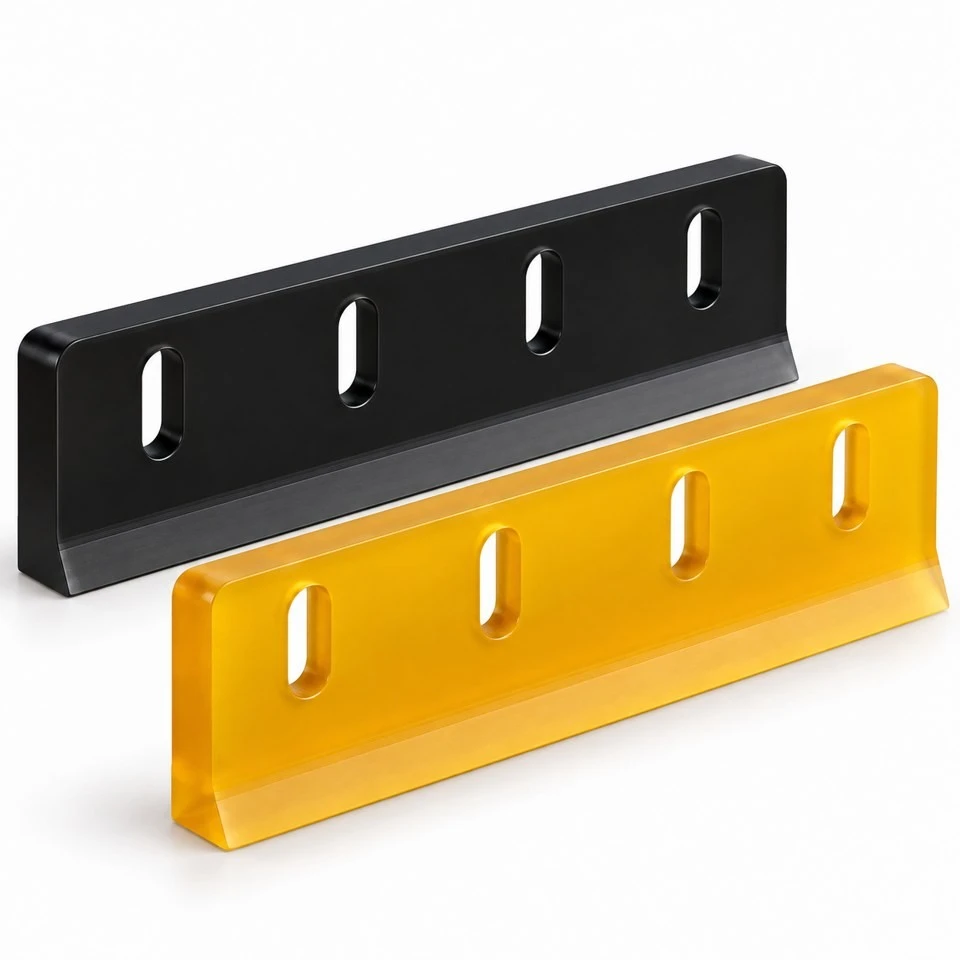
Tianjin SWKS Technology & Development Co.,Ltd is one of the most reliable manufacturers and suppliers of custom polyurethane scraper blades for conveyors in China. If you're going to buy bulk cheap custom polyurethane scraper blades for conveyors, welcome to get quotation from our factory. Quality products and low price are available.
Custom Polyurethane Scraper Blades for Conveyors
A scraper blade is a small component with a direct influence on how cleanly a material handling system operates. Its working edge meets a moving surface, while its mounting area transfers force into a holder or support. When these two areas are designed together, the blade can be adapted to the equipment instead of forcing the equipment to accept an unsuitable strip. SWKS supplies custom polyurethane scraper blade concepts for projects that require a particular outline, mounting pattern, edge profile, or material formulation.
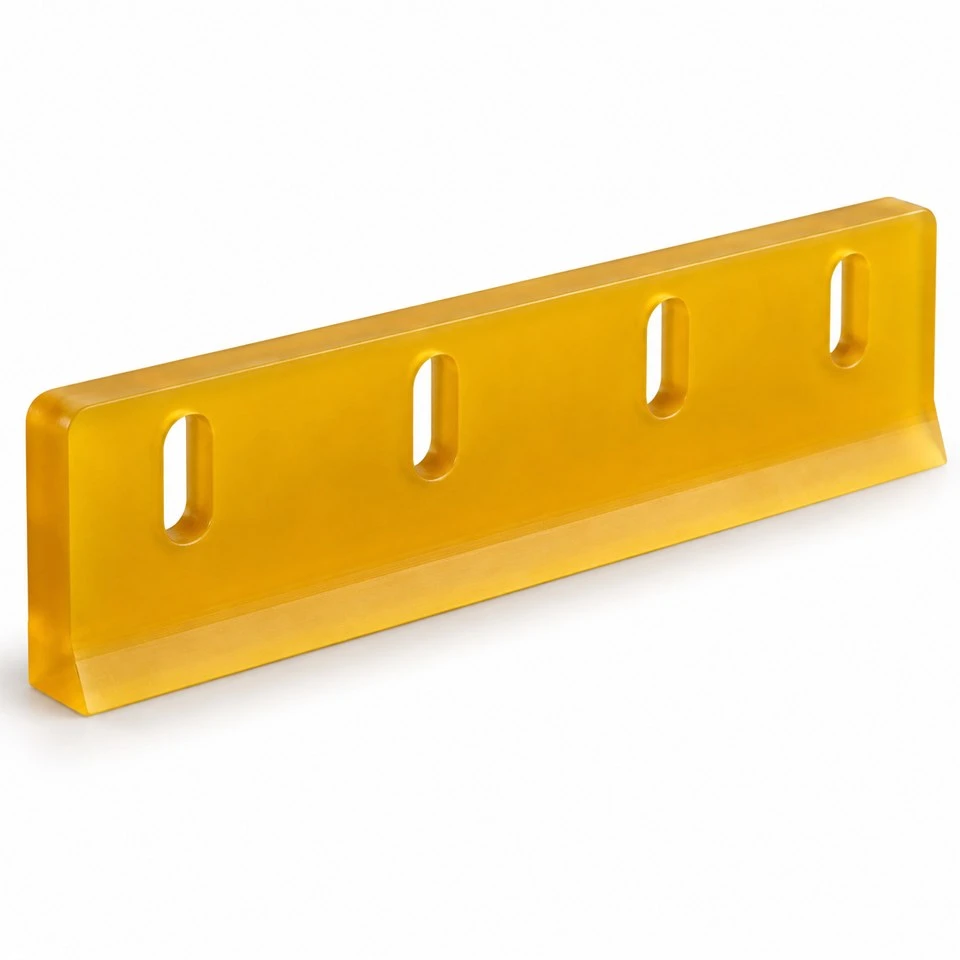
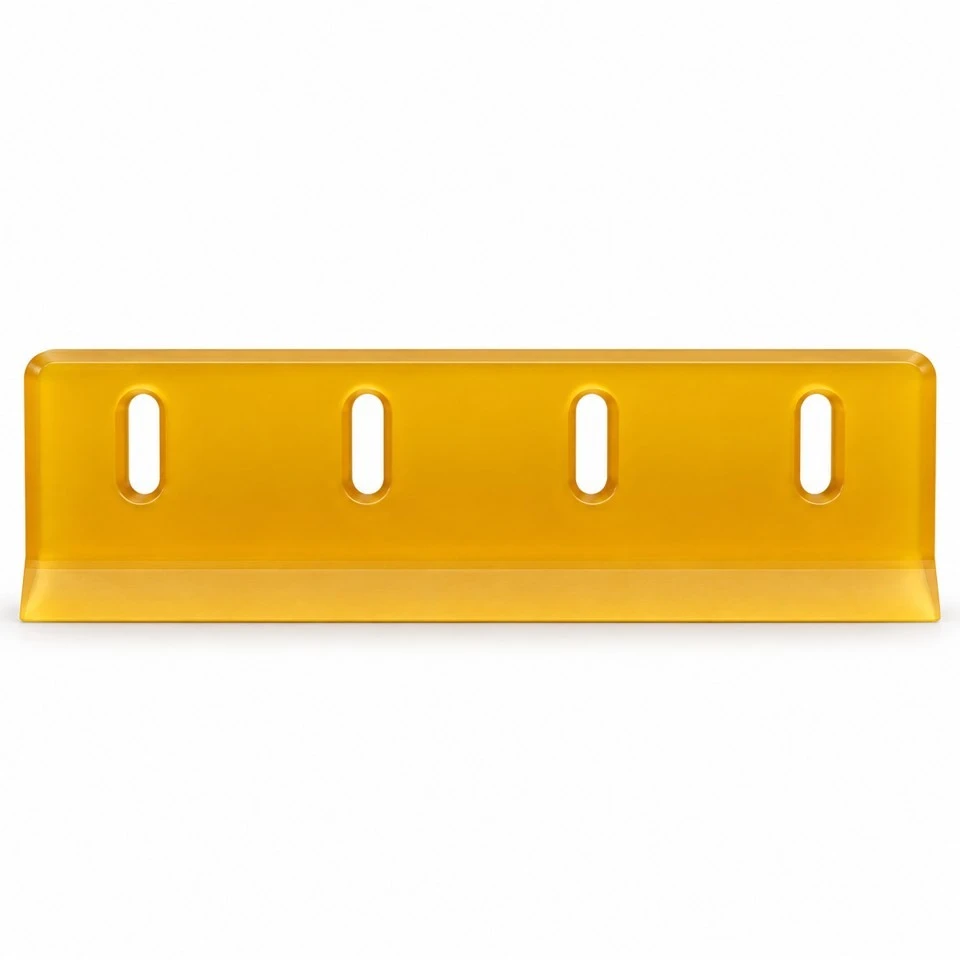
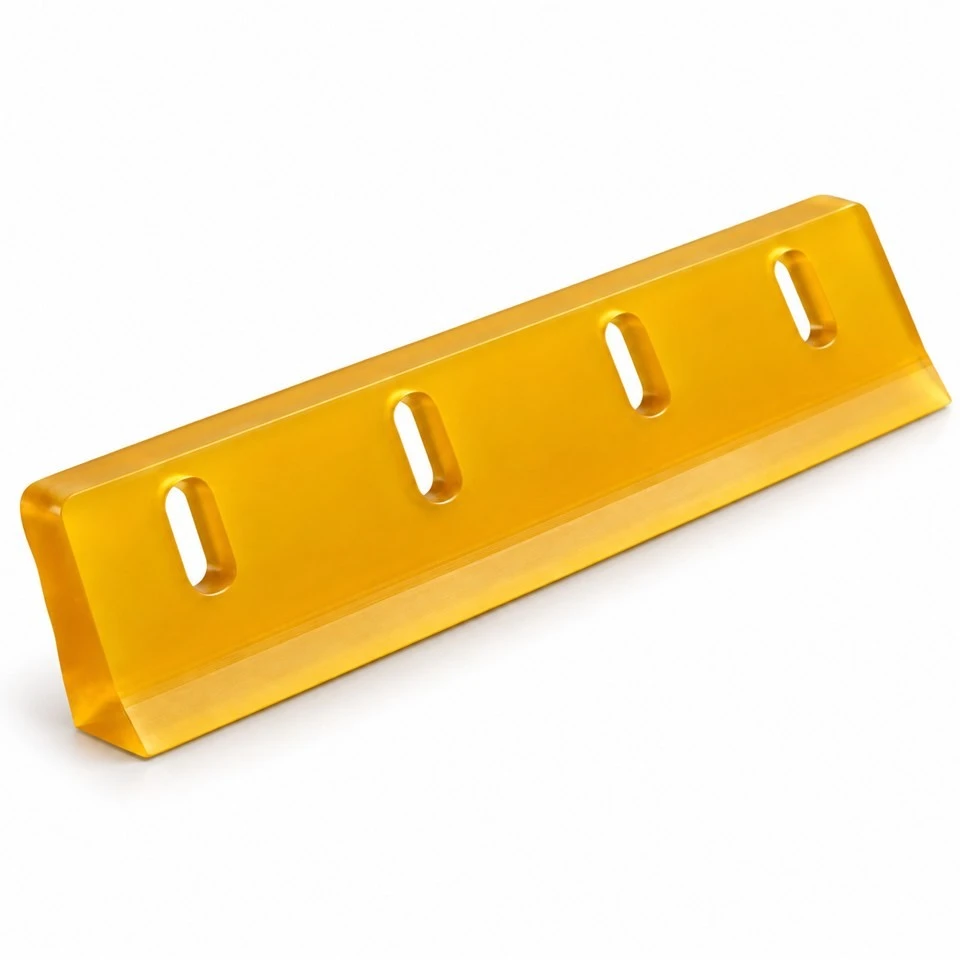
This page describes a made-to-drawing component rather than a universal replacement blade. The illustrated design has a continuous working edge and elongated mounting slots. Its dimensions, slot arrangement, color, and profile are examples of features that can be discussed for a custom project. Suitability depends on the actual belt or contact surface, conveyed material, installation position, and operating conditions. Please provide the application information with your drawing so the quotation can address the complete requirement.
Where can custom PU scraper blades be used?
Potential applications include conveyor cleaning assemblies, material discharge areas, transfer equipment, and machinery where an elastomer edge is used to remove residual material from a moving surface. A custom blade may also serve as a wiping strip within a production fixture. These applications can look similar in a photograph while placing very different demands on the component. A dry powder residue, a wet mixture, and a coarse abrasive material should not be treated as the same service.
Describe where the blade sits in the machine and what it contacts. Indicate whether it works continuously or only during part of a cycle. A photograph of the installation can help explain access limitations and nearby obstructions, but a controlled drawing is still needed to define the part. The blade should be reviewed as one element of the assembly, including its holder and adjustment arrangement. We do not represent an illustrated custom blade as compatible with every conveyor or cleaning system.
Which blade dimensions should be included in the drawing?
Start with the overall length, overall height, and material thickness. Then locate the working edge relative to the mounting area. If the blade has a taper or bevel, show its direction and the dimensions that control the contact profile. A single overall size is not enough to distinguish a square strip from a blade with a shaped working edge. Section views are particularly useful when the cross section changes across the height.
Mark the dimensions that affect assembly or cleaning performance as critical, and provide tolerances where they are required. Separate these from dimensions that only define the general outline. This helps avoid applying an unnecessarily tight tolerance to every surface. If an existing blade is being redesigned, identify which features must remain interchangeable with the holder and which features may change. A revision number on the drawing helps keep samples and production requirements aligned.
How can mounting holes and slots be customized?
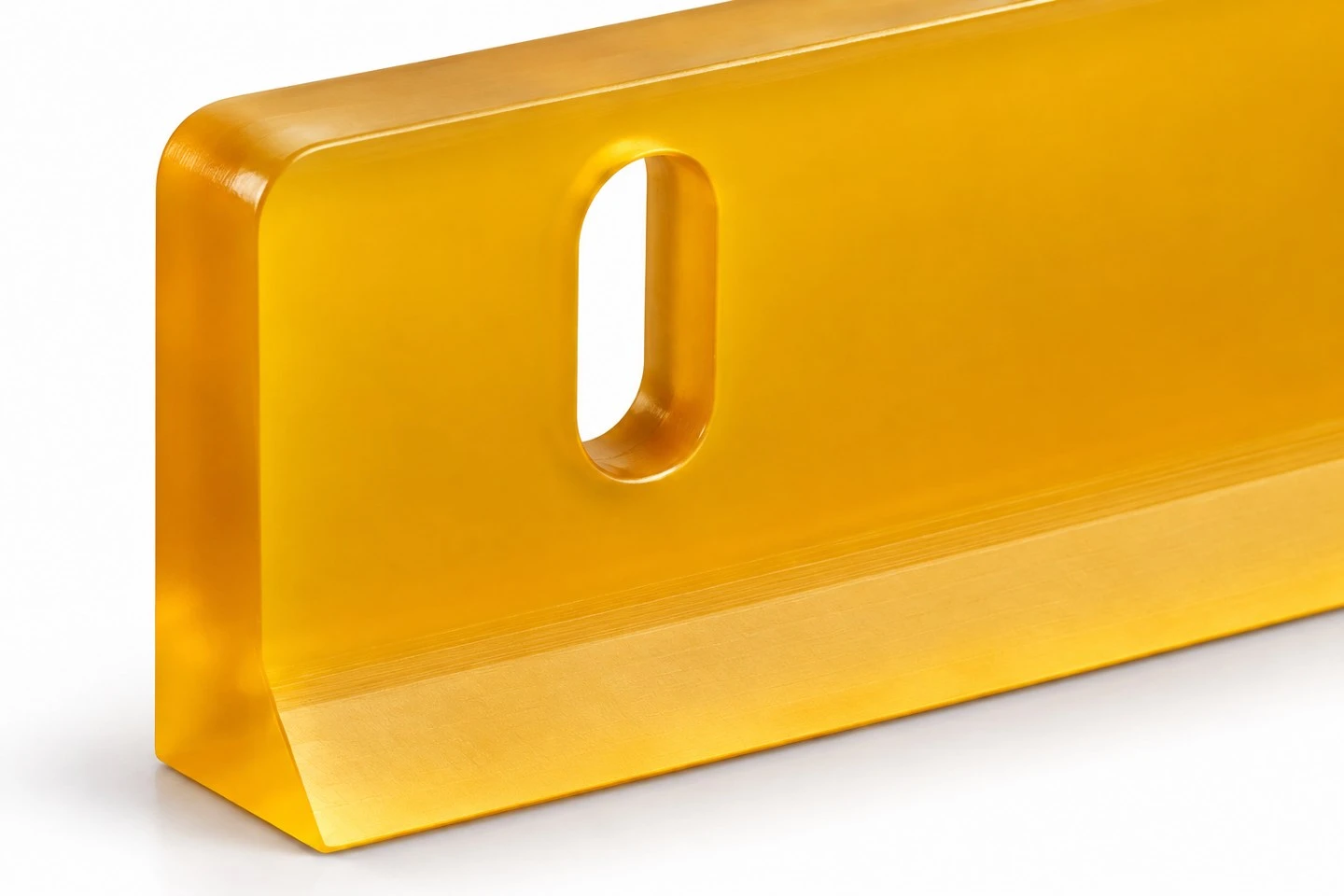
Mounting features can include round holes, elongated slots, cutouts, or a plain clamping zone, depending on the equipment. Slots may allow adjustment, but they also change how the blade is supported and how force is distributed around the fasteners. Define their width, overall length, center spacing, and distance from the edges. If the slot ends have a specific radius, include that detail rather than leaving it to interpretation from a photograph.
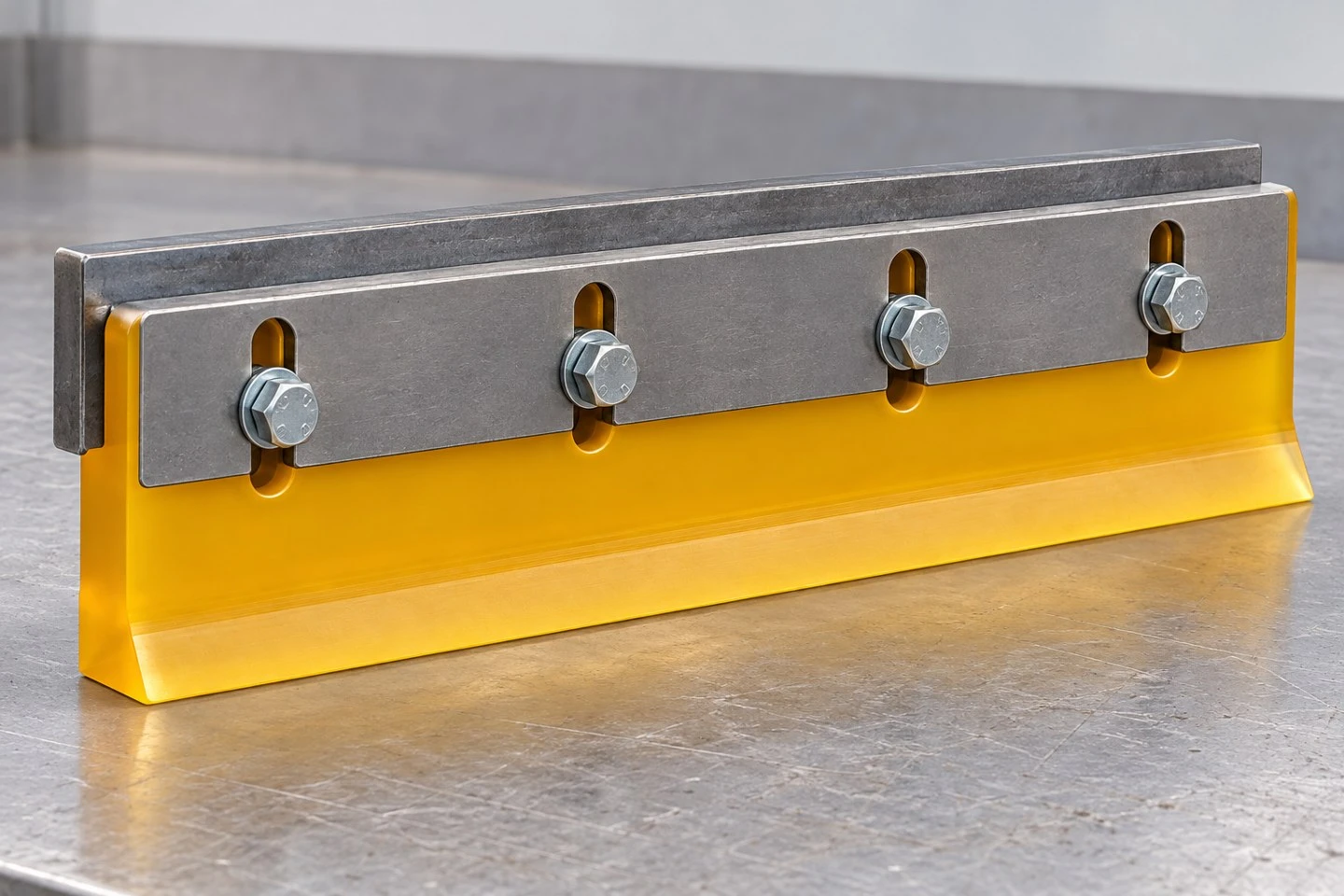
The mating holder should support the mounting region without introducing sharp edges that damage the polyurethane during tightening or service. Share the clamp plate, washer, or support arrangement when these affect the design. The intended fastening method and adjustment travel matter as much as the appearance of the slots. We can review the drawing for manufacturing considerations, while the equipment designer remains responsible for selecting and validating the complete mounting arrangement for its intended duty.
What working edge profiles can be discussed?
A blade can have a straight square edge, a continuous bevel, or another profile defined by the application. The useful profile depends on the contact direction, support position, and material being removed. An edge that looks sharp in a catalog image is not automatically the best choice. The goal is a repeatable contact geometry that the equipment can position and maintain without excessive local deformation or interference.
Show the direction of surface movement and identify which face leads during operation. Explain whether the blade is expected to flex or remain closely supported. If the edge must follow a shaped surface, include the relevant contour and mating geometry. Avoid relying on a freehand sketch alone to define a critical contact profile. For a new design, sample evaluation can compare the proposed edge with the actual surface before a larger production order is released.
How should polyurethane hardness be specified?
State the required hardness together with its measurement scale and acceptable range. A number without a scale does not adequately define an elastomer requirement. If you have an approved material specification, include it in the inquiry. If hardness has not yet been selected, describe the required flexibility, available support, and operating conditions so the material discussion begins with the application rather than a color or a photograph.
Hardness alone does not establish wear life, tear resistance, chemical compatibility, or cleaning performance. Two polyurethane formulations with similar hardness can behave differently in service. The cross section and unsupported height also influence how much the blade bends under contact force. A practical review therefore considers material, geometry, and installation together. Do not assume that making a blade harder or thicker will solve every cleaning or durability issue.
What operating conditions affect material selection?
Useful information includes the nature of the conveyed material, particle size or surface texture, operating temperature, contact speed, and the presence of water, oil, detergents, or other chemicals. Include cleaning procedures and periods of immersion or outdoor exposure where relevant. A short description such as general industrial use can conceal important conditions that change the material choice. List both normal operation and occasional conditions that the blade may encounter.
The word polyurethane covers a family of materials rather than one universal formulation. Material selection should be matched to the intended service, with any required tests agreed before approval. If the project involves regulated contact, a particular flame rating, or another documented requirement, identify it at the inquiry stage. No compliance certificate, temperature limit, or chemical resistance rating is implied by the product photographs or by the generic PU material description.
Should the blade be cast, molded, or cut from sheet?
The production route depends on the material system, geometry, quantity, and required consistency. A simple flat profile may be evaluated differently from a component with an integrated shaped section. Cast polyurethane and thermoplastic polyurethane are distinct processing options; the names should not be used interchangeably when defining a purchase specification. Confirm the intended material and process before comparing quotations from different designs or suppliers.
Tooling may be appropriate when a dedicated profile or repeat production requirement justifies it. Other projects may be reviewed around suitable stock forms and finishing operations. The quotation should identify what is included rather than assuming that every custom blade needs the same tooling arrangement. Provide the initial order quantity, expected repeat demand, and any sample requirement so the manufacturing proposal reflects the actual project stage.
Can color and surface appearance be customized?
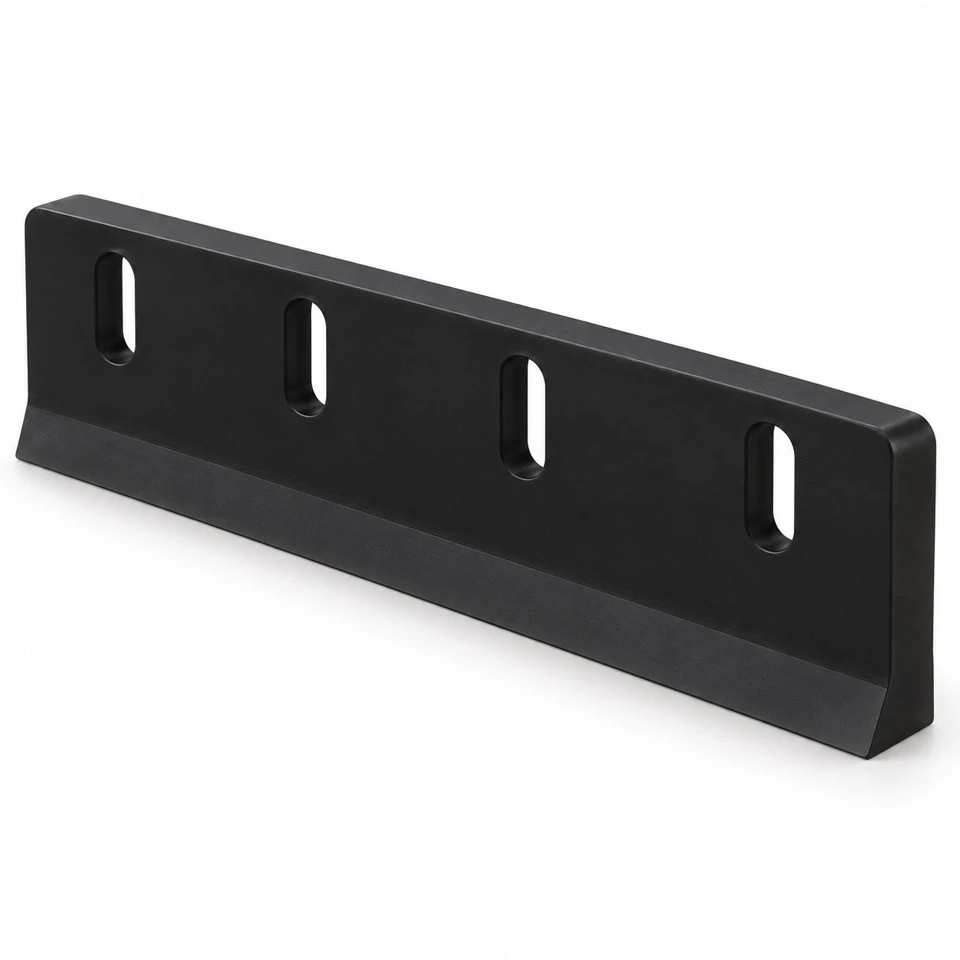
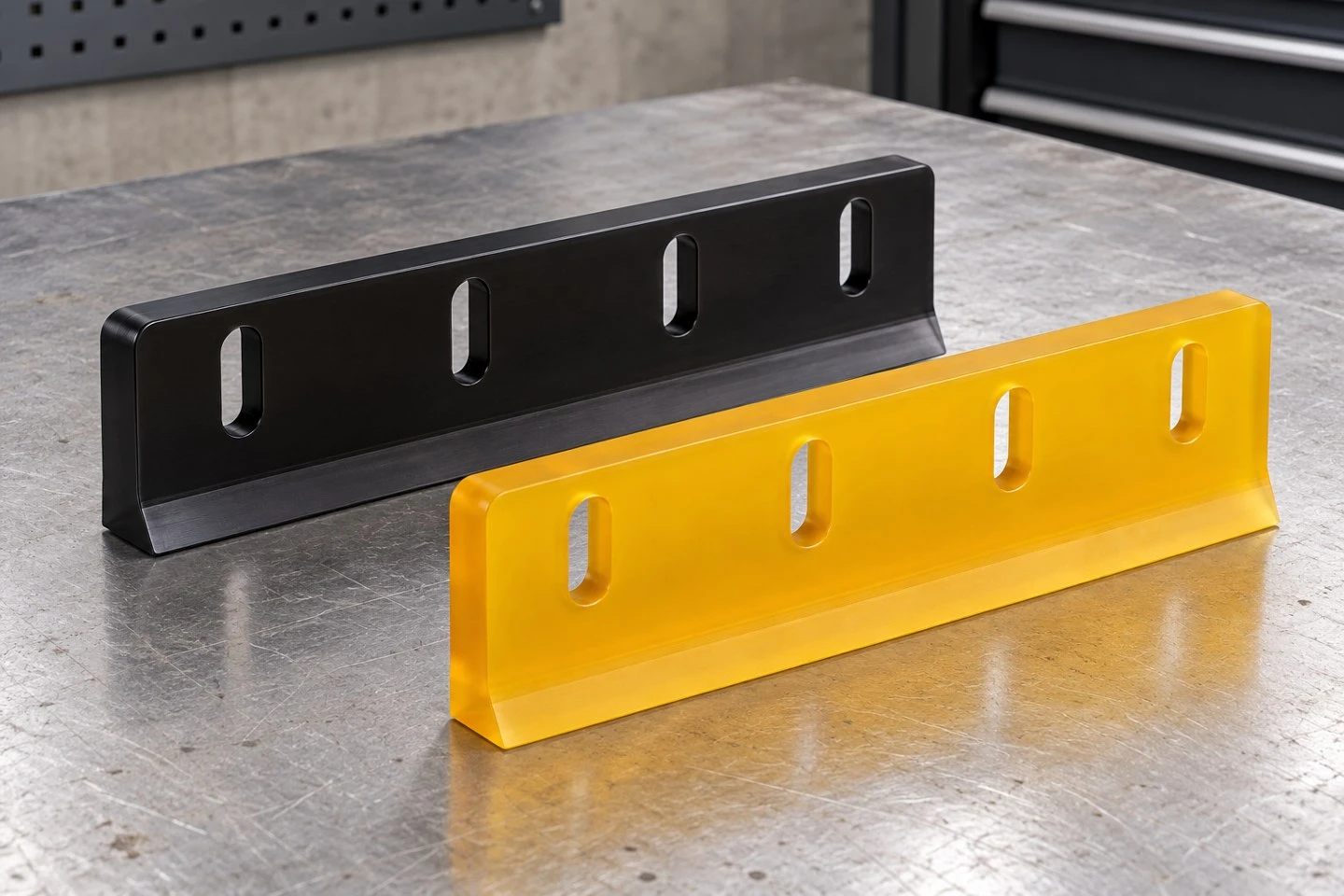
Color can be discussed as part of the specification, including amber, black, or another requested appearance where feasible for the selected formulation. Provide a reference and explain whether the color is functional, visual, or used for part identification. Appearance in a photograph changes with lighting and translucency, so an approved physical sample is a more useful production reference than a screen image when color consistency is important.
Specify which surfaces are visible and whether minor process marks are acceptable. A functional industrial blade does not necessarily require the same cosmetic finish on its clamped region and its exposed face. Keep appearance requirements separate from the working edge and mounting tolerances. The example images illustrate custom configurations; they do not establish a stock color range or guarantee that every color can be produced with every material formulation.
What should be checked on the first samples?
Begin with dimensional inspection against the agreed drawing. Check overall size, thickness, slot positions, edge profile, and any identified critical features. Then verify installation in the actual holder. The blade should fit without unintended distortion, and the available adjustment should correspond to the equipment design. Record the drawing revision and material reference with the sample approval so later orders have a clear baseline.
Functional testing should use representative operating conditions and a defined inspection interval. Monitor the contact pattern, edge wear, deformation, and any damage around the mounting features. Compare results using the same installation settings rather than judging two samples under different conditions. A short trial cannot establish an unlimited service life. Agree on the acceptance criteria and any design changes before moving from evaluation samples to a larger production batch.
What information is needed for a quotation?
Send a drawing or CAD model with the application description, requested material specification, initial quantity, and forecast demand. If only a sample is available, provide photographs and key dimensions first so the missing information can be identified. Please state whether the inquiry is for a new design, a repeat part, or a change to an existing blade. This prevents assumptions about interchangeability or tooling ownership.
| Item | Information to provide |
|---|---|
| Geometry | Length, height, thickness, section profile, holes or slots, tolerances |
| Material | PU specification, hardness scale and range, color requirements |
| Application | Contact surface, material handled, movement direction, speed, temperature, chemicals |
| Purchasing | Sample needs, initial quantity, repeat demand, delivery destination |
Welcome to send your drawings, material requirements, operating conditions, and quantity for a custom polyurethane scraper blade inquiry. We will review the available information before confirming the proposed manufacturing scope and quotation. Contact: amanda@tjswks.com
Hot Tags: custom polyurethane scraper blades for conveyors, China, suppliers, manufacturers, factory, bulk, cheap, low price, quotation, polyurethane coatings, polyurethane couplings, polyurethane reliable parts, pu extrusion, pu machining, pu parts


