


Tianjin SWKS Technology & Development Co.,Ltd is one of the most reliable manufacturers and suppliers of custom abs industrial collaborative robot teach pendant button frame in China. If you're going to buy bulk cheap custom abs industrial collaborative robot teach pendant button frame, welcome to get quotation from our factory. Quality products and low price are available.
Custom ABS Industrial Collaborative Robot Teach Pendant Button Frame
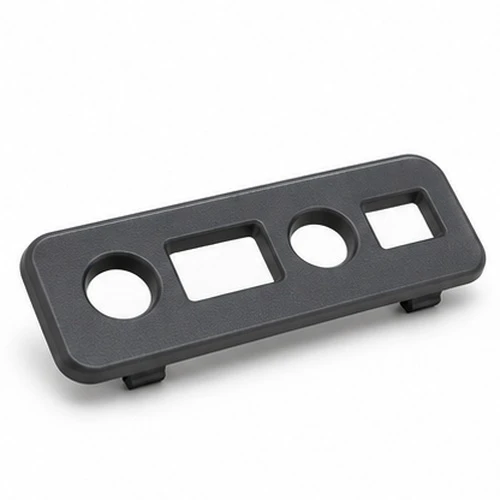
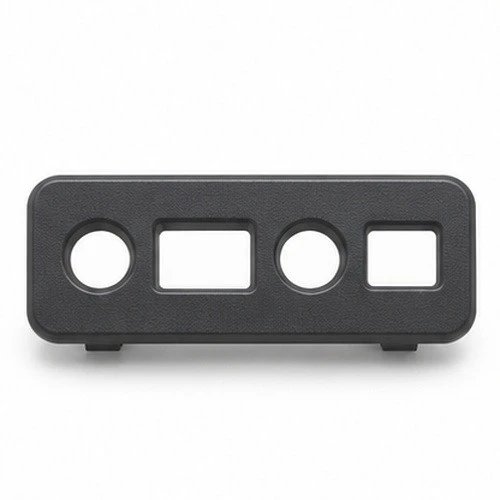
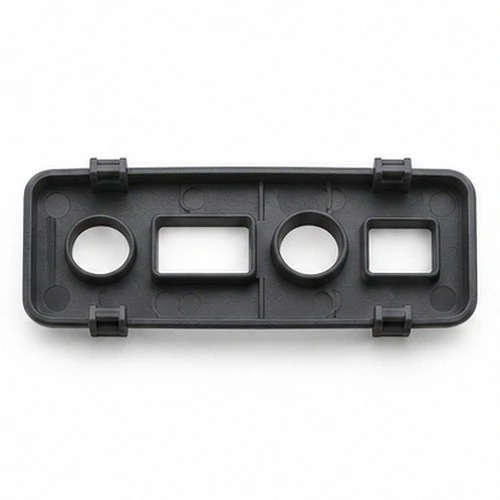
This custom ABS button frame surrounds the operating controls on a collaborative robot teach pendant. The blank molding is developed from the buyer's enclosure and switch layout. Openings, clips, finish and guide surfaces can be specified to match the pendant revision used for production.
Images are generated product illustrations in a photographic style. Final geometry, material grade and acceptance criteria follow the approved project drawing.
Contents
- What holds each pushbutton in line
- Why a cap passes one check and sticks in another
- The bezel and the switch carrier use different references
- Light, texture and marks on the front panel
- Tool split around a row of dissimilar openings
- Pilot checks for the pendant assembly
- Files for a custom ABS bezel quote
Product specification
| Attribute | Drawing-based scope |
|---|---|
| Material | ABS grade to be confirmed |
| Process | Custom injection molding |
| Application | industrial robot teach pendant face assemblies |
| Drawings | STP, STEP or IGS with dimensioned PDF |
| Quotation | Tooling, pilot samples and production quantities reviewed by project |
What holds each pushbutton in line
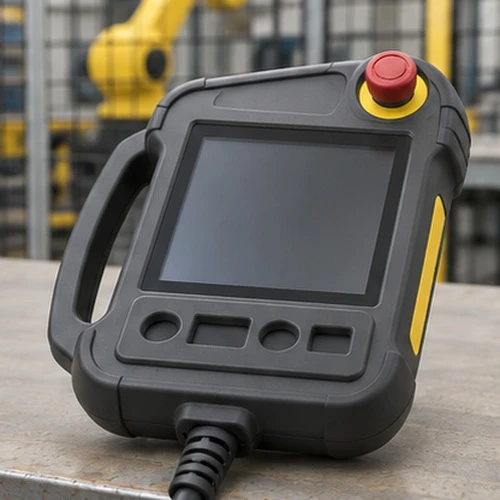
The frame is normally fitted near the front of a handheld teach pendant, where a set of button caps has to move through individual openings. On some pendants the cap is guided by its own switch body. On others a molded rib or an aperture near the front face helps it stay aligned. This difference belongs on the purchasing drawing because the same outside bezel size can hide two incompatible interfaces. For example, a long rectangular cap may have a slight rocking motion on its switch when it is pressed at one end. If the frame is intended to control some of that movement, the section through the cap and its supporting surfaces is more helpful than a dimension pulled from the top view.
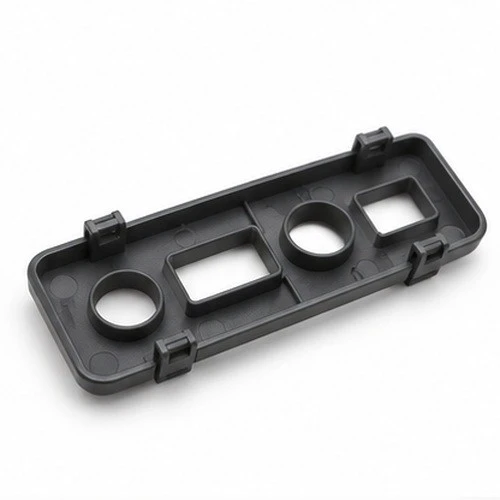
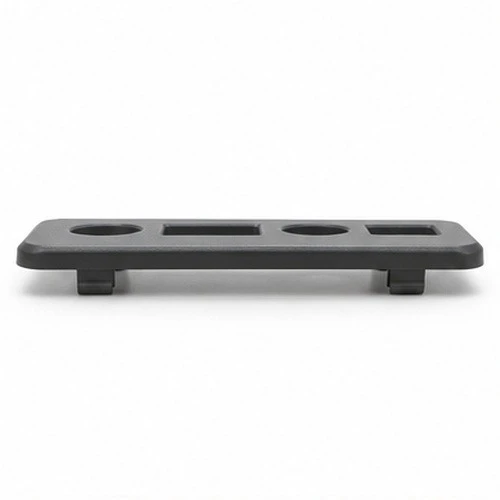
The injection molded ABS frame can be specified as a trim part, a mechanical locating part or a bezel combining both functions. Decide which version is needed before comparing quotations. A simple trim surround may only need to present a uniform gap and remain fixed on the housing when it is wiped. A frame that also guides one or more controls will require closer attention to molded opening size and to the offset between the front housing and the switch plate. The pictures illustrate an open bezel. Button caps, switches, display and housing taken as an assembly are separate items in the customer model.
Why a cap passes one check and sticks in another
Imagine a prototype sitting face up with the rear housing removed. Each switch feels normal when pressed slowly at the middle of the cap. After two corners of the housing are clipped together, one button begins to feel slow to return when pressed from its outer edge. Taking the frame off restores the original feel. That sequence gives a useful clue about the corner near the affected switch. Compare the behavior with the frame located on the front housing, with the switch carrier fitted and with the complete casing clipped together. Looking at those states separately can show whether the cap tilts inside its own guides or the frame moves toward the cap when another piece snaps into place.
One way to describe this problem on an inspection sheet is to identify the two corners of the cap and record the position at which contact begins. A drag felt in the thumb is easy to remember shortly after the trial and harder to interpret a week later. In a development build, a removable indicator can help locate the rubbing face when the equipment designer approves the method. A drawing note about continuous free movement needs an agreed test direction, support state and travel. For any control performing a safety function, fit and functional approval remain part of the pendant manufacturer's own equipment process.

The bezel and the switch carrier use different references
Looking at the front of the assembled unit, a bezel edge runs next to the perimeter of the housing. On the back, the switch carrier may be located by screw bosses and a molded pocket several millimeters away from the visible seam. Both sets of dimensions contribute to cap clearance. If each supplier measures from the wall nearest its own feature, the assembled offset can still be unknown. The drawing set can solve this by showing a common location scheme across the face frame, housing and switch carrier, or by explaining the relationship between their separate datums. A marked assembly section that shows the crosshair of each critical switch opening also gives a toolmaker a way to discuss variation without thinking in terms of the outside border alone.
The clips and ledges should also be considered under load. A rigid prototype machined out of a solid block can seem unusually good at holding the openings in line. A thin molded flange is able to move locally as one clip is fitted and the next is still free. Add the full clip engagement order to the assembly drawing if the order matters. Separate the locating stops from features added to carry spring load or keep the bezel seated. That makes it possible to review tool draft and gate position without accidentally changing the fit at an opening.
Light, texture and marks on the front panel
Graphite and black are frequent choices for this type of part, but two black ABS samples can look different under a task light if one surface is polished and the other is textured. A frame can have a visible band around a button plus darker recessed walls that are mostly hidden. SWKS reviews a finish or sample according to which surfaces the equipment owner will inspect and how they will see them. Use a good assembled reference if the bezel should match a neighboring display cover. A separate reference coupon can still help a tooling review if it describes the look on a particular face.
The material discussion includes the specified ABS grade, color, handling and cleaner exposure. The grade and texture jointly determine how a clip or a visible edge is assessed at the first article stage. A light witness on a hidden flange can be permitted while a raised mark on a finger-facing edge can be a problem. Two shots of a sample under different lighting can make this distinction clearer. Ask for those examples before approving tooling changes related to the face finish. If a recessed label or a color accent is intended, give its position in relation to the openings and attach the design artwork separately. The illustrative molding uses neutral surfaces and carries no brand or legend.
Tool split around a row of dissimilar openings
A button frame may put a long slim rail between two large openings and a wider region between several small holes. Filling and cooling can differ at those two locations. The mold review should include which side of the frame can carry the split line and where ejector support is available as the part is released. A long thin rail might pull as the molding leaves the tool. A short thick region can leave a sink mark opposite a rib on a prominent face. The front drawing, back view and local section are useful together here, especially where an tooling change has to preserve the cap's operating clearance.
The removal direction for the molded clips matters as much as the nominal hook width. A short hook with an undercut can require different tool access from a tapered snap feature that deflects during ejection. Review the intended retention and how the back of the frame is supported during demolding before deciding whether a clip needs a different geometry. If the customer prohibits a gate on the front edge, mark the allowed gate land and provide a reference for what remains after trim. Unclear cosmetic boundaries can create a second decision late in the build, when moving a witness mark is usually less convenient.
Pilot checks for the pendant assembly
Set aside some first articles for dimensional inspection and use a second group to fit the complete pendant. Compare the opening shape, pivot or switch centers, clip engagement and geometry around the display side. On an assembly used for approval, check each control at more than one pressing point when the approved test calls for it and record whether its return is free. Photography can show a seam gap, but it is usually a poor record of a drag or click. Pair it with a written observation or another method agreed for the particular build. If two styles of button share the pendant, label which frame positions accept each style and how the tester recognizes them.
Ask whether service technicians replace the frame independently or exchange the whole front assembly. If the frame is removed in service, there has to be a way to reach its clips without tearing out the surrounding components. A service tool may need an entrance gap that would be unnecessary for a permanent installation. The early mold samples offer a chance to record how replacement actually works, what is pulled first and how the cover is protected from the tool.
Files for a custom ABS bezel quote
For an RFQ this part is easiest to study with a dimensioned bezel drawing plus a model of the nearby front shell and switch positions. Send the material callout, target color and finish, the expected quantities and the build revision. Supply individual button cap models if their motion or clearance has to be reviewed, and show the direction of movement in each critical opening. A used pendant can be an informative visual reference if its current condition and version are indicated. Describe the checking procedure and any assembly evidence needed for the first article. Those items let us quote tooling, samples and molding separately against the same product configuration.
See our range of custom plastic injection molded parts for additional OEM applications and molded component examples.
Request a quotation
Email the drawing package, sample quantity and estimated production volume to amanda@tjswks.com. Include the delivery destination and the machine or assembly revision that applies to the request.
Hot Tags: custom abs industrial collaborative robot teach pendant button frame, China, suppliers, manufacturers, factory, bulk, cheap, low price, quotation


