


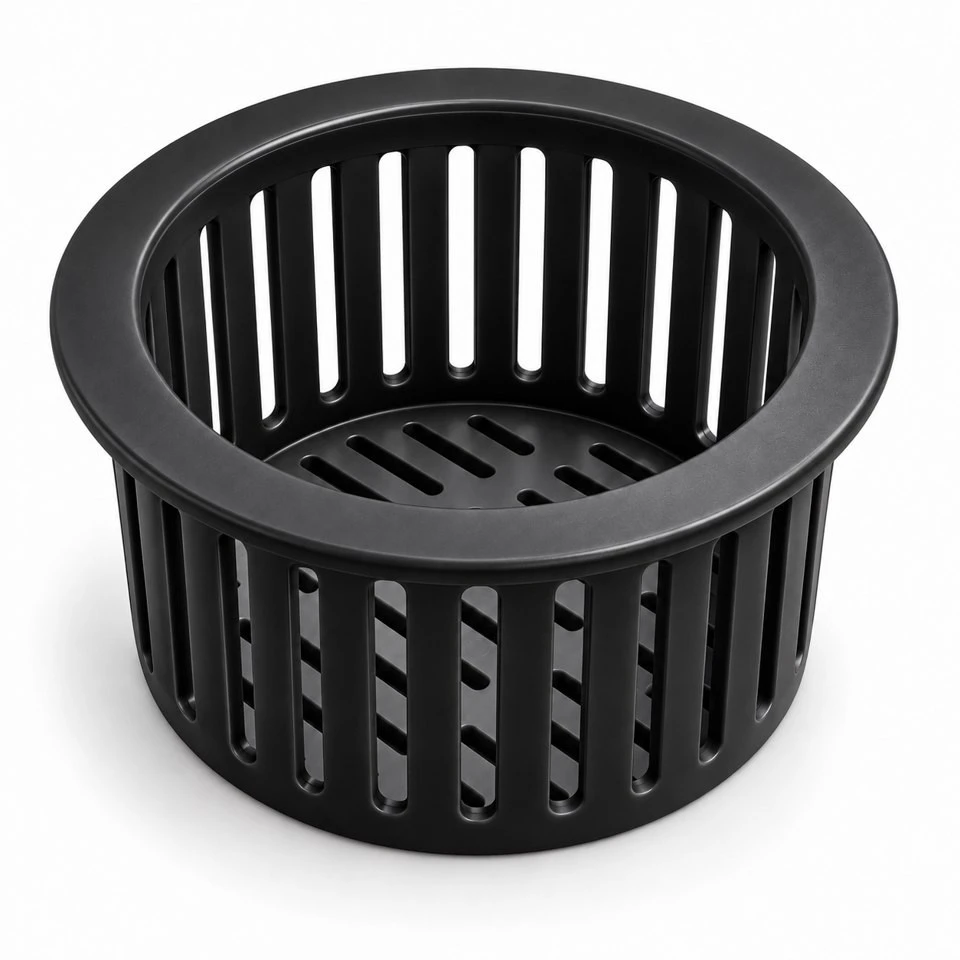
Tianjin SWKS Technology & Development Co.,Ltd is one of the most reliable manufacturers and suppliers of custom injection molded pp strainer baskets in China. If you're going to buy bulk cheap custom injection molded pp strainer baskets, welcome to get quotation from our factory. Quality products and low price are available.
Custom Injection Molded PP Strainer Baskets
Material: ABS/POM/PA66/PP/PC/PA/PU/TPE/TPU etc.
Processing Service: Injection
Drawing: STP/STEP/IGS
Contact: amanda@tjswks.com / 0086-15222707659
SWKS manufactures custom injection molded polypropylene strainer baskets for equipment assemblies that require a removable slotted plastic component. The basket shape, opening pattern and supporting flange can be developed around your housing and installation drawing. This service is intended for industrial buyers who need a dedicated part with a defined fit, rather than a standard basket with an unsuitable diameter, depth or mounting interface.
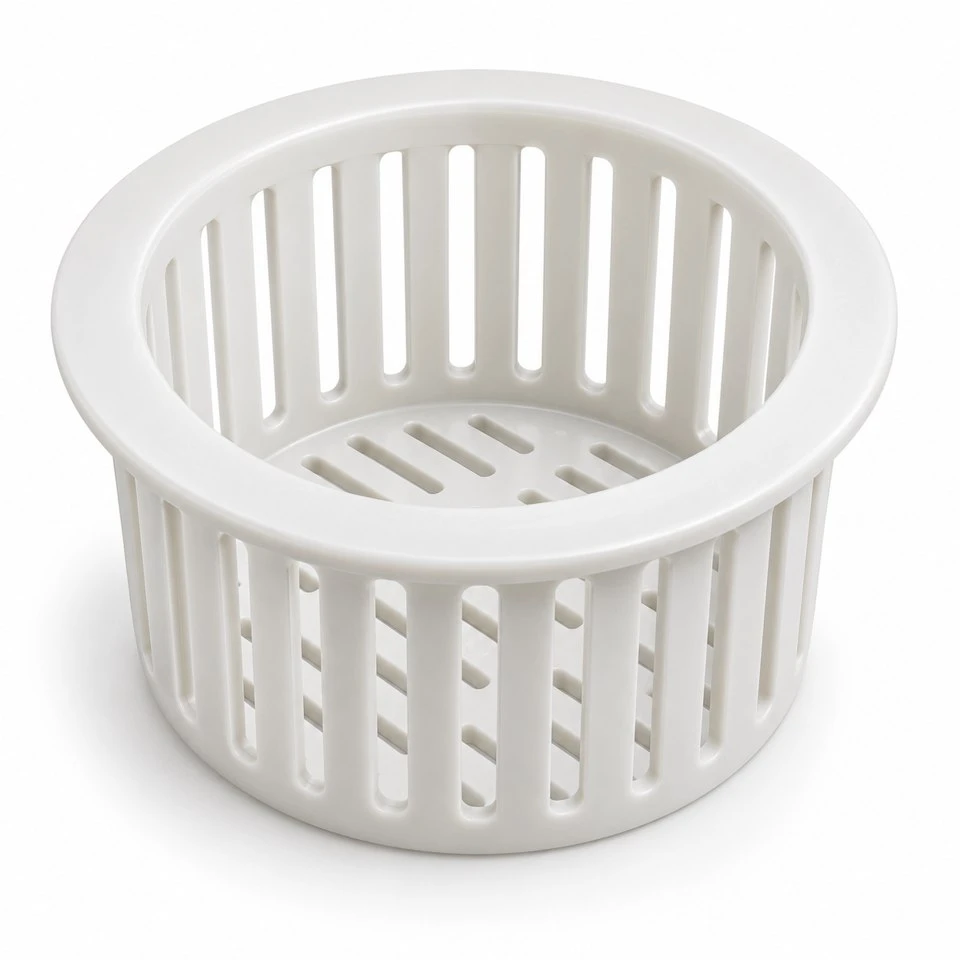
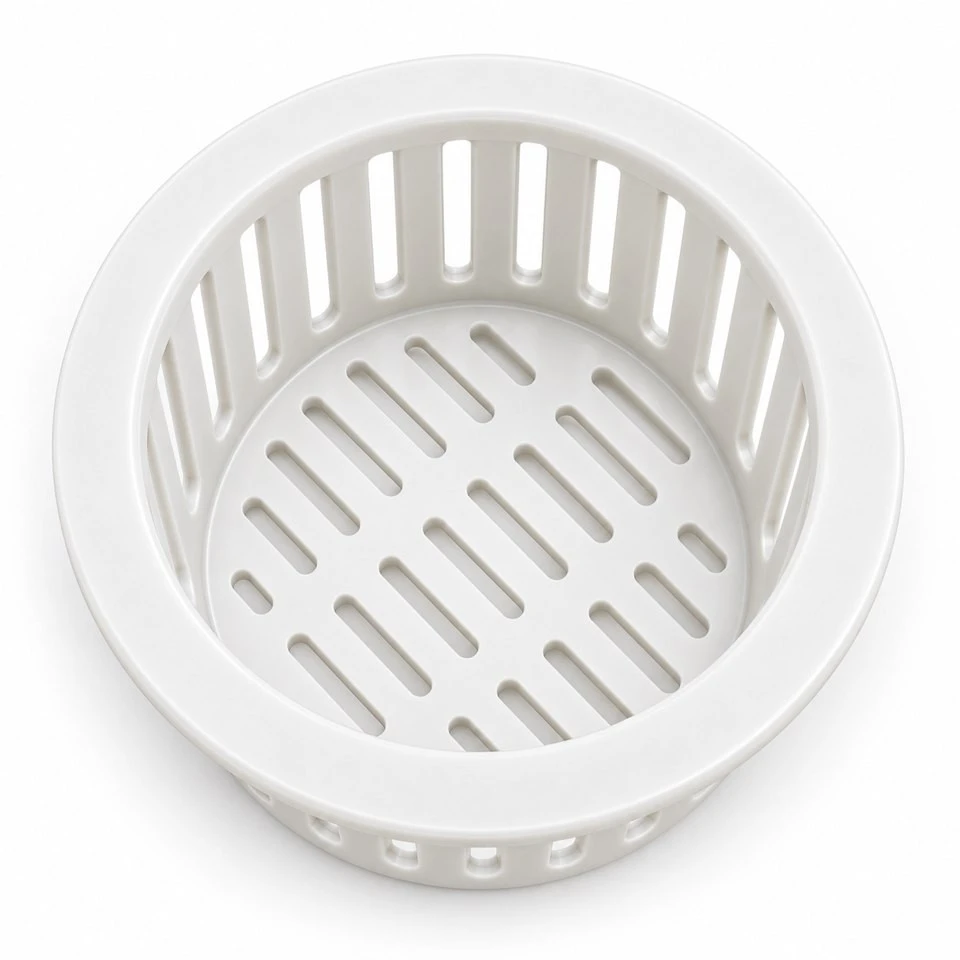
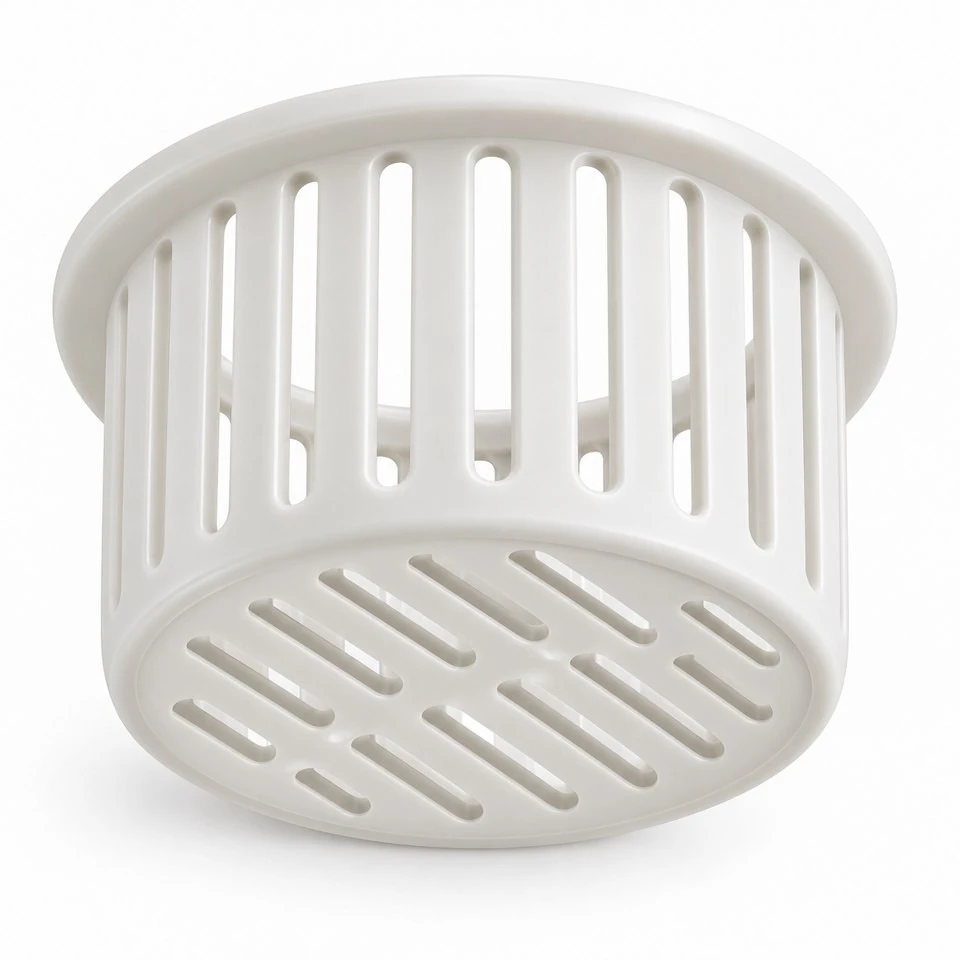
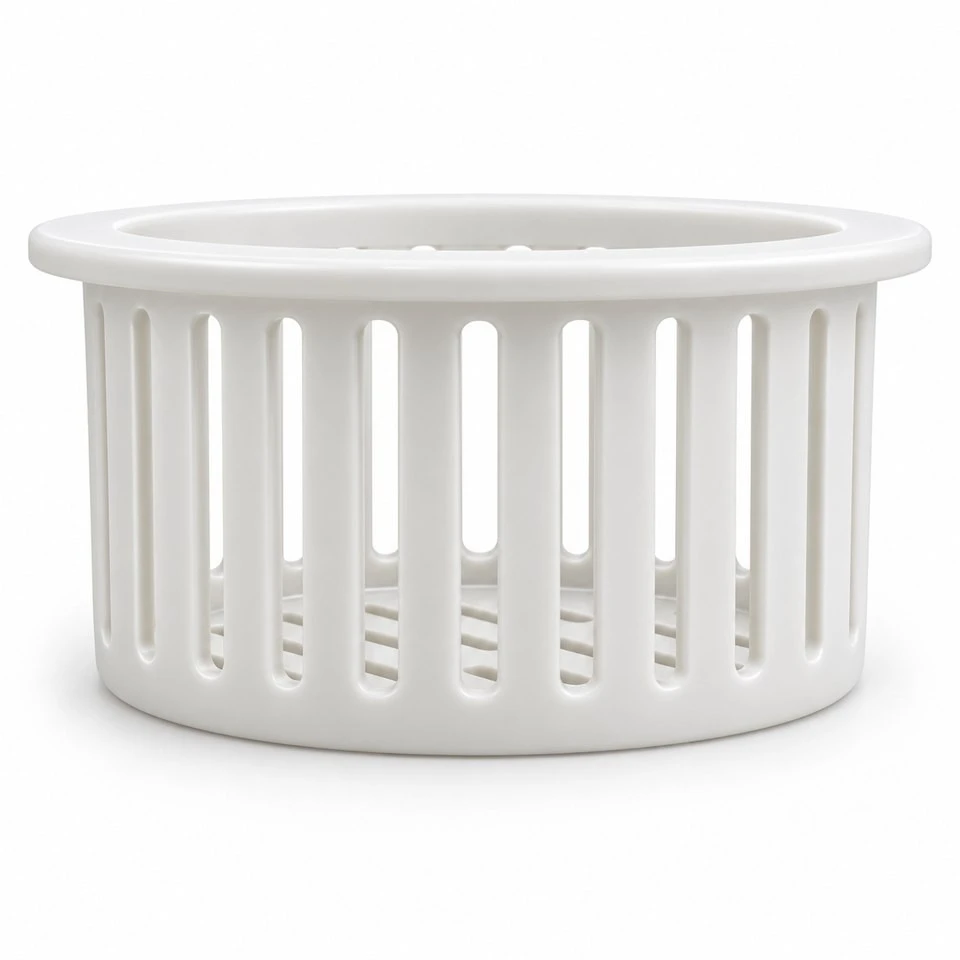
The design shown is an open cylindrical basket with a top flange, slotted sidewall and perforated bottom. It provides a starting point for discussing a custom molded PP component. Final dimensions, material grade and opening geometry follow the approved specification. A housing, sealing element, piping and other system components are separate items unless expressly included in the quotation. Send your model, operating conditions and quantity to discuss the manufacturing scope.
Where Can a Custom Plastic Strainer Basket Be Used?
Potential applications include equipment sumps, collection chambers, process accessories and other assemblies where a removable basket is used to intercept larger debris. The intended purpose should be defined by the equipment designer. Tell us whether the basket retains loose items, separates coarse particles or simply provides a perforated support inside another component. These functions may require different openings, supports and sample checks.
Provide an assembly drawing showing the basket position, flow direction and surrounding housing. Identify how the component is inserted, supported and removed. Include any cover or retaining part that controls its position during operation. A loose sample can communicate the general appearance, while an assembly view explains the interfaces that determine whether the basket fits and can be serviced in the intended equipment.
Which Basket Dimensions and Features Can Be Customized?
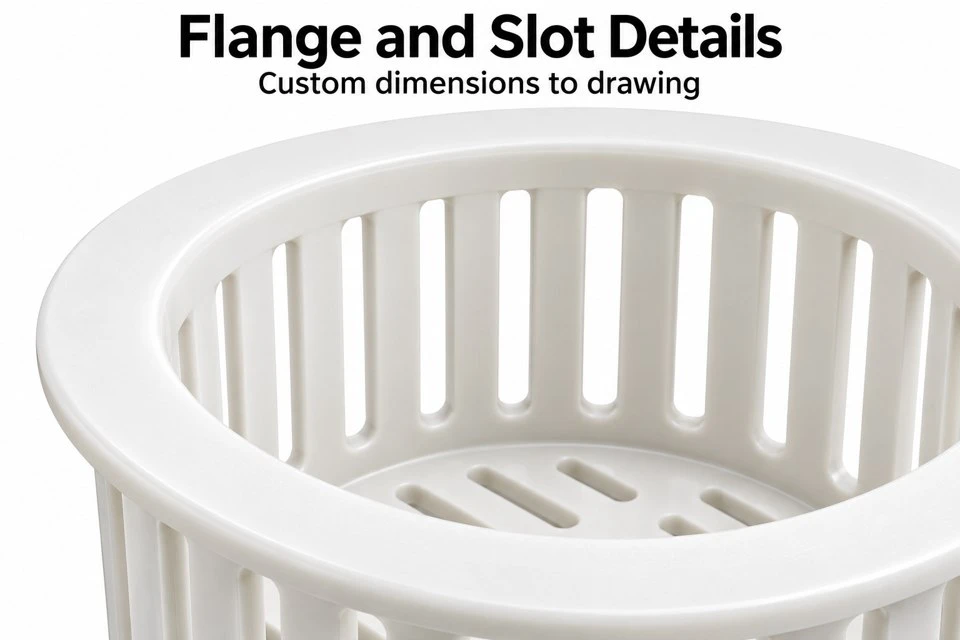
The outside diameter, overall depth, flange dimensions and bottom profile can be defined to suit the installation. Slot length, width, spacing and orientation can also be reviewed against the customer drawing. The open area and supporting ribs should be considered together, with attention to the intended duty and manufacturing method. Provide the functional requirements before selecting an opening pattern solely for its visual appearance.
Locating shoulders, orientation features and removal details may be considered when required by the housing. State whether the flange rests freely on a ledge or is held by another part. If the design requires a separate handle, insert or secondary operation, identify it in the inquiry so the quotation includes the requested scope. Each proposed feature should be reviewed with the part geometry and tool construction.
| Custom Feature | Information Required |
|---|---|
| Basket envelope | Outside diameter, depth and housing clearance |
| Top flange | Diameter, thickness and supporting surface |
| Slots or holes | Opening size, pattern and retention requirement |
| Bottom structure | Profile, openings and support arrangement |
| Material and inspection | Resin grade, service conditions and critical dimensions |
How Should the Slot Size and Retention Requirement Be Defined?
Describe the items or particles that the basket is intended to retain and the openings needed for the application. State the maximum or minimum opening requirement where it matters, including the method used to measure it. A molded slot width should be defined on the drawing with an appropriate tolerance. The overall basket diameter does not establish a separation rating or confirm performance in a particular liquid.
The arrangement of openings should also account for where material accumulates and how the basket will be cleaned. Include restrictions on sharp edges, trapped debris or access to the bottom. If a mesh liner or another filtering element is used, provide its drawing and explain how it is retained. The molded plastic basket and any additional filter medium should be specified as distinct components in the manufacturing proposal.
How Is the Polypropylene Material Grade Selected?
PP is a material option for this custom basket, with the exact resin grade selected against the service requirements. Provide the manufacturer and full designation if your equipment team already has an approved material. Where selection remains open, describe temperature, liquid contact, cleaning conditions and expected handling. The proposed grade should be agreed before the mold and sample plan are finalized.
The wider material list at the top describes the custom molding service and does not mean that all listed plastics can be substituted in the same tool. A change of polymer may require review of tooling allowances, dimensions and processing. If another material is being considered, state the reason and required characteristics so the quotation identifies the actual proposal rather than assuming equivalence between different resin families.
Natural white and other colors can be discussed with the selected resin. If a particular shade is required, supply an agreed color reference. Requirements for virgin material, additives or restricted substances should be stated explicitly. Where food contact or another documented application requirement applies, identify the intended conditions and supporting documentation needed for the specific resin and component rather than relying on a generic description of polypropylene.
What Information Defines the Basket and Housing Fit?
Supply the housing drawing with the supporting ledge, available depth and any cover that holds the basket in place. Identify the surfaces that establish its installed position. Explain the required clearance and whether the basket must be removable without tools. A nominal diameter alone is not sufficient to define the relationship between the flange, basket wall and surrounding assembly.
Consider how the component will be handled after use. Include removal access, nearby connections and any obstruction above the opening. If the basket is serviced while wet or containing retained material, describe the expected handling sequence and loads. Sample approval should include installation and removal in representative equipment, with the fit and accessibility checked against the agreed criteria.
Which Operating Conditions Should Be Included in the Inquiry?
Provide the liquid or process medium, operating temperature and any cleaning or maintenance exposure. State whether the basket sees static liquid, continuous flow or intermittent use. Include the supporting arrangement and the expected retained material. These details help define a meaningful engineering review; a product rendering cannot establish chemical compatibility, flow capacity, pressure resistance or service life for a finished assembly.
If flow restriction matters, the equipment team should define the required operating condition and evaluation method. Specify the complete system arrangement rather than assuming a performance value from the opening pattern. Where a pressure difference can occur across the basket, include that requirement in the design review. Acceptance should be based on an agreed test or assessment using the intended material and representative molded geometry.
What Is Reviewed Before Injection Mold Manufacture?
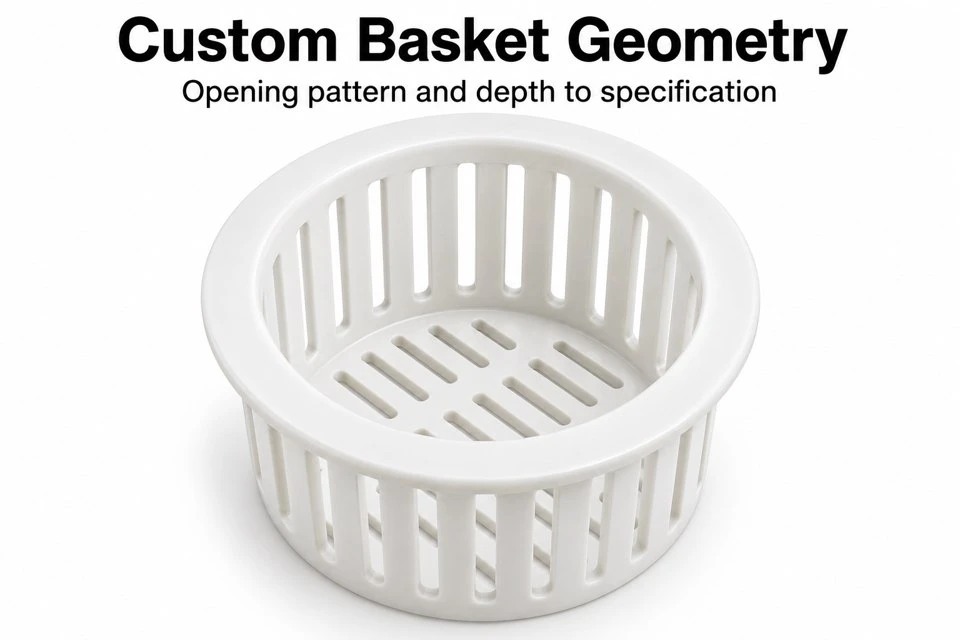
The tooling review addresses the wall sections, ribs, opening geometry, draft and locations of molding features. Narrow slots and the flange should be considered with the selected material and parting direction. The proposed mold construction depends on the final design, so manufacturing feasibility should be confirmed from the model. Any suggested geometry changes should be recorded for approval before tooling begins.
Identify the critical dimensions and inspection datums on a controlled drawing. These may include flange seating dimensions, basket diameter and opening size. Distinguish the interfaces that control assembly from surfaces with more general requirements. A dimensioned drawing alongside the three dimensional model helps the purchasing, tooling and inspection teams use the same priorities and approved revision.
For replacement components, an original sample may be helpful but can have wear, distortion or damaged openings. Explain which features must match the original design and whether any improvements are permitted. If only photographs or measurements are available, further definition may be required before a tool proposal can be confirmed. Resolving uncertain details early supports a quotation with a clear and reviewable manufacturing scope.
How Can Molded Samples Be Evaluated?
Sample inspection should reference the approved drawing, resin grade and color. Check the outside dimensions, flange seating, opening pattern and bottom geometry using the agreed method. Then fit the basket to a representative housing and cover. Review installation, retained position and removal access. Record the result so future orders have a clear reference for the accepted assembly relationship.
Where functional testing is needed, agree on the medium, operating condition and criterion for acceptance in advance. Include cleaning and repeated handling if they are relevant to the equipment. A prototype can assist with layout checks, but its production method may not represent injection molded material behavior. Use representative molded samples when approval depends on the selected resin, opening geometry or manufacturing process.
How Are Repeat Orders and Packaging Specified?
Repeat orders should retain the part number, drawing revision, material designation and approved sample reference. This is useful when similar baskets have different depths or opening patterns. Proposed changes to resin, color or geometry should be reviewed before production. Consistent identification helps purchasing and quality teams distinguish the correct configuration without relying on appearance alone.
Packaging can be arranged around the flange, ribs and receiving workflow. State whether nesting is acceptable and whether separators or individual protection are needed. Include quantities per pack, labels and any requirements from the assembly partner. For maintenance stock, clear labels can help the receiving team select the intended basket and retain its specification for later replacement orders.
What Is Needed for a Custom Strainer Basket Quotation?
Send a STP, STEP or IGS model with a dimensioned drawing, material requirements and order quantity. Include the housing information, desired opening size, operating conditions, expected repeat demand and delivery destination. Tooling cost, unit price, minimum order quantity, sample arrangements and lead time are confirmed after project review. If a trial assembly date is important, include it with the inquiry so the proposed schedule can address that target.
Send your drawing, material and quantity for a custom PP strainer basket quotation. Contact: amanda@tjswks.com / 0086-15222707659
Hot Tags: custom injection molded pp strainer baskets, China, suppliers, manufacturers, factory, bulk, cheap, low price, quotation, pp accurate parts, pp chemically resistant parts, pp dimensionally stable parts, pp electrically insulating parts, pp plastic assembled parts, pp plastic rotational molding parts


