


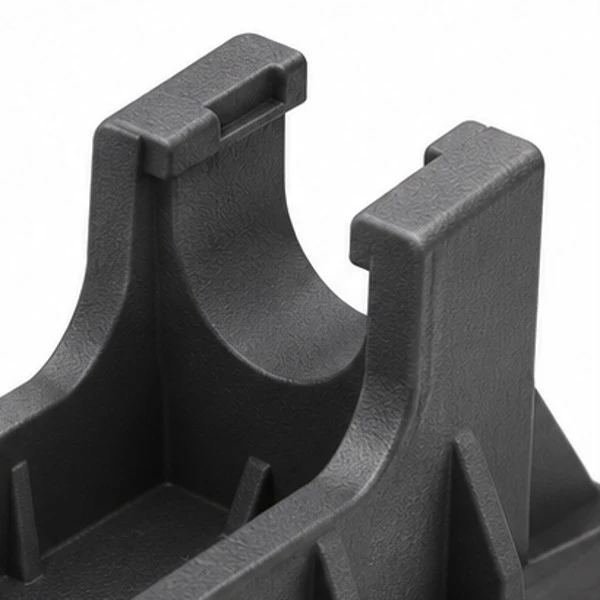
Tianjin SWKS Technology & Development Co.,Ltd is one of the most reliable manufacturers and suppliers of custom pp industrial filter backwash nozzle socket in China. If you're going to buy bulk cheap custom pp industrial filter backwash nozzle socket, welcome to get quotation from our factory. Quality products and low price are available.
Custom PP Industrial Filter Backwash Nozzle Socket
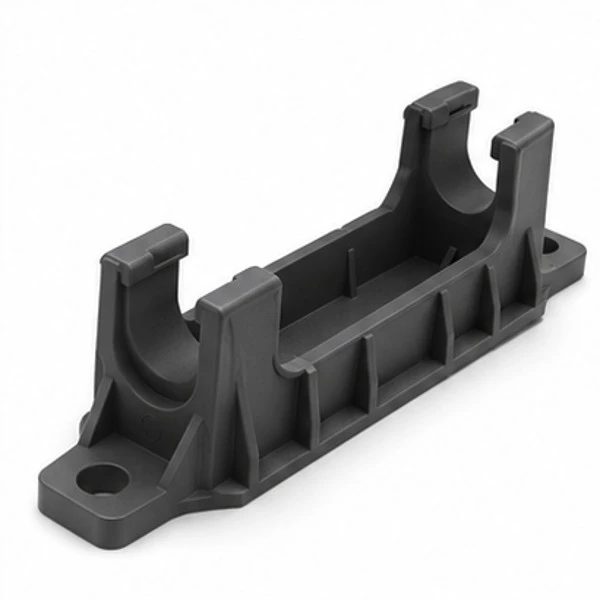
A custom injection-molded PP socket that locates a compatible backwash nozzle in an industrial filtration assembly.
| Part material | PP |
|---|---|
| Other materials for custom parts | ABS, POM, PA66, PP, PC, PA, PU, TPE, TPU |
| Processing | Injection molding |
| Drawing formats | STP, STEP, IGS |
| Configuration | Custom part manufactured to the approved product drawing |
Nozzle socket function and filtration layout
A backwash nozzle socket locates the nozzle or its adapter within a filter vessel, distributor plate or manifold. Its assembly may include a seal, separate retaining element and nozzle body specified by the filtration system designer. Show the opening relative to the surrounding piping or filter media support. Define the side from which the nozzle installs and the amount of space needed for removal. Confirm how the socket is secured to the surrounding structure and which assembled components carry the operating loads.

Illustrative rendering. Final part geometry follows the approved drawing.
Connections and sealing geometry
Provide the mating nozzle section with the exact interface type and applicable connection designation. If the socket receives a threaded component, specify the thread form, engagement and reference dimensions. For a seal seat, mark the groove or landing, the mating material and the dimensional limits. If the system uses a welded or mechanically retained socket, show the joint geometry and mounting plate section. Determine which sealing surfaces are checked on the bare part and which can only be assessed in the assembly.
PP grade and process conditions
Choose a polypropylene formulation using the expected water chemistry, temperature, cleaning exposure and load profile. If the nozzle socket sees concentrated cleaning solution or disinfection products during only part of the cycle, record the contact duration and expected frequency. A grade change can affect shrinkage and assembled fit. Any requested declarations for water contact should identify the application and market so the specified grade and documentation scope can be reviewed before tooling.
Backwash operation and verification
The complete system defines required flow, liquid pressure, possible air scour and filtration cycles. Share nominal conditions and pressure excursions, plus any acceptance limits for leakage or branch distribution. A port arrangement may pass a static fit check yet require further review when the complete distributor is operated. Record the test medium and assembled nozzle configuration. Confirm which equipment-level tests are required and distinguish them from molded-part dimensional inspection.

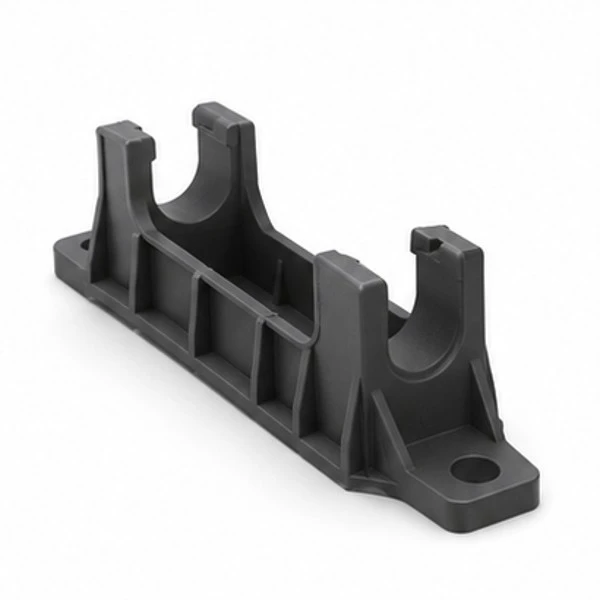
Illustrative rendering. Final part geometry follows the approved drawing.
Tooling and first samples
Review the bore, flange and external mounting features with the intended parting direction. Threaded or recessed details can affect tooling complexity and how the component is ejected. Mark any internal sealing surface where flash or a witness would be unacceptable. First samples should be trial assembled with the exact nozzle and mounting plate. Record seating depth, alignment and gasket condition, and check service access where several nozzles sit close together.
Filtration assembly and installation sequence
Establish whether the socket is installed during fabrication of the distributor, during assembly of the filter tank, or as a replaceable service item. The sequence determines which side of the plate is accessible for tools and whether the nozzle can be fitted from the same side as the socket. If the nozzle will be installed after filter media or a protective cover is in place, provide the clear opening and the room for rotation or pullout available at that stage.
A section through the opening should identify the plate thickness including any coating, the bearing surface below the flange and the space reserved for a seal or retention feature. Describe any fastening support supplied by another vendor. If two features have to line up during service, such as a branch direction and a stop in the socket, show their relationship on an assembly view. Note whether a gasket is expected to move during installation or remain in a fixed recess.
Planning an assembled fit and leak review
Inspect the mounting footprint, entry size and seal seat on the molded component before trial assembly. Use the appropriate mating parts and record their versions. A representative plate segment can be useful for bench work if it accurately reproduces the hole, support and joint stack. Where installation distortion is a concern, agree on whether to measure the component in the free state, after retention in the plate, or in both configurations.
For an assembled leak or flow review, specify the equipment owner's method and acceptance criteria. Report the media, temperature and configuration present during each check. Identify which connections are blanked and which remain open for observation. If the evaluation compares different nozzle versions, do not change the nozzle size or restriction without recording it in the test log. A variation in the downstream element can obscure the effect of the socket geometry when comparing results.
Assessing filter reversals and duty
Describe the sequence of filtration, backwash and any standby period for the application. An intermittent reversal can produce a different condition at the connection than steady filtration. Provide expected variations between normal setup and occasional cleaning exposure. If the filter includes an air-assisted phase, identify where air enters, what parts are exposed and what equipment drawing controls the allowed connections. These details help define the equipment-level qualification plan for the intended nozzle assembly.
State whether suspended solids, abrasive media or deposits can contact the nozzle seat. Share any field observations of blocked ports, distorted fittings or seals that moved after repeated maintenance. A marked record of the region affected is more useful than a generic request for a stronger component. Indicate whether a change to the socket is intended to address a change in water quality, a new nozzle series, or access limitations during maintenance.
Information for repeat procurement
Separate forecasts for different bases, threads or seal seat dimensions, even if the overall flange outline is the same. Label sample sets with the nozzle reference and the plate drawing used to verify them. If a cartridge or distributor plate has more than one revision in service, record which variants have received an assembly trial before a common stock item is considered. Specify how the buyer will recognize each variant after unpacking.
For a tooling inquiry, send the desired grade, finished part drawing, mating connection data, trial quantity and projected order quantities. Note any documentation required for the intended industry and the scope needed from the molded component supplier. If the drawing is being updated, identify the proposed change and the date by which the complete interface can be reviewed. The vendor can then quote the relevant socket configuration and sample scope.
Nozzle orientation and downstream clearance
Show whether the nozzle has a defined orientation relative to the distributor and whether the socket needs a feature to keep it in that orientation. A round inlet or cylindrical body can appear symmetrical while the outlet openings perform a directional function. Mark the nozzle axis and reference surfaces on the assembly drawing. If installation depends on the installer observing an external mark, state whether the mark is molded into the part or belongs to another component. This will prevent confusing an orientation requirement with a cosmetic preference.
Also show the free space downstream of the installed nozzle. Nearby pipe walls, plates or support elements may affect access or obstruct a portion of the intended opening. An assembly view showing adjacent nozzles can help define the location of the socket and the separation between connections. Where maintenance requires replacing one nozzle at a time, provide the clearance after adjacent fittings have been installed, rather than only the clearance on a bare plate.
Condition checks after maintenance
After a service event, document whether the nozzle returns to its intended seating depth and whether any seal was replaced. If a connection was disturbed repeatedly, compare the final installation with the original approval condition. Record where a leak or drip was observed and the exact operating phase in which it appeared. A sample request should identify whether the molded socket is being changed because of concern about fit, corrosion of the mating hardware, or damaged seals. Each issue can require a different assembly check.
Specifying the interface for custom production
The illustrated flange and nozzle seat are examples of how a molded socket can be arranged. The drawing establishes the final hole spacing and internal joint. If several configurations use the same plate, provide the insert or nozzle feature that differs between versions. Include the preferred method of identifying each part and the sample quantities needed for every intended configuration. This keeps the molded socket revision tied to the correct filtration equipment record.
Guidance for plate and nozzle samples
A representative nozzle and a sample of its mating plate are useful when the actual installation differs from a simplified engineering model. Identify any surface coating, backing support or separate adapter that changes how the flange seats. If a sample is cut from an existing filter, mark which face was exposed to the process stream and where the nozzle opening sits in the complete layout. Include the dimensions of any seal or retaining feature supplied separately. This allows the buyer and molder to discuss assembly constraints using the same interface before selecting the tooling approach.
Read the SWKS related injection molding design guide or browse the plastic injection parts category.
Request a quotation
Send the drawing, application details and quantities to amanda@tjswks.com or call 0086-15222707659.
Hot Tags: custom pp industrial filter backwash nozzle socket, China, suppliers, manufacturers, factory, bulk, cheap, low price, quotation, ABS machine parts, Nylon PU Coated Wheel Bushings PA, PC machine parts, perforated plastic sheet, Plastic Parts, precision plastic injection parts


