


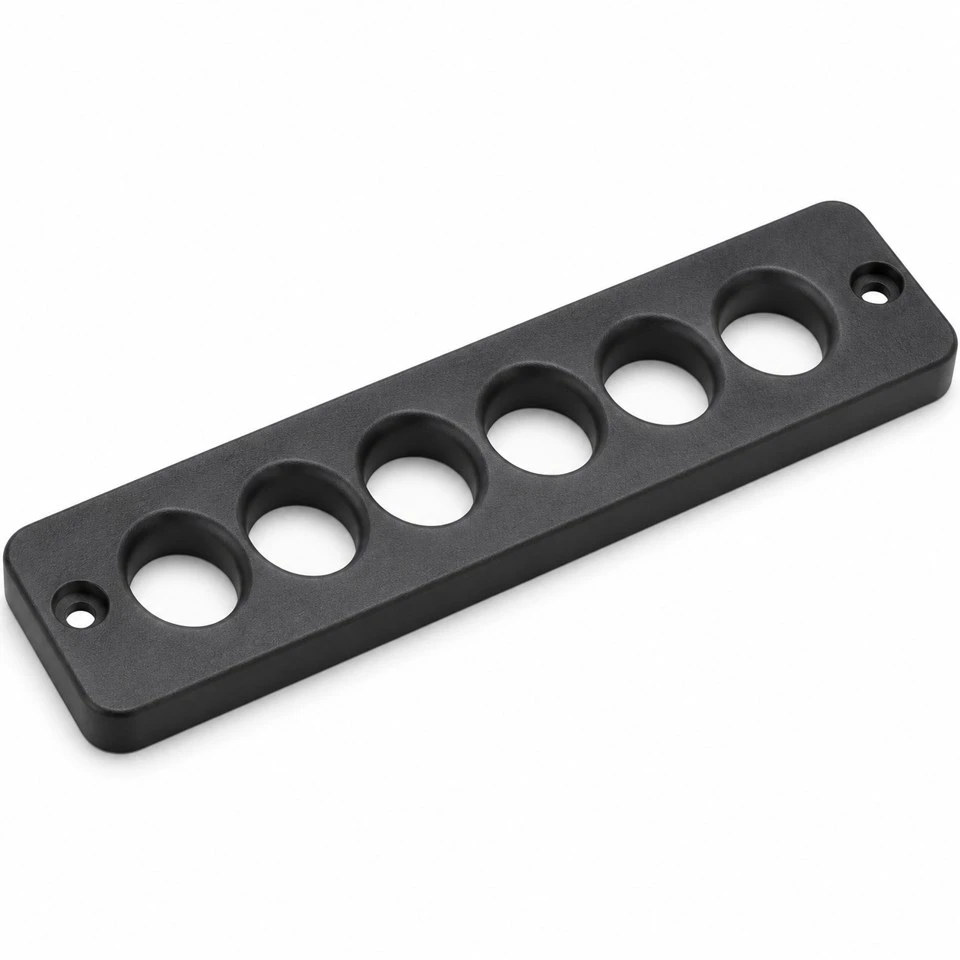
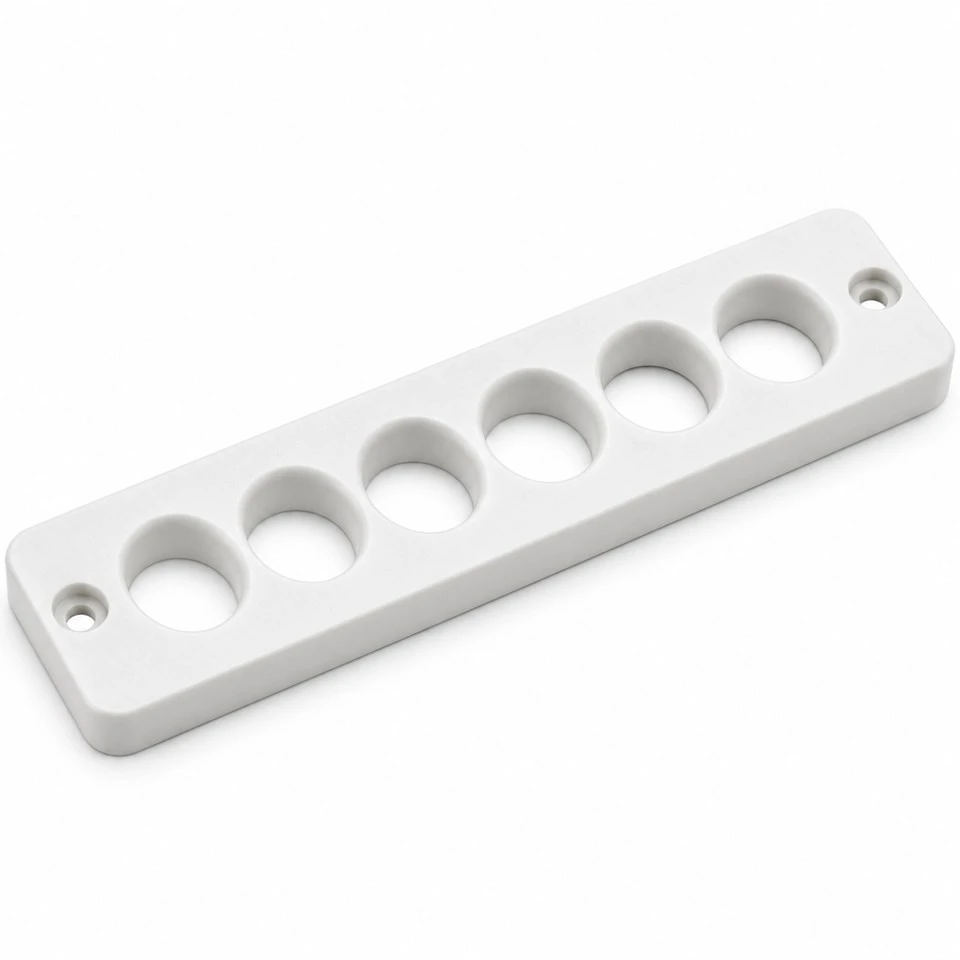
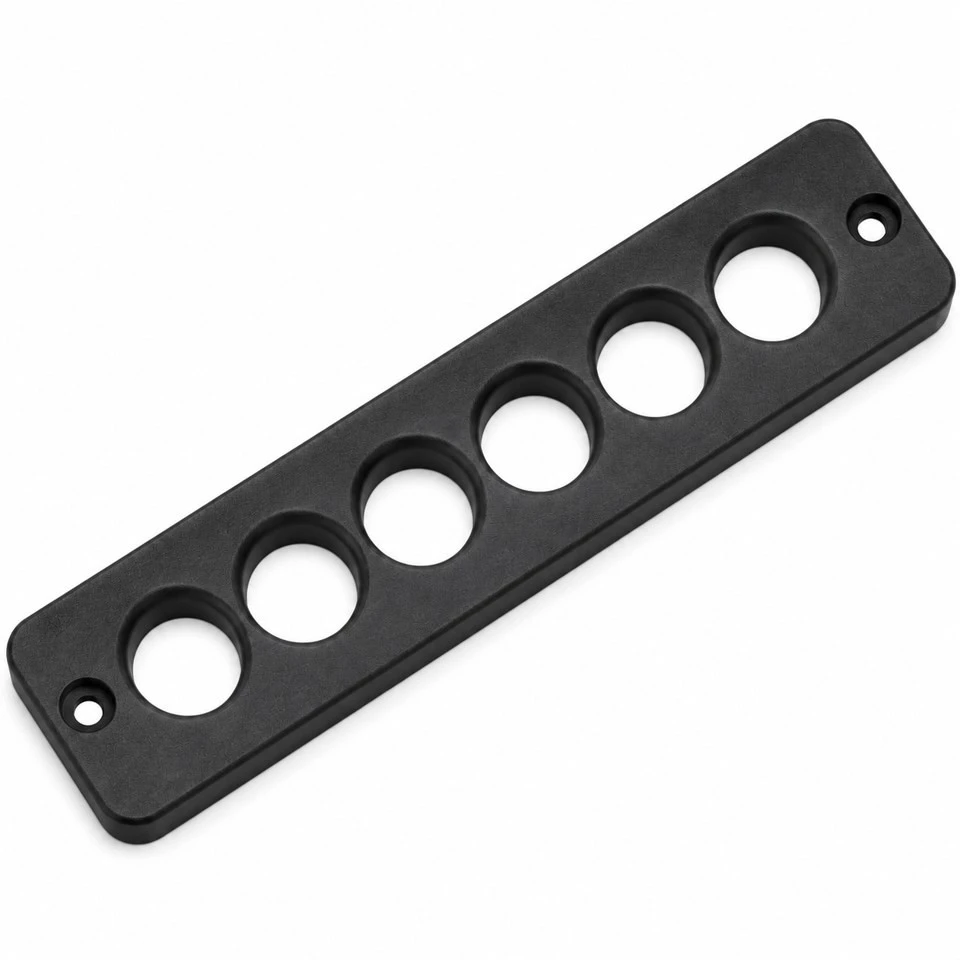
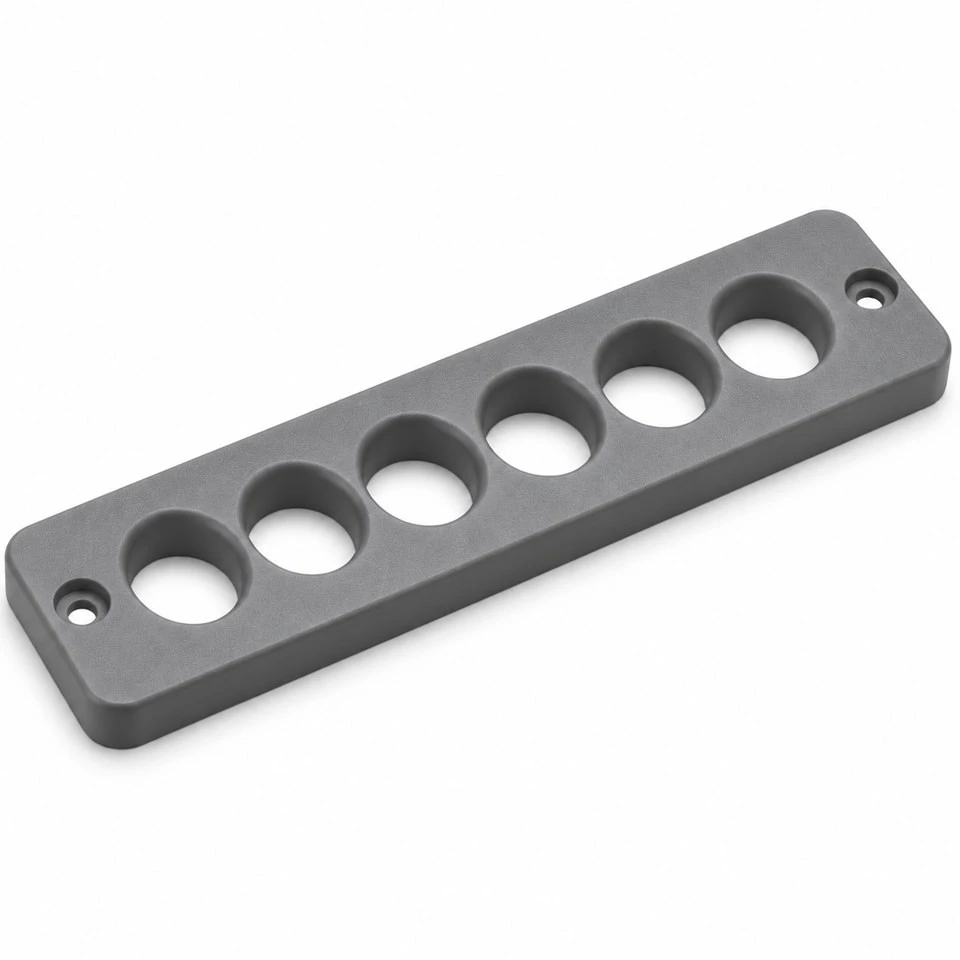
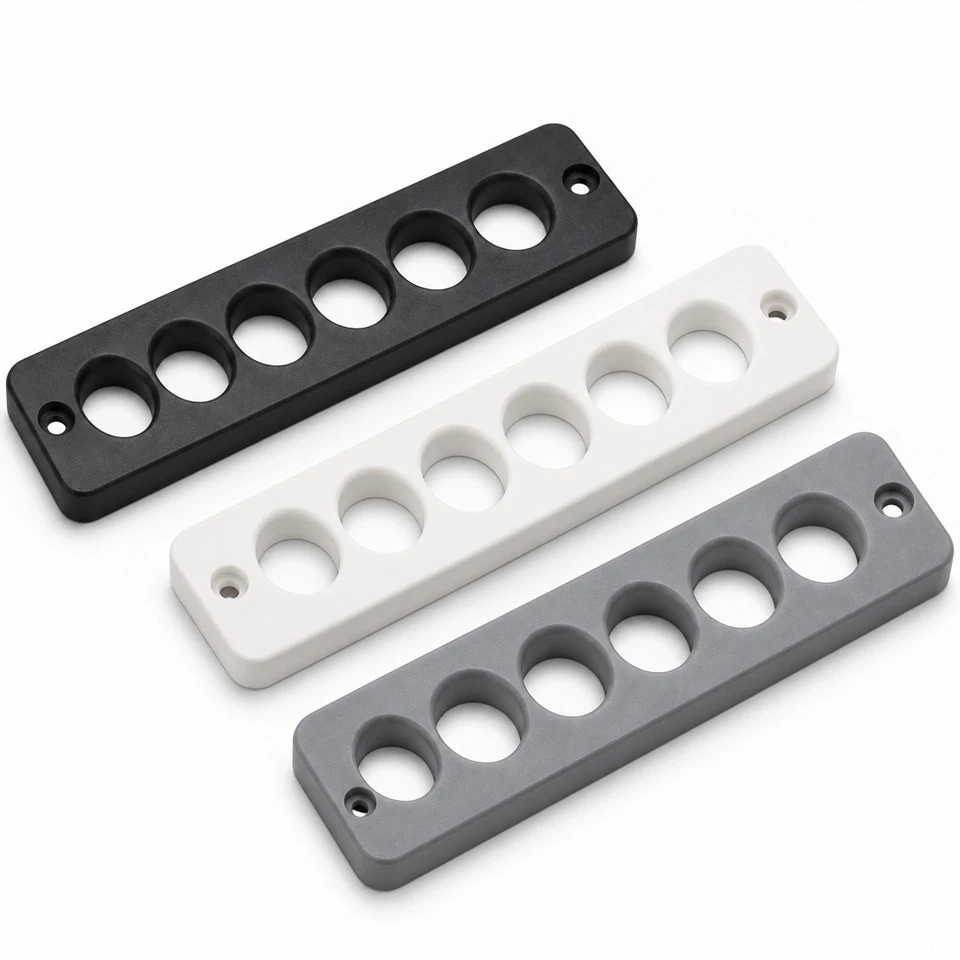
Tianjin SWKS Technology & Development Co.,Ltd is one of the most reliable manufacturers and suppliers of custom injection molded plastic cable guide plates in China. If you're going to buy bulk cheap custom injection molded plastic cable guide plates, welcome to get quotation from our factory. Quality products and low price are available.
Custom Injection Molded Plastic Cable Guide Plates
A cable route often becomes difficult at the point where several wires must pass through a compact machine frame. Loose bundles can cross, rub against nearby edges, or occupy the space needed for maintenance. A custom plastic cable guide plate provides an organized passage with hole positions designed around the actual assembly. SWKS offers custom plastic molded parts for these routing and positioning tasks, with nylon, PP, POM and ABS considered according to the installation conditions. The plate geometry, mounting pattern and cable openings are developed from your drawing rather than selected from a fixed universal size.
This product page focuses on rigid, one-piece guide plates for industrial equipment. The illustrated parts show possible custom structures, not a standard stock series. An open cable passage is not a sealing gland, and the plate alone does not provide strain relief, ingress protection or a certified electrical safety function. If your application requires those functions, they need separate design features, appropriate components and validation within the complete equipment.
What can be customized on a plastic cable guide plate?
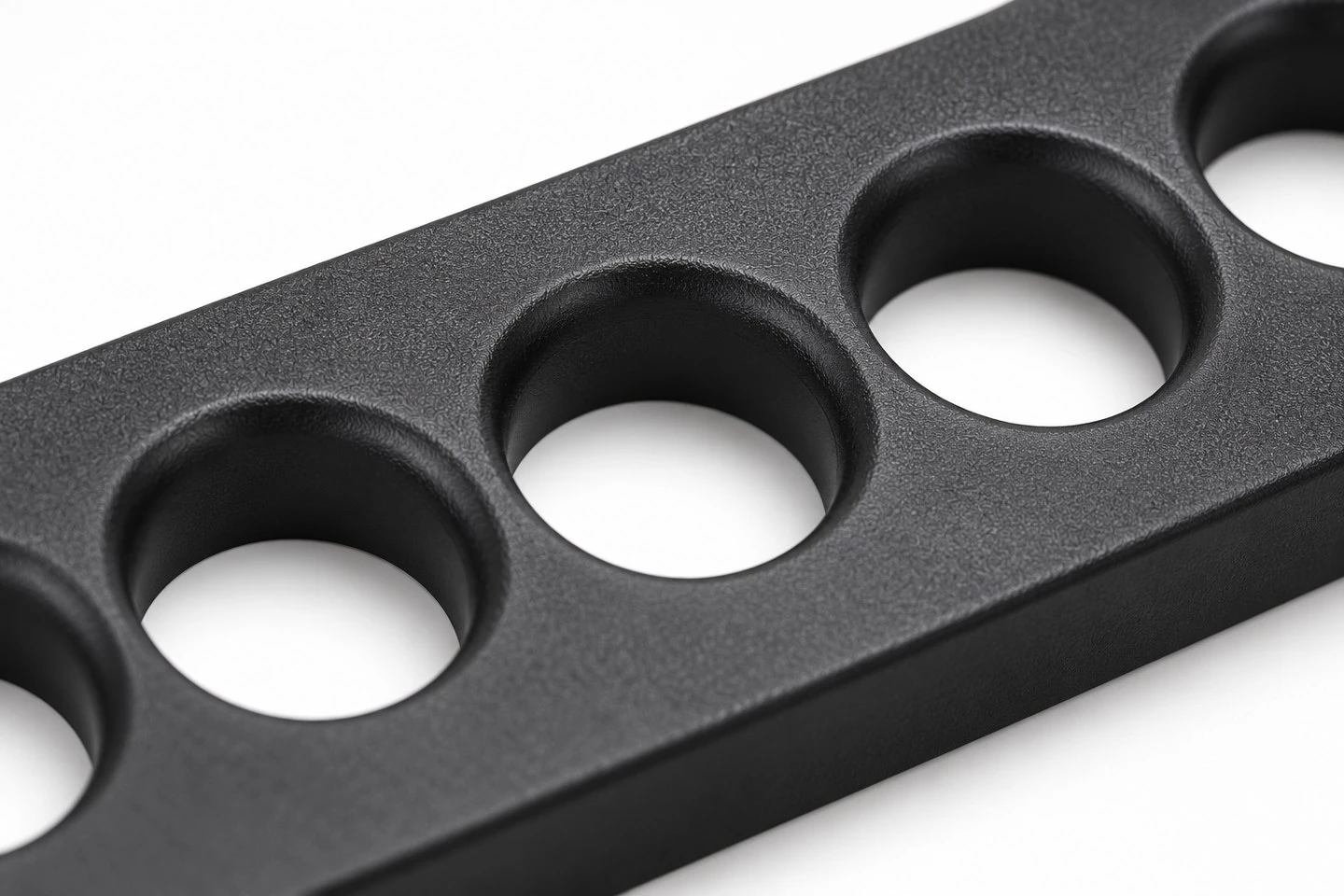
The starting point is the space available in your machine. We can review the plate outline, overall thickness, number of passages, opening diameter, hole spacing and mounting arrangement against your assembly model. The openings can follow a straight row or a different pattern when the cable route needs it. Mixed opening sizes may be useful where sensor leads and larger power cables share a mounting area. The drawing should identify which openings are functional cable passages and which are reserved for fasteners or alignment.
Rounded entry edges can help reduce sharp contact with cable jackets, but the required radius and clearance depend on the particular cable and movement. Local ribs, recessed screw areas, locating surfaces and identification features can also be considered during mold review. Every additional feature should serve a defined assembly need. We check whether the proposed shape can be released from the mold and whether slides, a different parting line or a revised feature would make the design more practical.
Which material should you choose: nylon, PP, POM or ABS?
Material selection begins with the working environment, not the color of a sample. Please identify the maximum and minimum operating temperatures, cable movement, mounting loads, exposure to cleaners or oils, indoor or outdoor use and any purchasing specifications. Nylon, PP, POM and ABS are different material families, with substantial variation between individual grades. We can discuss suitable candidates, but final suitability must be established using the selected grade data and testing in your assembly. No single resin should be assumed to meet every routing requirement.
| Material family | Possible design interest | Points to confirm before approval |
|---|---|---|
| Nylon / PA / PA66 | Mechanical guide structures and ribbed mounting features | Moisture conditioning, dimensional behavior, selected reinforcement and actual temperature range |
| PP | Lightweight guide plates and applications requiring evaluation of chemical exposure | Stiffness, long-term clamping behavior, shrinkage and compatibility with the specific chemicals |
| POM | Guide passages where sliding contact and dimensional consistency are important | Grade selection, operating environment, cable-jacket contact and mold shrinkage |
| ABS | Indoor equipment components requiring a defined appearance and molded structure | Heat exposure, chemical contact, impact needs and any special electrical requirements |
When is nylon worth evaluating for this component?
Nylon can be considered when a cable guide includes mechanically loaded mounting areas or structural ribs. The relevant choice may be an unfilled grade or a reinforced formulation, depending on the load case and the surface in contact with the cable. These options should not be treated as interchangeable. Reinforcement can change molding behavior, surface texture and directional dimensional response. A grade that suits a mounting boss may require further attention at a surface that repeatedly contacts a flexible jacket.
Moisture is also part of the dimensional discussion for nylon parts. State whether inspection is required in a dry molded condition or after a defined conditioning procedure. Hole spacing that looks correct immediately after molding may need a different evaluation after the part reaches its working environment. For critical interfaces, the drawing should define the inspection condition and the acceptance method so that sample approval reflects the intended service state.
How do PP, POM and ABS change the design discussion?
PP may be considered for lightweight routing components, particularly when a project calls for evaluation against specified chemicals. However, mounting pressure and sustained load need attention. A screw tightened directly against a polymer surface can change the local shape over time. The installation may need a larger bearing area, a controlled tightening procedure or a different mounting arrangement. Chemical compatibility must be checked for the named substance, concentration, temperature and exposure time rather than inferred from the resin family alone.
POM can be a candidate where a cable occasionally slides through a guide opening. The cable jacket material, contact pressure and motion still determine whether the combination is acceptable. ABS may be considered for indoor equipment guide plates where appearance and assembly geometry matter. Neither resin name establishes an electrical rating or outdoor life. If flame behavior, UV exposure or a specific regulatory requirement is relevant, provide the exact requirement before material sourcing and quotation.
How should cable holes and mounting holes be dimensioned?
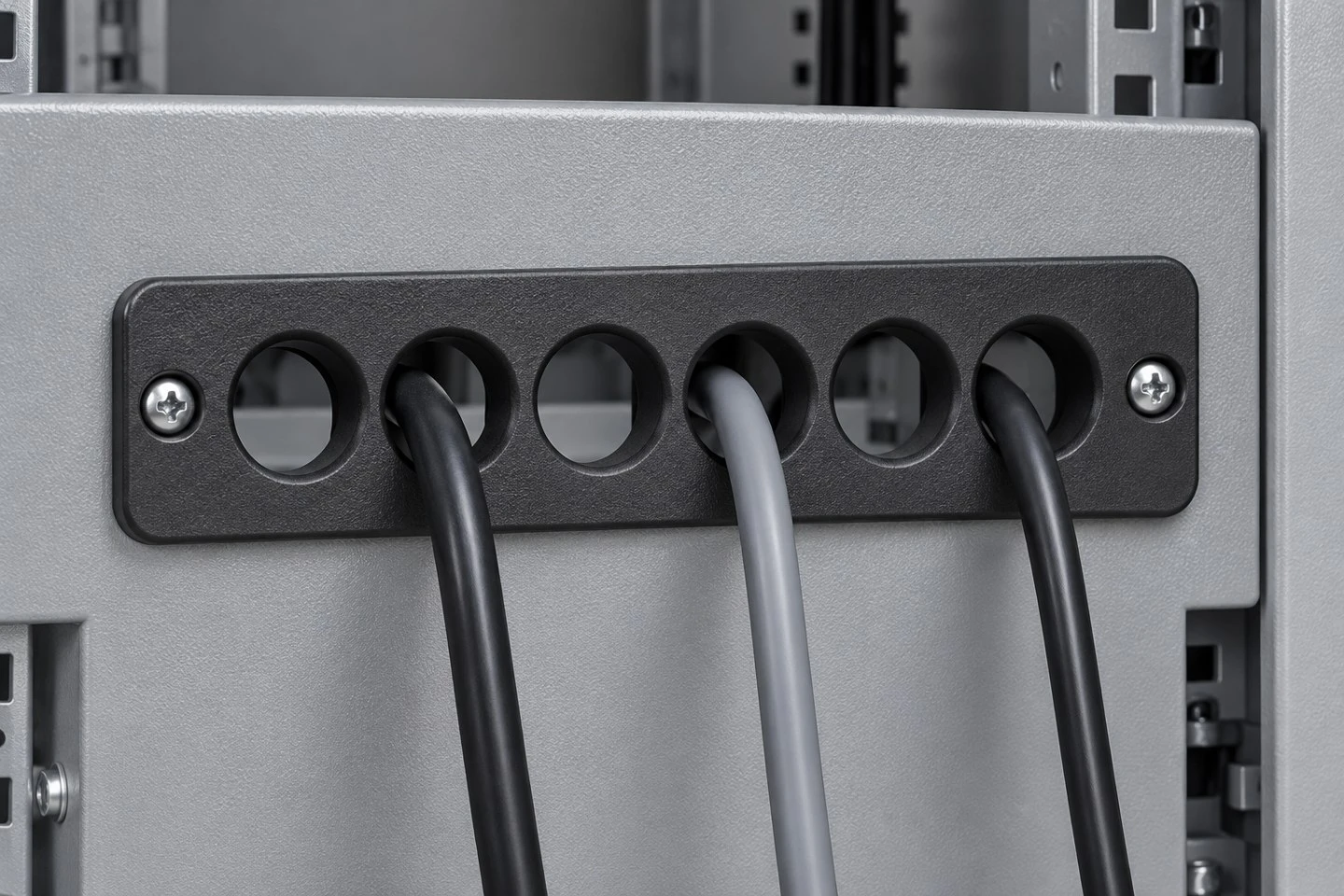
The cable opening should be based on the maximum outside diameter of the cable or sleeve that must pass through it, including the clearance required for assembly and movement. If a connector has to pass through the plate, its envelope may control the opening instead of the cable itself. A fully closed hole generally requires the cable to be threaded through before its end connections are completed. Please flag this assembly sequence early; a split guide is a different product structure and may need a separate tooling approach.
Mounting-hole locations should reference the surfaces that actually locate the part in the machine. Define whether the fasteners merely secure the plate or also locate it. Avoid applying an unnecessarily tight tolerance to every feature. Instead, identify the critical passage dimensions, fastener spacing, flatness requirements and clearance zones. We review achievable tolerances with the selected resin, mold arrangement and inspection method before accepting the final drawing. Dimensions shown in a concept image are not purchasing specifications.
Are standard dimensions available for this product?
This is a drawing-based custom product, so there is no single standard length, hole diameter or thickness that applies to every order. A quotation is prepared from your geometry and production requirements. If you have an existing part, a dimensioned sketch and a sample can help define a replacement project, but any missing dimensions must be resolved before tooling. We do not assign arbitrary standard sizes to a component whose purpose is to fit a specific equipment layout.
Your dimensional schedule can list overall length and width, nominal wall thickness, each passage diameter, passage center distances, mounting-hole diameters and mounting centers. Include edge radii, local recesses and the relevant datum scheme when they affect assembly. If several versions share the same outline but use different openings, send a complete version matrix. This allows the mold strategy and possible interchangeable tooling features to be evaluated without assuming that every version can use an identical cavity.
What is checked during injection molding design review?
We examine the wall distribution around the openings because narrow webs, thick intersections and abrupt transitions can influence filling and dimensional consistency. Where suitable, a ribbed structure may support the plate without making the entire section unnecessarily thick. Draft, corner radii and the parting line need to be coordinated with the functional contact surfaces. A cable passage that must remain smooth should be identified as such before the mold is designed.
Gate and ejector locations are reviewed against appearance and use. Gate vestiges should not interfere with mounting or create an unwanted contact point near a cable route. Ejector marks, parting-line position and any permitted flash need explicit acceptance criteria when they matter to the assembly. These items are discussed during design review and sample approval, rather than represented as invisible or automatically absent on every injection molded part.
How are samples evaluated before production?
Sample review should connect the molded part to its actual job. In addition to agreed dimensional checks, install the plate on the intended panel and route representative cables through it. Confirm access for fasteners, cable insertion, connector clearance and service removal. If cables move during normal operation, evaluate the movement in the real routing path. A visual inspection of a loose sample cannot establish performance under repeated motion or sustained fastening loads.
When the design is approved, the agreed drawing revision, resin grade, color reference and inspection requirements become the production reference. Record any approved sample conditions that affect measurement, especially conditioning requirements for nylon. If the application needs wear, chemical, temperature or electrical testing, define who performs the test, the method and the acceptance criteria. Such results must come from the relevant evaluation; concept photographs are only illustrations of possible geometry.
What affects tooling cost, order quantity and delivery?
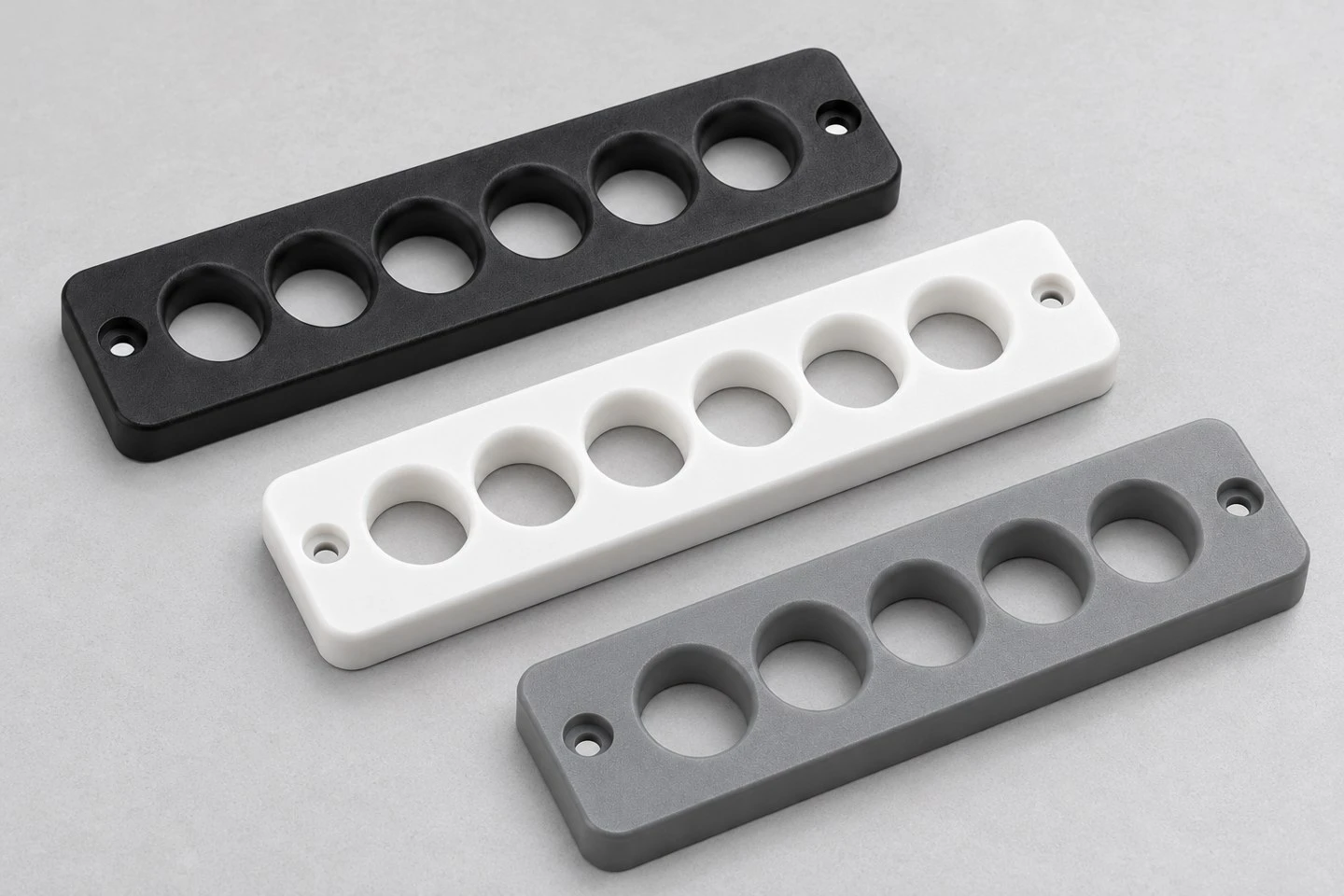
The quotation depends on component size, cavity arrangement, resin choice, mold complexity, expected annual demand and the required inspection scope. A simple plate with through-openings has different tooling needs from a part with side features or undercuts. Multiple variants may require separate cavities or interchangeable tooling elements. We review these choices using your expected volumes and the required version mix, rather than treating the lowest initial mold price as the only decision factor.
Minimum order quantity and lead time are quoted for the specific project. Please provide the first order quantity and expected repeat demand so that tooling and production planning match the business requirement. A new design may require mold development and sample approval before production. A change to hole positions, resin or mounting geometry after approval can affect tooling, dimensions and timing, so the change should be reviewed and documented before the next batch is manufactured.
What should you send for a custom cable guide plate quotation?
Send your STP, STEP or IGS model together with a dimensioned drawing where available. Identify the preferred material family and any exact grade requirement, desired color, quantity, assembly conditions and critical dimensions. A short explanation of how the plate is installed is particularly helpful. Include cable outside diameters, whether connectors must pass through the openings, the panel mounting arrangement and any areas where cable contact must be avoided.
If your material is still undecided, describe the environment so nylon, PP, POM and ABS can be discussed against the same functional requirements. We can then review the custom molded geometry, highlight information needed for quotation and propose a practical route toward sample approval. The goal is a component designed around your equipment, with clearly agreed dimensions and production requirements.
Welcome to send your drawings, material requirements and required quantities for a custom injection molded plastic cable guide plate quotation. Contact: amanda@tjswks.com
Hot Tags: custom injection molded plastic cable guide plates, China, suppliers, manufacturers, factory, bulk, cheap, low price, quotation, consumer plastic injection parts, Injection Molding Parts ABS Plastic Special-shaped Parts, PA6 PA66 Nylon Parts price, Plastic Speaker Casing Housing Cover Shell, standard plastic machinery components, Wholesale Injection Mould Maker Plastic Product


