


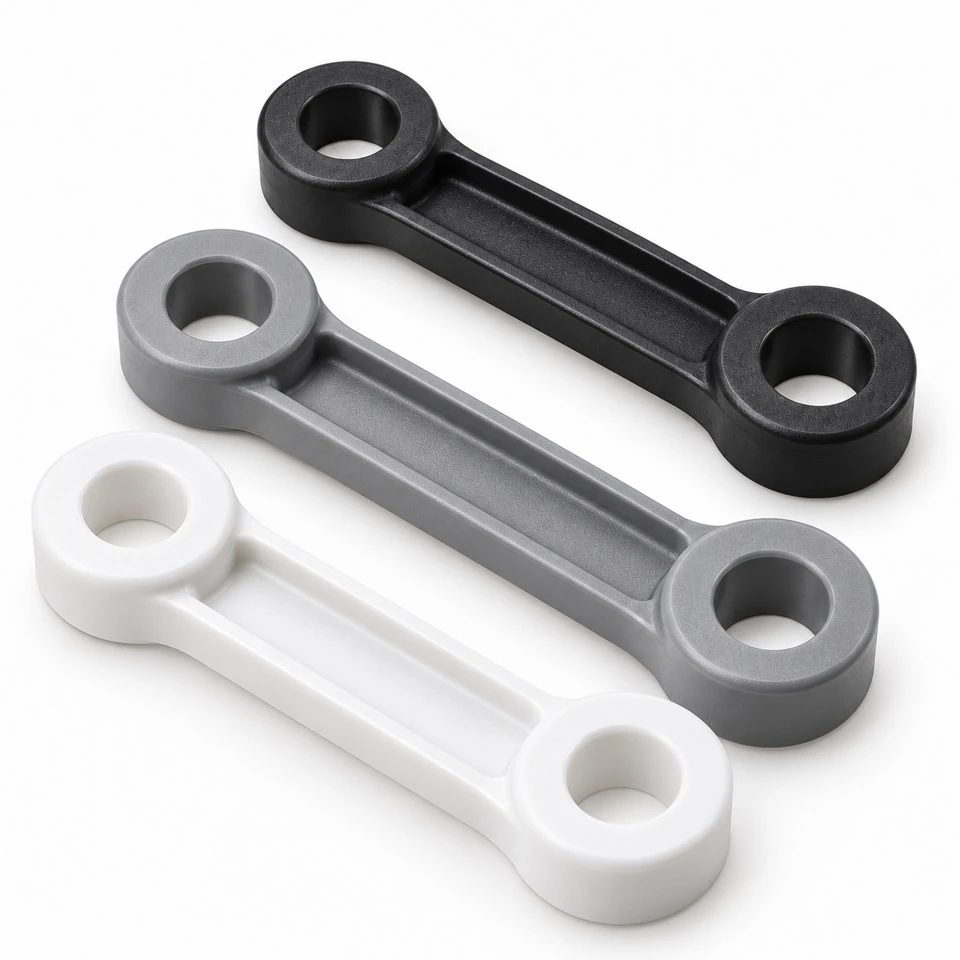
Tianjin SWKS Technology & Development Co.,Ltd is one of the most reliable manufacturers and suppliers of custom injection molded plastic linkage arms in China. If you're going to buy bulk cheap custom injection molded plastic linkage arms, welcome to get quotation from our factory. Quality products and low price are available.
Custom Injection Molded Plastic Linkage Arms
A linkage arm connects two mechanical interfaces so that movement at one location can be transferred to another. In a compact industrial mechanism, the connection often has to fit a restricted envelope, align with existing pivot points and clear nearby components throughout its travel. SWKS offers custom injection molded plastic linkage arms developed from your drawing, with nylon and POM among the material families that can be evaluated. The center distance, pivot bores, connecting web and reinforcing features are defined around the assembly rather than a fixed catalog size.
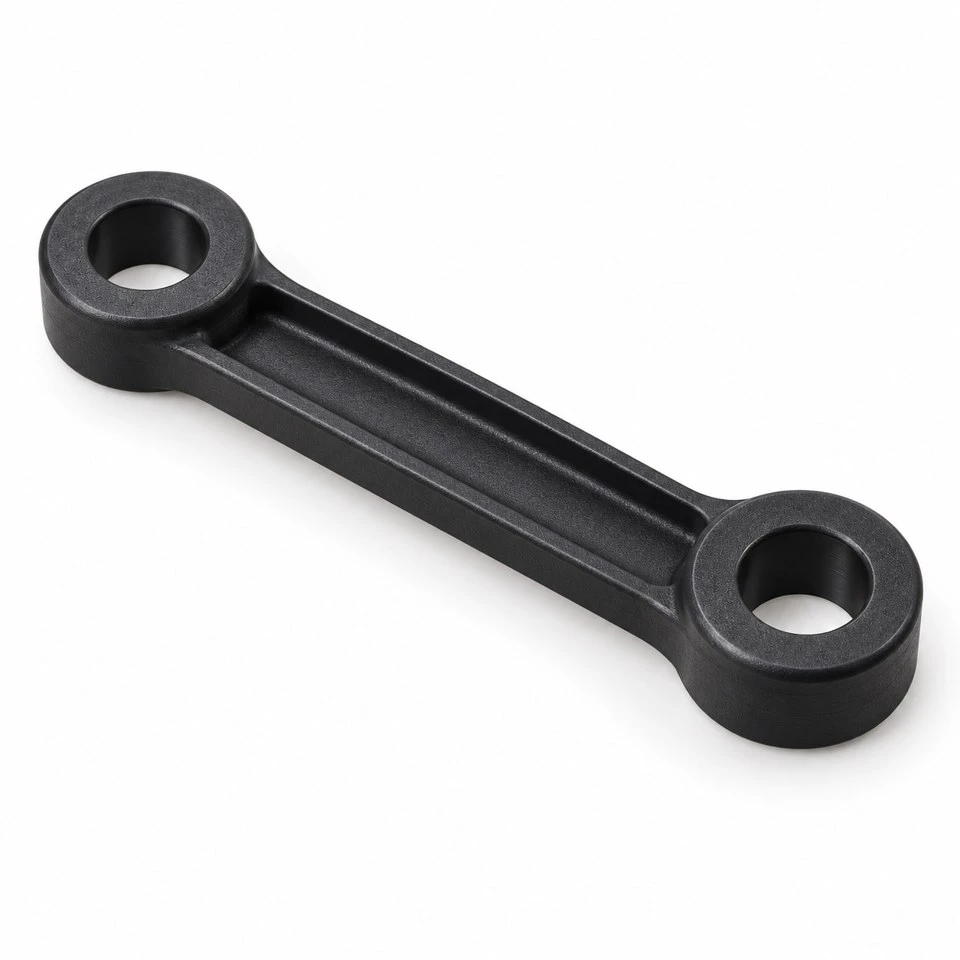
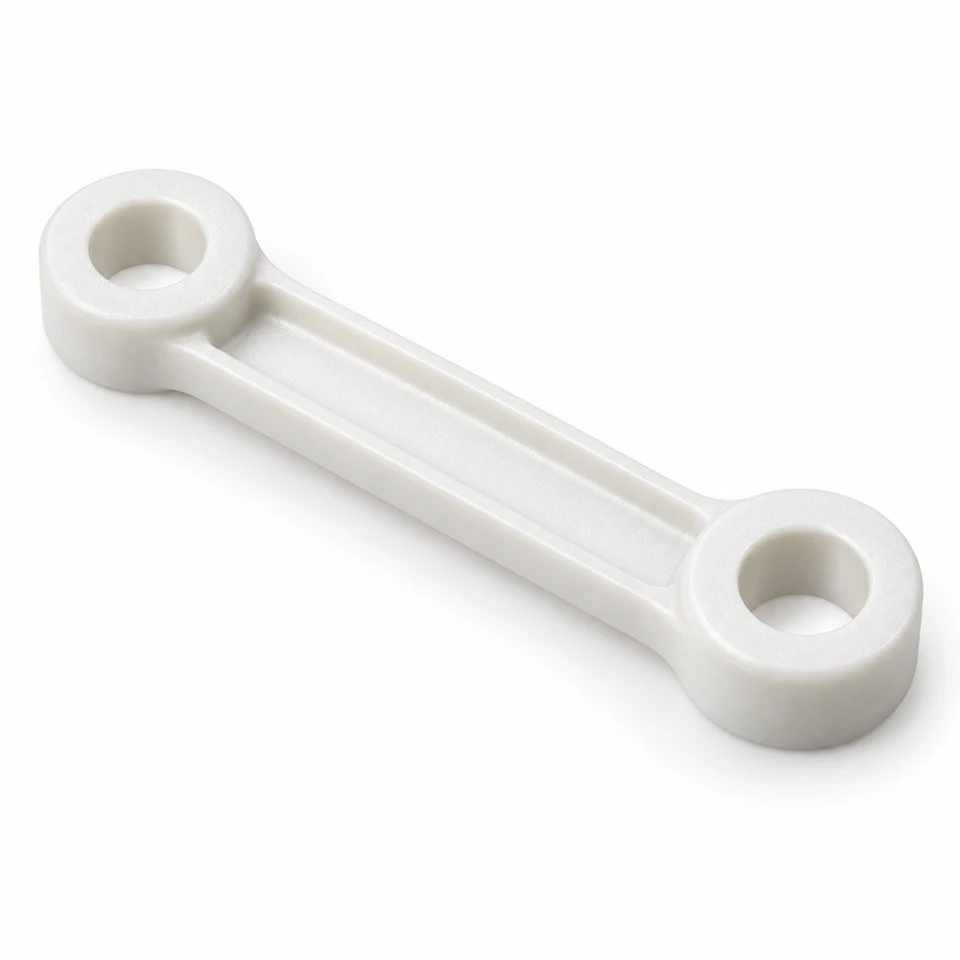
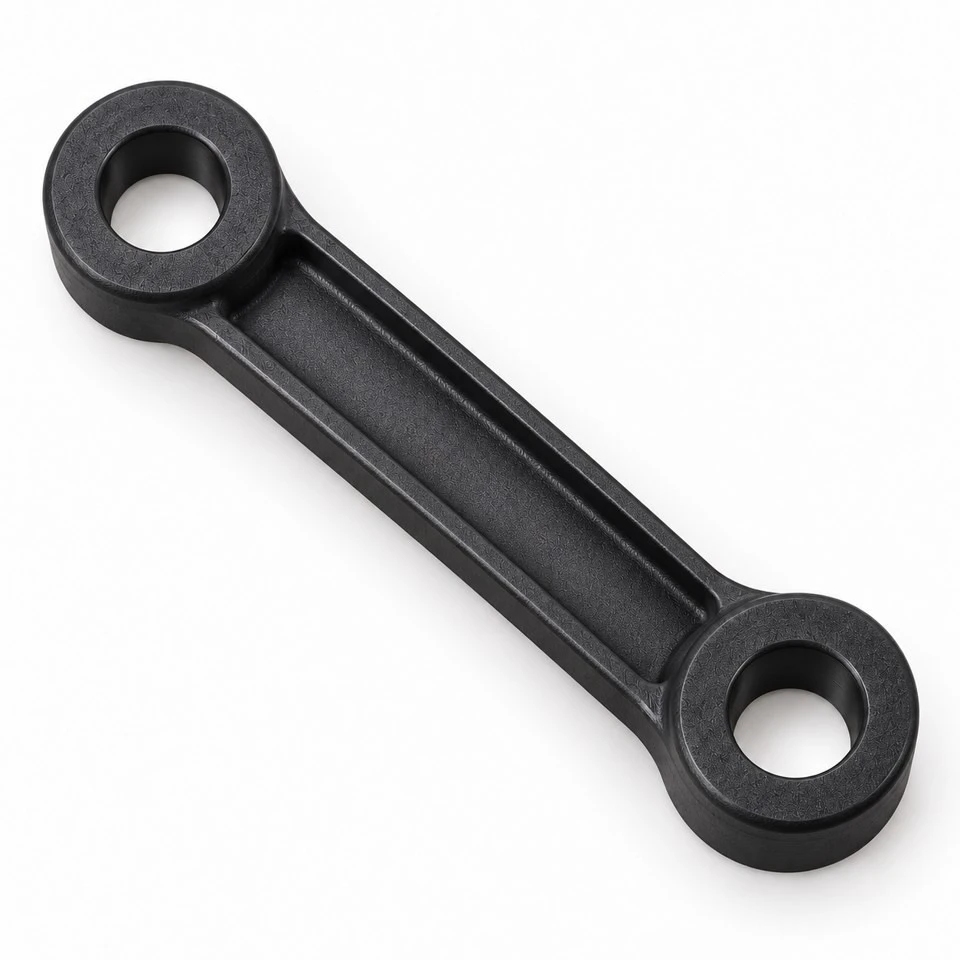
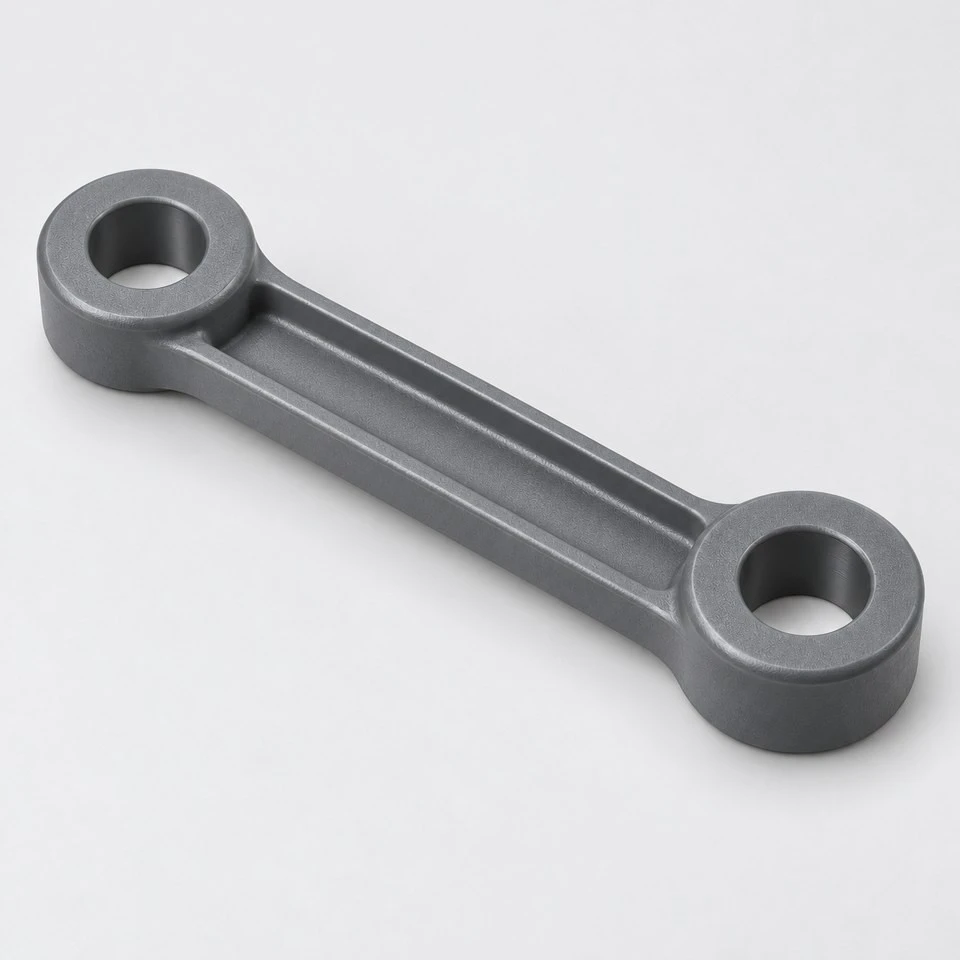
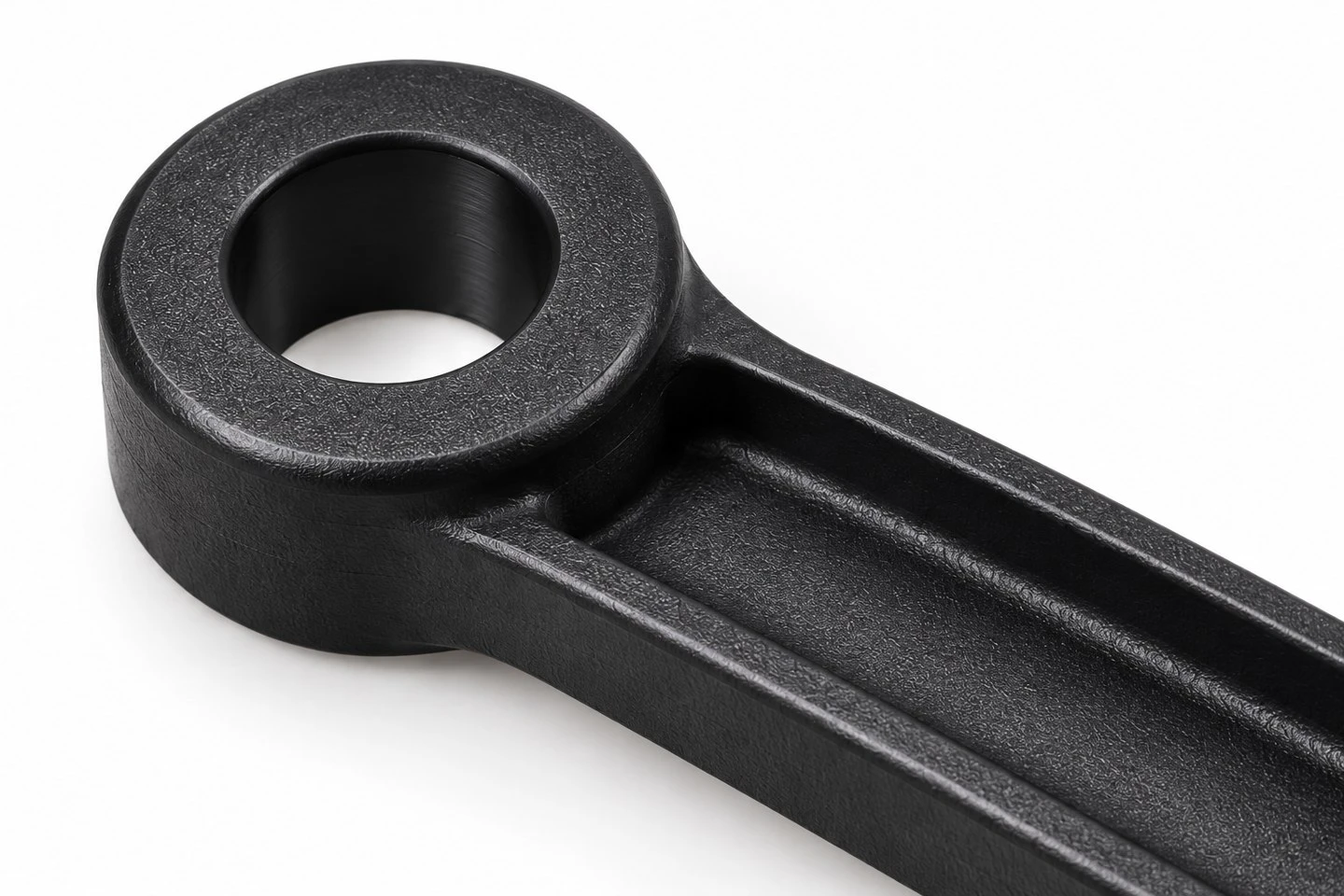
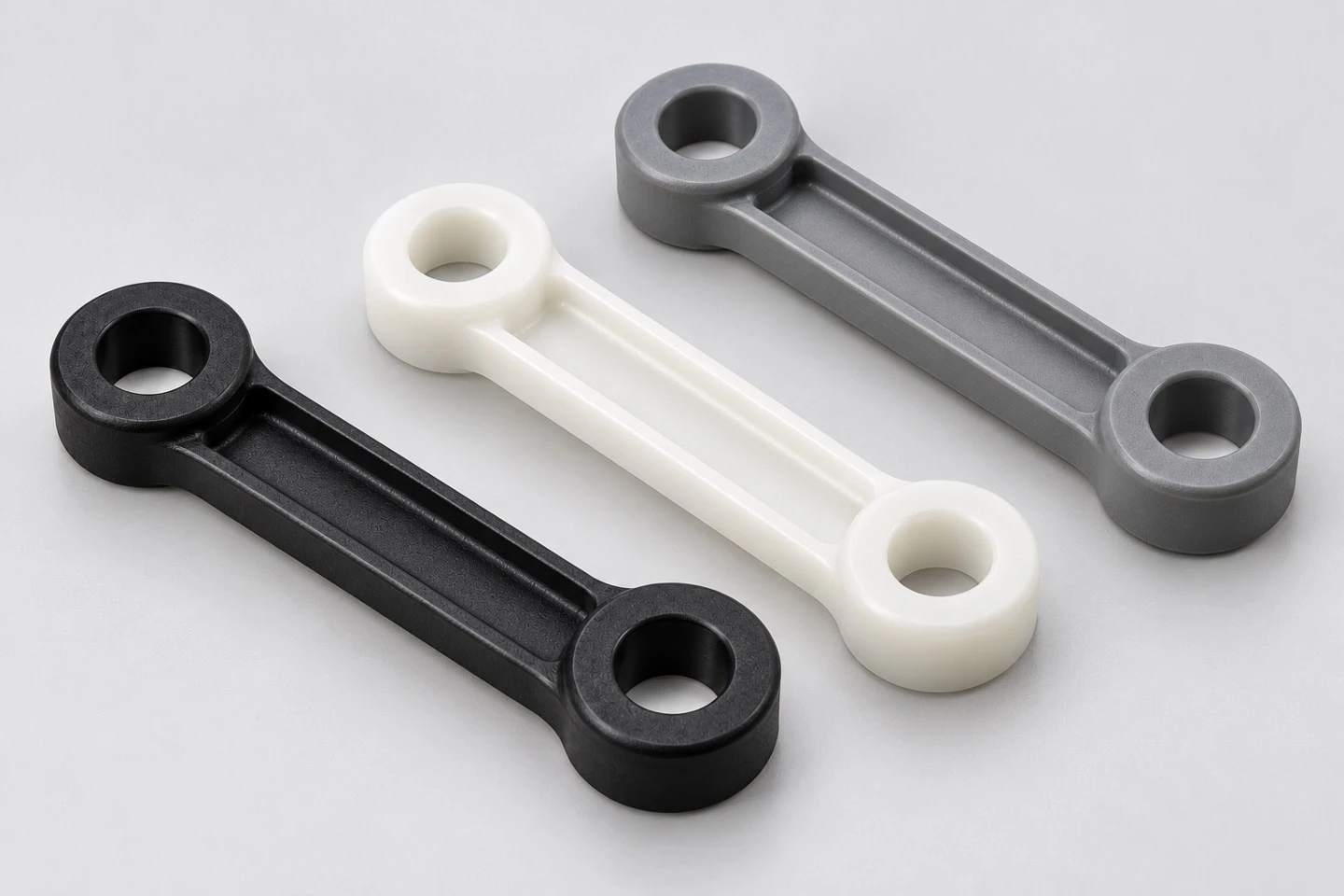
The illustrated concept has two circular end bosses joined by a recessed, ribbed web. It represents a possible custom connecting link for equipment mechanisms, not a tested standard component. The final application, load capacity, operating life and acceptance requirements must be defined for the particular design. The concept images do not establish a rated force or a service-life guarantee.
Where can a custom plastic linkage arm be considered?
Possible applications include light-duty positioning mechanisms, equipment access assemblies, mechanical indicators and motion transfer within industrial devices. The component may connect two pivots, maintain a defined spacing between moving parts or form one element of a larger linkage. Whether plastic is suitable depends on the forces, motion, temperature and environmental conditions of the complete mechanism. We review the proposed part with those requirements instead of assuming that a polymer can replace an existing metal link without design changes.
For a replacement project, explain why the existing component is being changed. Weight, noise, assembly convenience, corrosion exposure or a revised mechanism layout may lead to different design priorities. A successful custom part begins with a clear description of its mechanical job. If the linkage performs a safety-related function, include the applicable validation requirements from the start; a general product description is not a substitute for engineering approval.
What geometry can be customized?
The primary dimensions are usually the pivot center distance, bore diameters, boss thicknesses and the available envelope around the connecting web. These features can be revised to match your mechanism. Both bores may be the same size, as in the illustration, or different sizes when the assembly requires it. Boss faces may need a defined relationship to each other so that the part sits correctly between mating components.
The connecting web can incorporate ribs, local recesses, offset surfaces or clearance features where they are useful. These details are reviewed for their effect on stiffness, material distribution and mold release. A thicker component is not automatically a better component: unnecessary material can complicate molding and may not improve the critical load path. We discuss practical changes while preserving the interfaces that control fit and movement.
Why are pivot center distance and bore alignment important?
The relationship between the two pivots affects the position and movement of the connected mechanism. Please specify the center distance from a clear datum scheme and identify the inspection condition. Bore alignment, boss face spacing and the clearance to mating pins may be as important as the overall length. These requirements should be separated from dimensions that only control the external appearance.
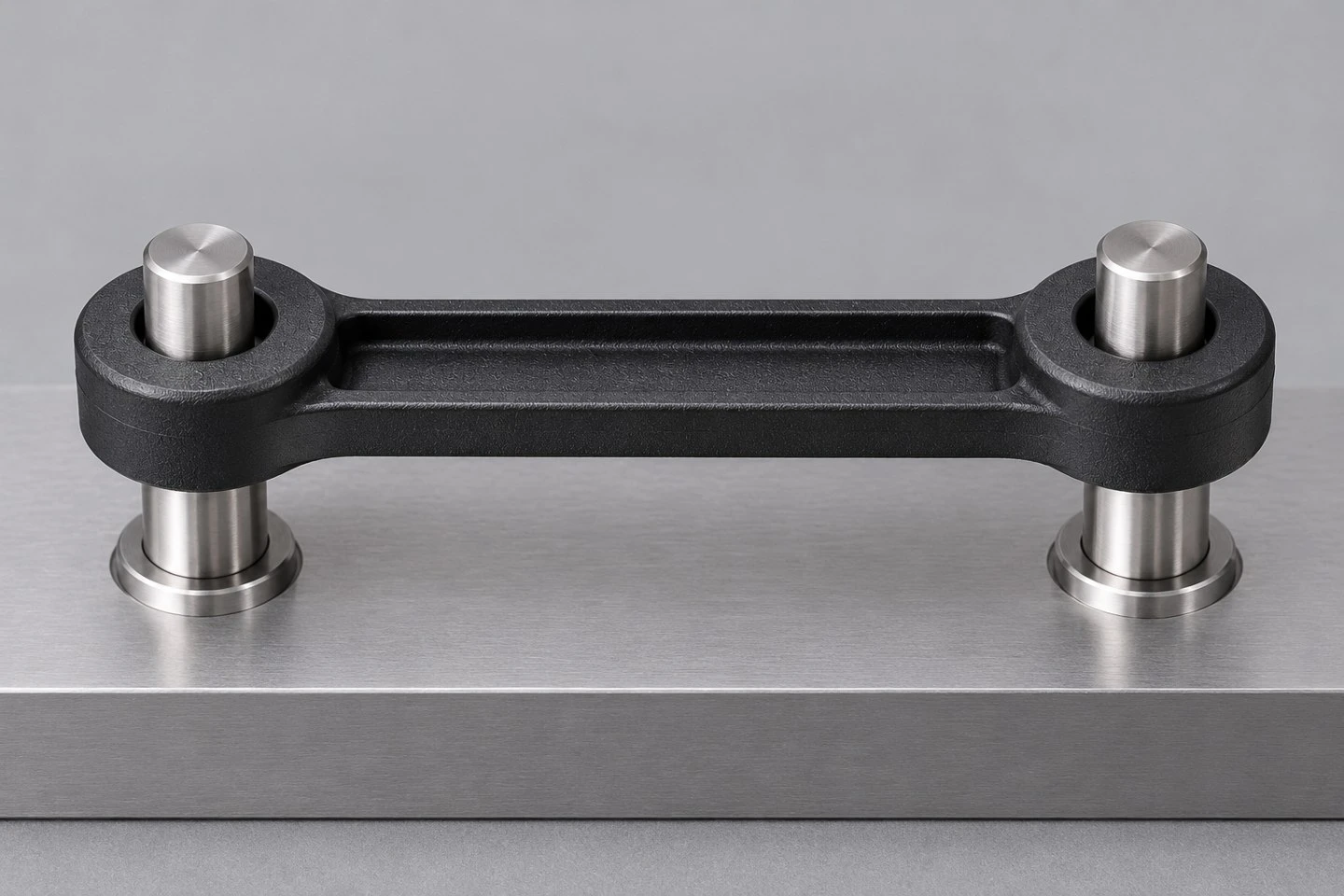
Provide the mating pin or shaft dimensions, any bushings, the retention method and the intended running clearance. State whether a bore rotates on a pin, remains fixed to it or simply provides installation clearance. A press fit, a freely moving pivot and a loosely located connection require different design decisions. We do not assign one universal fit to every molded bore. The appropriate tolerance is reviewed using the resin, geometry, mold arrangement and inspection method.
Which loads and movements should be described?
Tell us whether the link mainly carries tension, compression, bending or a combination of these loads. Identify the maximum expected force, any impact during operation and whether the force reverses. The assembly model should show the travel range and the available clearance in the extreme positions. A link that clears surrounding parts at rest may interfere with them during movement, so the operating envelope needs to be part of the review.
Also state the expected operating frequency, target service life and whether load is applied continuously or only briefly. A short functional trial and a long-term durability evaluation answer different questions. Sustained loads may influence polymer deformation, while repeated movement can introduce wear at the pivot interfaces. Those effects are evaluated for the selected material and complete design. We quote a custom component against an agreed requirement rather than publishing an unsupported generic load rating.
When should nylon be evaluated?
Nylon can be considered for mechanically loaded molded structures, including links with ribs and locally reinforced pivot areas. Selection may involve an unfilled or reinforced grade, depending on the forces, dimensional needs and mating surfaces. Reinforcement changes more than stiffness: it can also affect molding behavior, surface condition and directional dimensional response. The grade should therefore be selected with the bore contact and overall structure in mind.
Moisture conditioning is relevant when nylon dimensions control assembly. Please define whether the part is inspected in a dry molded condition or after an agreed conditioning process. The intended operating environment should be included in sample evaluation. If a pivot clearance is critical, test the assembly in representative conditions rather than relying only on a measurement taken immediately after molding. The accepted inspection state should be recorded on the project documentation.
When might POM be a suitable candidate?
POM is often evaluated for mechanical parts where sliding contact and dimensional behavior matter. For a linkage arm, attention should be given to the pivot interfaces, the surrounding boss structure and the way the force enters the web. A general material description cannot predict wear against every pin material. The mating surface finish, contact pressure, speed and operating environment all belong in the application review.
If lubrication is planned, identify the lubricant and whether it will remain available throughout operation. If the mechanism must run dry, state that explicitly. Different POM grades can offer different properties, so the purchase specification should identify the agreed grade or performance requirements. A color change or a material substitution after approval should be reviewed before production because it may affect both molding and functional behavior.
| Design item | Information for quotation |
|---|---|
| Connection geometry | Pivot center distance, bore sizes, boss widths and mating pin details |
| Material | Nylon / PA / PA66, POM or another resin evaluated for the application |
| Motion | Travel range, speed, operating frequency and required clearance envelope |
| Loading | Force direction, maximum load, impact and duration of loading |
| Environment | Temperature, moisture, cleaning agents, oils and indoor or outdoor exposure |
| Acceptance | Critical dimensions, sample checks and any required durability evaluation |
Can ABS or PP be used for a custom link?
ABS and PP can be reviewed when their selected grade properties suit a particular component, but they are not automatic substitutes for nylon or POM in a loaded linkage. A low-force motion indicator may have different needs from a heavily cycled actuator connection. Please provide the actual function and loading so that the discussion is based on the application rather than a list of available polymers.
A change between material families can alter stiffness, shrinkage, environmental response and the fit at the pivots. The mold and tolerance strategy may need adjustment. If you want to compare several resins, identify the alternatives before tooling so that their implications can be reviewed. Samples should be evaluated against the same operating conditions and acceptance criteria, allowing a meaningful comparison instead of relying on how a loose part feels by hand.
How are ribs, bosses and mold features reviewed?
The pivot bosses transfer force into the connecting web, so their transitions deserve attention. Radii, rib placement and section changes are reviewed to avoid unnecessary local concentrations of material and abrupt geometry. Draft must be considered on the relevant molded surfaces, while functional dimensions are defined at the locations that matter for assembly. Where a bore requires a special finish or additional processing, that requirement should be identified before quotation.
The tooling review also considers gate position, parting lines, ejection and potential weld-line locations. These features need to be coordinated with the load path and the mating surfaces. Gate vestiges must not obstruct movement or pin installation. Permitted marks and parting-line traces should be agreed where they affect operation. The illustrated ribs show a design concept; the final moldable structure is established from the approved model and project requirements.
What happens during sample and assembly approval?
Initial samples are checked against the agreed dimensional plan, then evaluated in the actual mechanism. Confirm pin insertion, lateral clearance, free movement through the full travel and access for retaining hardware. Check that the link does not rub against nearby covers, brackets or wiring. If the application includes load reversal or impact at the travel limits, those conditions should be included in the functional evaluation.
Where service life is important, define a representative test with the required load, motion, environment and acceptance criteria. A visual sample approval does not demonstrate long-term durability. Record the drawing revision, resin specification, inspection condition and any approved assembly requirements before production. If testing identifies a necessary change to a bore, rib or material, review the tooling and repeat the relevant evaluation before approving the revised component.
What affects price, tooling and order quantity?
The quotation is influenced by the part size, resin grade, mold complexity, cavity arrangement, inspection scope and production quantity. A simple two-bore link has different requirements from an offset link with side features or additional hardware. If multiple versions are needed, provide the full range of center distances and interface changes. We can review whether common tooling elements are practical or whether separate tooling is more appropriate.
Minimum order quantity and delivery timing are quoted for the project. Please share the first order quantity, repeat demand and the planned approval schedule. New custom geometry may require mold development and sample evaluation before production. An existing mold should not be assumed suitable for a different center distance or resin without review. Clear revision control helps keep later batches consistent with the configuration that was actually approved.
How do you request a custom plastic linkage arm quotation?
Send a STP, STEP or IGS model together with a dimensioned drawing if available. Include the preferred material, color, required quantity and the critical pivot dimensions. An assembly image or short description of the movement helps explain the component's purpose. If you are replacing a metal part, provide the relevant loads and any problems you want the redesign to solve.
SWKS can review drawing-based plastic molded parts with custom pivot geometry, connecting webs and reinforcing features. There is no fixed standard dimension table for this product; the final dimensions are agreed from your design. Welcome to send your drawings, material requirements and required quantities for a custom injection molded plastic linkage arm inquiry. Contact: amanda@tjswks.com
Hot Tags: custom injection molded plastic linkage arms, China, suppliers, manufacturers, factory, bulk, cheap, low price, quotation, Injection Mold Products Manufacturer Custom Plastic Parts, Low Volume Injection Molding Machine, plastic part design, plastic rubber machinery parts, POM Plastic for Auto Spare Parts, Wholesale Injection Mould Maker Plastic Product


