


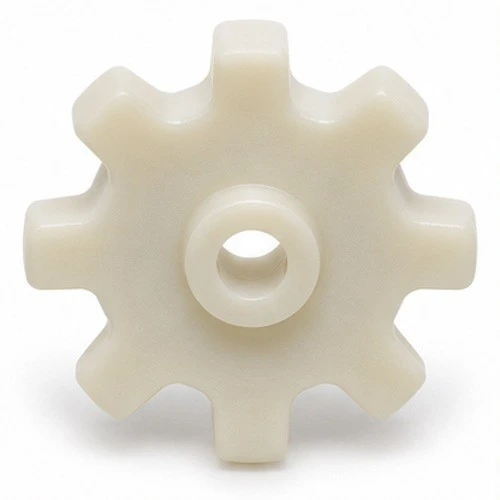
Tianjin SWKS Technology & Development Co.,Ltd is one of the most reliable manufacturers and suppliers of custom pom precision seed planter seed knockout wheel in China. If you're going to buy bulk cheap custom pom precision seed planter seed knockout wheel, welcome to get quotation from our factory. Quality products and low price are available.
Custom POM Precision Seed Planter Seed Knockout Wheel
At the end of a metering cycle, the pickup opening may still hold a seed that did not release at the expected position. The knockout wheel brings a shaped lobe into that part of the cycle. SWKS quotes this drawing-based injection molding with tooling and part quantities defined for the project.
Images are generated product illustrations in a photographic style. Final geometry, material grade and acceptance criteria follow the approved project drawing.
Contents
- The seed that stays with the disc
- Lobes, spacing and cartridge orientation
- Wear has a location as well as a size
- First molded wheels for the planting unit
- Inspection and equipment trials
- Planning repeated assembly
- From drawing review to a quote
Product specification
| Attribute | Drawing-based scope |
|---|---|
| Material | POM grade to be confirmed |
| Process | Custom injection molding |
| Application | precision planter seed metering assemblies |
| Drawings | STP, STEP or IGS with dimensioned PDF |
| Quotation | Tooling, pilot samples and production quantities reviewed by project |
The seed that stays with the disc
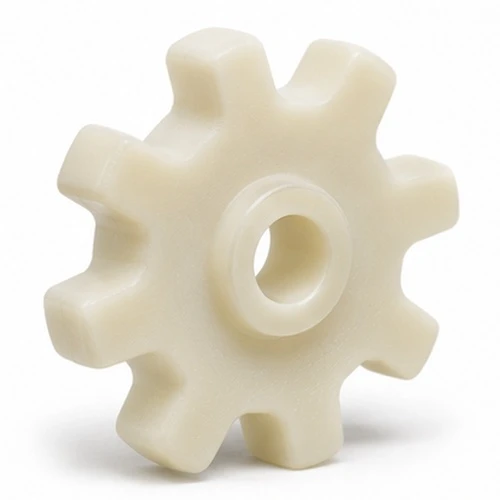
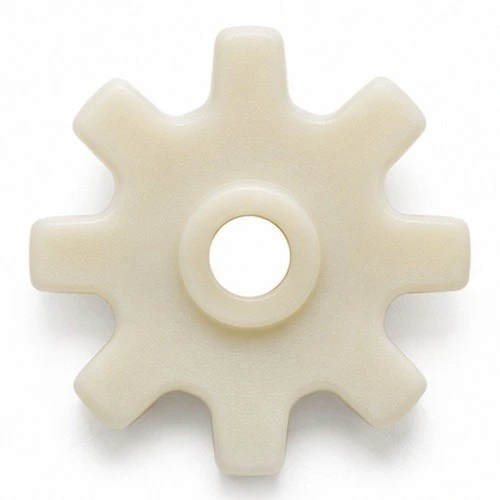
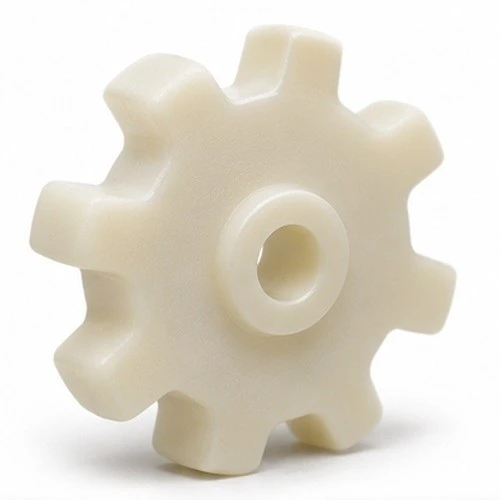
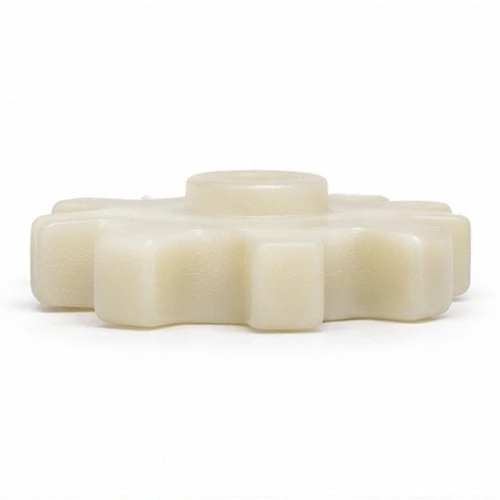
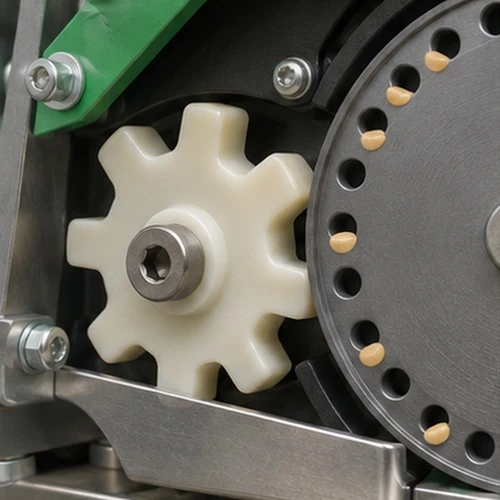
A seed metering disc carries individual seeds through the pickup and release cycle. Some layouts include a knockout wheel to dislodge a seed that remains in the disc at the designated point. The POM wheel in the illustration has rounded lobes around its perimeter. Their final shape and spacing follow the planter design. For a new tool, send the metering disc profile, the axle or support and the position at which the wheel is intended to act. A detached wheel model cannot show how far the lobe should enter the working region.
A useful bench discussion starts with the seed size range and an outline of a full metering cycle. A seed remaining near an opening can lie flat, stand on an edge or lodge against a surface. The equipment owner may qualify the disc and wheel with several seed lots. Label the parts of the bench setup that reproduce the actual metering head and describe how the selected seeds are presented. The molded wheel can then be evaluated against the same references used when drafting the part.
Lobes, spacing and cartridge orientation
One lobe can approach the disc before the previous lobe has moved fully clear when the wheel and disc profiles bring them close together. A local section at maximum engagement and a second at the exit are useful. In some layouts the lobe clears a supporting back plate by a small space. Note whether the plate is fixed in the fixture or has a small amount of working movement. An inspection of the molding can record width and lobe shape, while a fitted fixture checks the relationship with the rotating disc.
Where the hub is keyed or indexed, identify which lobe or feature sets the orientation. Move the sections to show the relation between that mark, the axle center and the working opening. If the wheel mounts without angular indexing, the exterior profile and pattern may still need to be consistent at every point where it meets the disc. That requirement belongs with the pattern on the drawing.
Wear has a location as well as a size
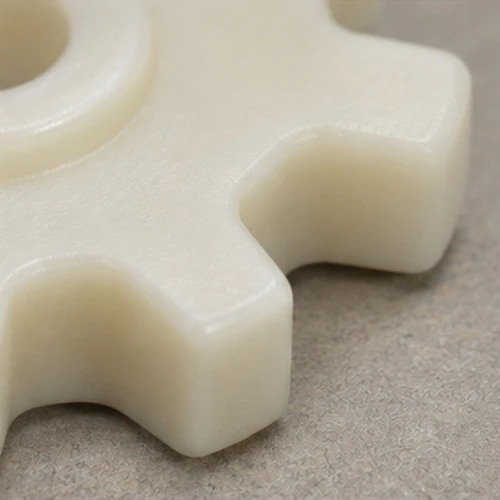
A wheel from the field can be an informative reference if its working and idle zones are easy to identify. Inspect it before cleaning away dust or seed treatment residue. A rubbed area may indicate a planned contact or show where a neighboring part is out of position. Label the side toward the disc and identify the corresponding assembly. Compare the used wheel with a recorded new part or the released drawing before assigning a lobe profile from the used sample.
The acetal grade should be stated along with the anticipated conditions of use. Abrasive debris, seasonal storage, mating surface and cleaning can affect the choice. A suitable molding inspection checks flash at the lobe and enough edge quality for the intended contact. Any operating or wear target should be set up and measured with the customer's intended disc, seeds and service conditions.
First molded wheels for the planting unit
With the unpowered fixture ready, rotate the approved disc slowly and record where the lobe enters the defined opening envelope. Try the seed sizes for which the equipment team requests evaluation. Record whether the observation is a dry fit, an indexed check or part of a test on a designated planter head. The report should describe the disc and axle revisions and the seed group so later results can be compared against the original trial.
Before quoting, attach the hub dimensions, lobe profile, axle condition and metering head section. Give the expected number of wheels per machine and the sample and repeat order counts. If the wheel is replaced as part of a seasonal maintenance kit, identify how it is removed and whether similar versions share the same shaft. That can help catch a version difference early and makes it easier to specify packaging and labeling for spare parts.
For a comparison made after use in the field, confirm that the reference sample belongs to the intended row unit. Several rows in the same machine can use similar looking assemblies fitted with discs for different seed sizes. Photograph the housing and disc together with the wheel before drawing a conclusion about how the molded lobe should meet the opening. The equipment owner can identify which combination will be used to approve new wheels.
Inspection and equipment trials
One useful observation for the first inspection is to compare how the lobe enters the working region at the smallest and largest relevant seed setup. If a trial builds up a gap unexpectedly, note whether the difference appears while locating the molding or only after a fastener, latch or neighbor is installed. Record the order of operations. When a second technician repeats the check, the same viewing angle, machine revision and position on the part help make the observations comparable. Notes that identify a part as simply tight or loose can be hard to act on without knowing where the recorded condition appeared.
The report can include the dimensions and alternatives that matter for acceptance, such as a functional gauge or a fixture that represents mating geometry. If a feature can be checked in more than one position, agree which position governs the result. A flexible part restrained during measurement may show less movement than it would before installation, while some installed checks require the part to be held just as it is held in service. Store the drawing revision and information about the setup with the measurements. That makes it possible to read the results of the pilot alongside any later tooling revision.
Planning repeated assembly
A first build is an opportunity to learn whether the person receiving the component can tell its orientation, identify the correct version and put it into the equipment using the planned sequence. It is worth deciding how the parts will be grouped on the inspection sheet and in the shipment, especially when pieces come from different cavities or more than one molding run. Include the inspection plan and any functional tests approved by the customer. If the team already uses a reference assembly or gauge, tell us whether it can be supplied for the trial or should remain available only for final verification at the site.
For repeat production, pack orientation and separation depend on which areas touch neighboring pieces in transit. Parts that nest neatly can be harder to separate by hand if the stack is packed under load. A thin edge and a small projection can look sturdy on their own and still take a mark where the two parts meet in a full carton. Specify any protected surfaces, label details and pilot shipment count early. Where the first order only covers engineering and assembly approval, later production quantities can be quoted against the agreed packaging and inspection scope.
From drawing review to a quote
Send the part file and a dimensioned PDF together with a cropped assembly section or a mating part file. The drawing package should identify metering disc profile, lobe arrangement, axis position, seed range, debris exposure and replacement procedure. A photo of a current unit is most useful when it shows the direction of assembly or a feature that is hard to read on a print. If the quote is for a replacement, a sample can tell us about finish and practical handling. The sample should be accompanied by notes on any wear, damage or previous repairs, because the visible geometry may represent an already used part.
Share the approximate sample and production quantities, delivery destination and documentation needed at first article. If the drawing is still open to changes, identify which areas are fixed, which can be reviewed and who will clear any change to the assembly. Tooling, samples and production are priced separately to the extent the project requires. With the functional interface and quantities defined, the quote can also describe the intended inspection report and identify any hardware the customer plans to supply for a fit check.
See our range of custom plastic injection molded parts for additional OEM applications and molded component examples.
Request a quotation
Email the drawing package, sample quantity and estimated production volume to amanda@tjswks.com. Include the delivery destination and the machine or assembly revision that applies to the request.
Hot Tags: custom pom precision seed planter seed knockout wheel, China, suppliers, manufacturers, factory, bulk, cheap, low price, quotation


