


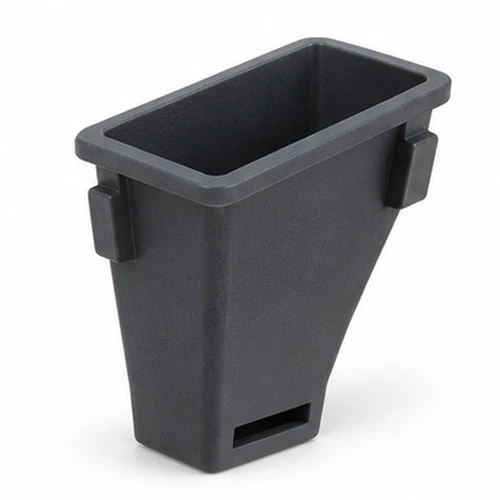
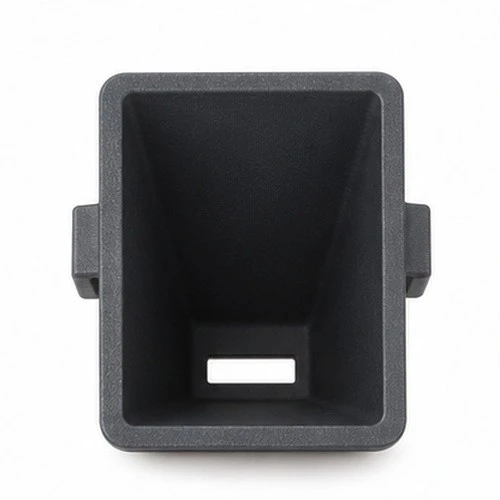

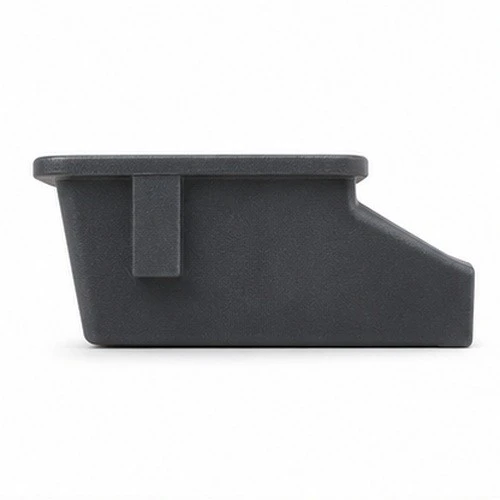

Tianjin SWKS Technology & Development Co.,Ltd is one of the most reliable manufacturers and suppliers of custom pp agricultural seed drill fertilizer outlet metering insert in China. If you're going to buy bulk cheap custom pp agricultural seed drill fertilizer outlet metering insert, welcome to get quotation from our factory. Quality products and low price are available.
Custom PP Agricultural Seed Drill Fertilizer Outlet Metering Insert
Two dry granular products can pass through the same outlet differently because the particles pack, bridge or tumble at different angles. A molded insert gives the equipment owner a specific outlet geometry to evaluate under that material. SWKS quotes this drawing-based injection molding with tooling and part quantities defined for the project.
Images are generated product illustrations in a photographic style. Final geometry, material grade and acceptance criteria follow the approved project drawing.
Contents
- The opening controls how granules enter the outlet
- Trace restriction upstream as well as through the insert
- Replacing an insert after field exposure
- Observations from a representative metering run
- A sample worth checking twice
- From pilot quantity to repeat orders
- Drawing package and quotation
Product specification
| Attribute | Drawing-based scope |
|---|---|
| Material | PP grade to be confirmed |
| Process | Custom injection molding |
| Application | fertilizer discharge points on agricultural seed drills |
| Drawings | STP, STEP or IGS with dimensioned PDF |
| Quotation | Tooling, pilot samples and production quantities reviewed by project |
The opening controls how granules enter the outlet
The PP metering insert sits at the discharge area of a seed drill's fertilizer system. The shape shown here is a short replaceable insert with a molded passage and retaining ribs. The equipment designer chooses the passage geometry and identifies the material that will travel through it. The quote covers the molded insert from the drawing, together with its retention and mounting details. The hopper, gate or auger and any setting scale are supplied independently according to the seed drill design.
Granules may settle against a sloping wall before reaching the throat. A product with a finer distribution can fill the space differently from one with larger particles or fines. A flat bench test can also behave differently when the insert is installed at the hopper angle. Give the intended material range, installation angle and relevant metering settings for a representative trial. These conditions help make observations at the opening meaningful for the equipment designer.
Trace restriction upstream as well as through the insert
If flow seems intermittent, an operator may first look at the visible exit. A closer check can show the restriction starts where the hopper narrows before the insert, at a ledge where the two pieces meet or at the molded throat itself. Draw the section through all three areas. A small lateral shift of the insert can create a projecting edge even when the throat diameter or width meets the print. The locating shoulders, ribs and the mating hopper profile set how the opening lines up once installed.
Show the configuration where the insert is fully seated and identify any stops that can be seen from the bottom. An approved check gauge might measure one opening dimension and still miss a step at the interface to the gate. Use the representative hopper section to check that transition when it is important. If a finger or tool is needed for cleaning, draw the necessary access in the service position.
Replacing an insert after field exposure
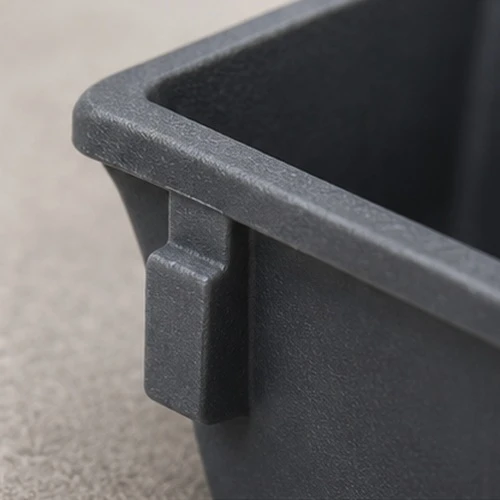
Some inserts are changed when moving to a different fertilizer or when the outlet is cleaned. Share how an operator reaches the retaining ribs and whether they disengage under a controlled squeeze or by sliding away from a stop. A prototype can feel secure when dry and clean on the bench. Residue can make it harder to grasp or move during service. The equipment owner can describe how deposits are removed and how a service check will be judged.
A PP grade can be selected with the fertilizer and cleaning exposure documented. The part may also see dust or long storage periods, so color and handling requirements can be included with the grade request. The drawing should identify the edges that touch or guide a stream of material. If a tool witness projects near the exit, decide how it is to be assessed. Other exterior areas may be available for a gate or cavity identification.
Observations from a representative metering run
Use the agreed hopper, installation and material in a trial arranged by the equipment owner. Mark the flow direction, material condition and metering setting in the worksheet. A photo of the first bridging location can be more helpful than a single observation that the passage stopped flowing. An inspection report can correlate that location with the molded opening dimensions and the mating position. If alternative sizes of insert are quoted together, identify each throat size against its mounting orientation and expected service position.
For the RFQ send the section through the outlet, enough of the hopper to show the approach and a separate section of the lock. List the intended fertilizer range, cleaning process, sample count and annual demand. A customer-selected reference part can help the quote team identify wear marks and expected handling, particularly where the outlet is partly hidden by the surrounding machinery.
When an insert is a retrofit the hopper lip can be worn or deformed. Give the newest available drawing and record the condition of the unit used for the trial. A photo of the inlet while the insert is seated can show whether the old hopper still provides the support represented in the drawing. This gives the buyer a clearer basis for comparing a new part with the previous one.
A sample worth checking twice
One useful observation for the first inspection is to compare clean and representative used conditions on the approved fixture and identify whether an interruption begins inside or above the insert. If a trial builds up a gap unexpectedly, note whether the difference appears while locating the molding or only after a fastener, latch or neighbor is installed. Record the order of operations. When a second technician repeats the check, the same viewing angle, machine revision and position on the part help make the observations comparable. Notes that identify a part as simply tight or loose can be hard to act on without knowing where the recorded condition appeared.
The report can include the dimensions and alternatives that matter for acceptance, such as a functional gauge or a fixture that represents mating geometry. If a feature can be checked in more than one position, agree which position governs the result. A flexible part restrained during measurement may show less movement than it would before installation, while some installed checks require the part to be held just as it is held in service. Store the drawing revision and information about the setup with the measurements. That makes it possible to read the results of the pilot alongside any later tooling revision.

From pilot quantity to repeat orders
A first build is an opportunity to learn whether the person receiving the component can tell its orientation, identify the correct version and put it into the equipment using the planned sequence. It is worth deciding how the parts will be grouped on the inspection sheet and in the shipment, especially when pieces come from different cavities or more than one molding run. Include the inspection plan and any functional tests approved by the customer. If the team already uses a reference assembly or gauge, tell us whether it can be supplied for the trial or should remain available only for final verification at the site.
For repeat production, pack orientation and separation depend on which areas touch neighboring pieces in transit. Parts that nest neatly can be harder to separate by hand if the stack is packed under load. A thin edge and a small projection can look sturdy on their own and still take a mark where the two parts meet in a full carton. Specify any protected surfaces, label details and pilot shipment count early. Where the first order only covers engineering and assembly approval, later production quantities can be quoted against the agreed packaging and inspection scope.
Drawing package and quotation
Send the part file and a dimensioned PDF together with a cropped assembly section or a mating part file. The drawing package should identify outlet cross section, granule size or formulation, machine orientation, snap-fit requirements and cleaning procedure. A photo of a current unit is most useful when it shows the direction of assembly or a feature that is hard to read on a print. If the quote is for a replacement, a sample can tell us about finish and practical handling. The sample should be accompanied by notes on any wear, damage or previous repairs, because the visible geometry may represent an already used part.
Share the approximate sample and production quantities, delivery destination and documentation needed at first article. If the drawing is still open to changes, identify which areas are fixed, which can be reviewed and who will clear any change to the assembly. Tooling, samples and production are priced separately to the extent the project requires. With the functional interface and quantities defined, the quote can also describe the intended inspection report and identify any hardware the customer plans to supply for a fit check.
See our range of custom plastic injection molded parts for additional OEM applications and molded component examples.
Request a quotation
Email the drawing package, sample quantity and estimated production volume to amanda@tjswks.com. Include the delivery destination and the machine or assembly revision that applies to the request.
Hot Tags: custom pp agricultural seed drill fertilizer outlet metering insert, China, suppliers, manufacturers, factory, bulk, cheap, low price, quotation


