


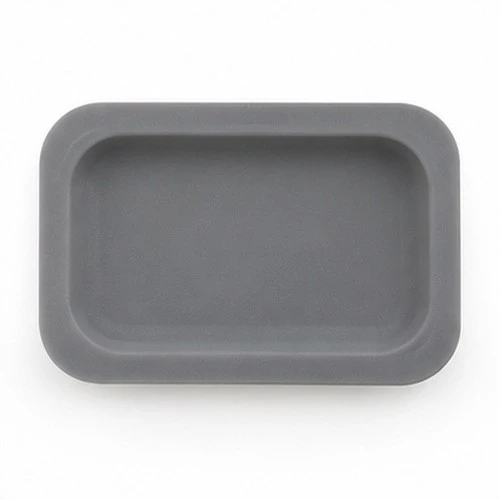
Tianjin SWKS Technology & Development Co.,Ltd is one of the most reliable manufacturers and suppliers of custom silicone robotic tactile sensor elastic pad in China. If you're going to buy bulk cheap custom silicone robotic tactile sensor elastic pad, welcome to get quotation from our factory. Quality products and low price are available.
Custom Silicone Robotic Tactile Sensor Elastic Pad
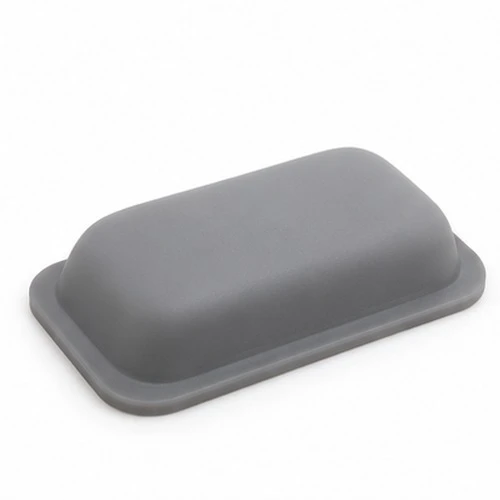
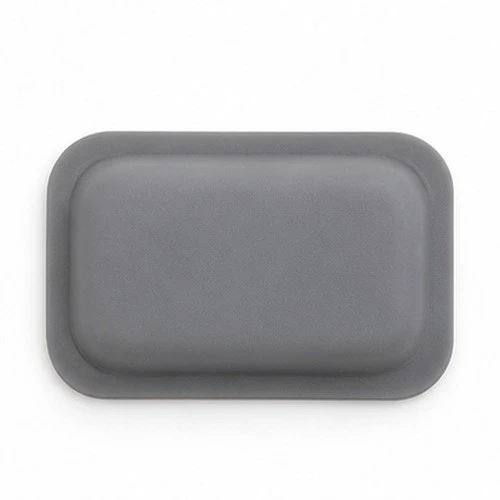
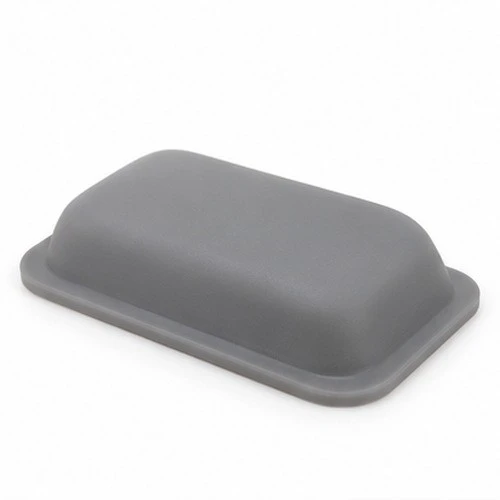
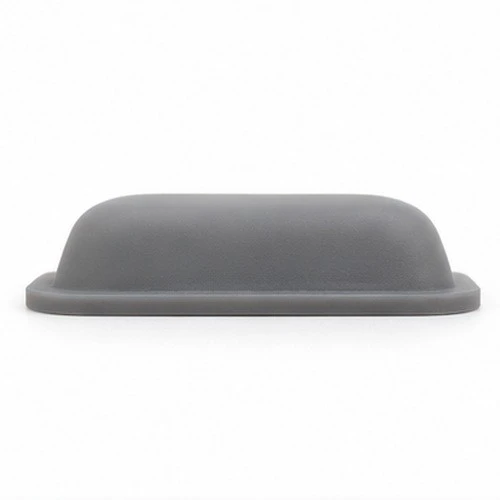
SWKS quotes this elastic tactile interface pad from the customer's approved drawings and project requirements. The white-background photos are generated illustrations of representative geometry. Final fit, material grade and validation requirements follow the project specification.
Product specifications
| Material | Silicone grade per approved specification |
|---|---|
| Process | Custom elastomer molding |
| Part function | elastic tactile interface pad |
| Drawing review | contact dome, sensor stack and restoring movement |
| Quotation files | STP, STEP or IGS and a dimensioned PDF |
| Supply scope | Tooling, first samples and repeat production per project |
A soft interface in the tactile assembly
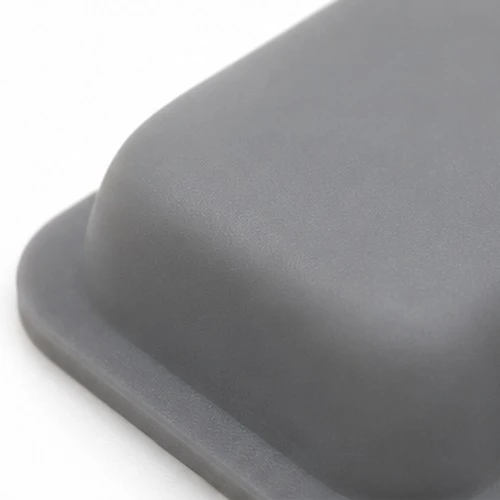
The silicone pad is a compliant interface formed to fit the sensor stack identified by the robot designer. A raised face or dome can distribute contact to the area shown on the assembly drawing. The drawing can also show where a thin border locates, which surface faces the sensor and how the part returns after the load is removed. The pad itself contains no sensing electronics. Its deformation must be considered with the backing, outer cover and travel allowed by the mechanical build. Give the resting position and the intended movement envelope rather than only a free thickness.
An outside edge that looks flat on a bench may be compressed once the sensor is assembled. Mark where the pad is intentionally clamped and where movement is expected. A picture from the side helps distinguish the contact dome from the perimeter flange. If an overlay or separate cap touches the pad, include it in the fit model.
Contact repeatability in the customer fixture
A designer may want to evaluate a central touch and a corner touch as different cases. Show which locations are checked and how force or travel is measured on the actual sensor assembly. A small change in the backing geometry can alter how a dome moves even when the silicone piece passes its loose measurements. Keep the approved sensor, fixture and test positions on the same drawing release. The equipment owner defines tactile sensitivity, electrical response and acceptance of the complete stack.
A molding report can document geometry, compound and visual condition. For first articles mark any surface where a seam, dust or molding flash would affect the test. Record the part's orientation and whether a gasket or adhesive layer is present in the intended stack.
Finish, returns and spare pads
Supply the grade and hardness range with the relevant material condition and any contact or cleaning restrictions. The appearance of one material can be approved from a sample without defining its response in a sensor stack. If there is a replacement pad, show how it leaves the housing and where the next pad is located when installed. Keep samples from alternate compound or sensor revisions separate until the buyer's review is complete. Provide both pilot and repeat quantities so that the correct pad versions can be identified on the quotation.
Compound and hardness approval
For the elastic tactile interface pad, provide the full compound designation where it has already been released. A material family and a nominal hardness describe only part of an elastomer specification. Record any color, surface, media exposure and approval requirements that distinguish one release from another. Include the measurement method and the specimen condition for hardness. A shaped lip can deflect when a reading is taken on the finished part, while a test slab lets the buyer assess the compound under a separately defined condition. If either measurement is required, identify which one belongs in the purchase acceptance record. Give the expected handling before inspection and specify whether the supplier must retain or trace a compound lot. Where an alternative formulation is proposed, link its evaluation to the installed conditions rather than transferring results from an unrelated component.
RFQ and project release inputs
For a quotation, send the dimensioned drawing and the applicable 3D file, plus a section through the surfaces that mate to the part. Include the sample count, estimated annual quantity, grade and receiving location. State whether the attached data is an engineering model for review or the manufacturing release. If a current piece is supplied as a reference, say whether it is a new part, a worn service item or a prototype. Worn or compressed surfaces can help explain the issue being investigated, but the released drawing should indicate what the new part has to meet. List any tests or documentation the owner expects the molding supplier to complete and identify the customer-supplied hardware for fit checks. Separate the part, tooling and sample requirements on the same request.
Packaging and shape after delivery
Discuss how the elastomer will be handled after it is molded, especially if a shallow lip or long perimeter could be creased when pieces are packed. A packing drawing or photograph can show which face may rest on a divider and how an operator will remove one sample from a box. Soft parts can temporarily conform to another surface, so compare samples after the agreed handling and conditioning period. If parts are grouped as sets, specify the preferred quantity, labels and version identifiers. For a pilot, the receiving team may need to keep different cavities or runs separate until approval. Assign a packing instruction and keep it tied to the same part number as the molding. This is useful when visually similar components go to different assembly teams.
Elastomer inspection with and without a fixture
Where the part can bend under light handling, obtain the buyer's gauge or measurement instruction before starting dimensional approval. The operator should know where to support it, which marks identify the selected orientation and whether a reading is made before or after a fit check. A small flexible protrusion may be easier to assess with the gauge designed for the assembly. A mating piece can also hide evidence of deformation if it presses the component into a shape it would not otherwise hold. Record the free condition when it is part of the drawing requirement, and keep photographs of the approved fixture and the sampled part. If the measuring process is expected to be repeated after warehouse storage, record the relevant handling conditions on the report.
Review lot identification with the buyer
A production purchasing release should link the material lot, part revision and cavity or run information where the buyer needs it. This is particularly useful if two different grades look similar, or if a new design introduces a feature that is hidden after installation. Specify which identifiers appear on the molded part and which are kept on its package. The part's drawing should leave a suitable position for a molded mark if one is required. A reference sample can carry a separate tag when tooling identifiers are still under discussion. For repeat production, identify which paperwork will accompany the order and which data can remain in the supplier's record. A small decision here can prevent a receiving team from confusing two design trials.
A receiving plan that can be repeated
A pilot box can travel between the molding supplier, equipment builder and the end user's receiving inspection. Include the drawings and report identifiers needed to keep the samples in order. If the customer approves a visual reference, decide who will keep it after the trial. An image used in a quote may be sufficient for choosing a general color, while the production drawing can identify a particular texture or shade reference. Explain which surfaces are expected to retain their form when packed and how long the sample should remain in any fixture before it is assessed. Record the equipment version used during the fit check. That lets a later repeat order follow the same inspection and packing instructions without relying on photographs from an unrelated build.
Shape review around molded transitions
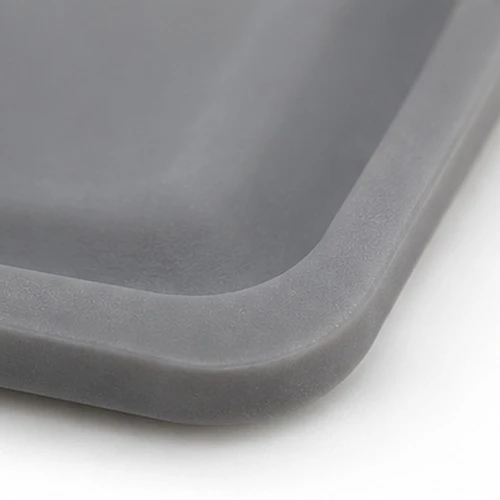
An elastomer cavity often includes changes from a supported mounting face to a thinner working edge. A shaded computer model can make the transition appear gradual while an enlarged section shows a small corner or a sudden change. Review the approved outline and which surfaces carry fit requirements. The supplier can raise questions about mold release, visible marks and inspection access while the equipment team identifies the parts that define the installed position. Where a tool proposal requires approval, mark the areas being reviewed and retain the accepted version with the buyer's order. Use a local reference fixture for evaluating geometry when indicated on the drawing. Agree how the first sample will be presented so a soft but important feature can be inspected without bending it inadvertently.
Sample approval and change records
A prototype study usually begins with one approved interface and expands when more variants are released. Keep a record of what the first samples were designed to answer. A section through a retaining feature may show that an initial fit question can be checked without the entire equipment build. The equipment owner can then schedule the separate performance validation when appropriate. For elastic tactile interface pad, confirm that the revision shown in any inspection fixture matches the revision on the purchase drawing. Identify the location and direction of the observed fit. If a tool or material changes after the sample review, note what needs to be rechecked and keep the earlier sample identifier in the record. That makes a receiving decision reproducible when responsibility passes from engineering to purchasing.
Explore the SWKS range of custom molded industrial components for related OEM parts.
Request a quotation
Email your drawings, application information and expected quantities to amanda@tjswks.com for a project review.
Hot Tags: custom silicone robotic tactile sensor elastic pad, China, suppliers, manufacturers, factory, bulk, cheap, low price, quotation


