


Tianjin SWKS Technology & Development Co.,Ltd is one of the most reliable manufacturers and suppliers of custom injection molded pp equipment drip trays in China. If you're going to buy bulk cheap custom injection molded pp equipment drip trays, welcome to get quotation from our factory. Quality products and low price are available.
Custom Injection Molded PP Equipment Drip Trays
Material: ABS/POM/PA66/PP/PC/PA/PU/TPE/TPU etc.
Processing Service: Injection
Drawing: STP/STEP/IGS
Contact: amanda@tjswks.com / 0086-15222707659
SWKS provides custom injection molding for equipment drip trays designed around a customer's machine layout. A shallow collection pan can sit beneath a dispensing station, small pump assembly or service area where occasional drips need to be collected. Unlike a general storage tray, an equipment component must fit the surrounding structure, allow practical removal and match the liquids and cleaning conditions of its application. We review these requirements together with your drawing before confirming the manufacturing scope.
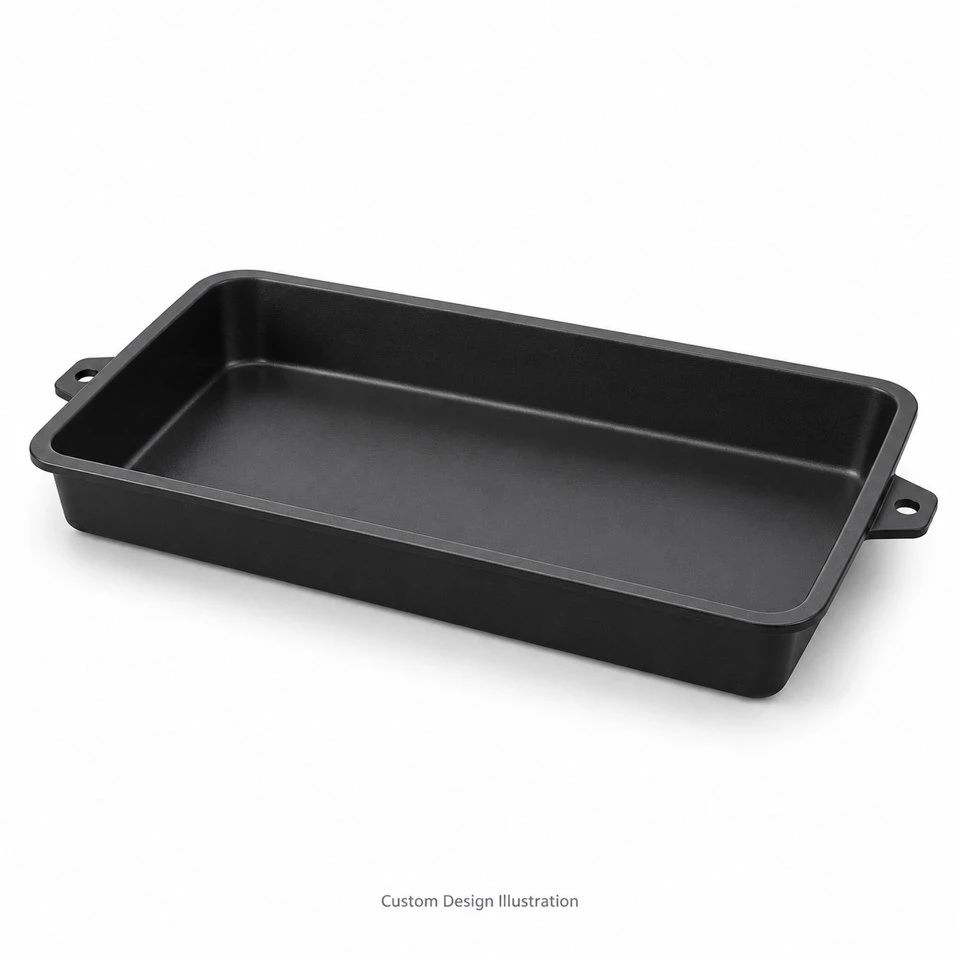
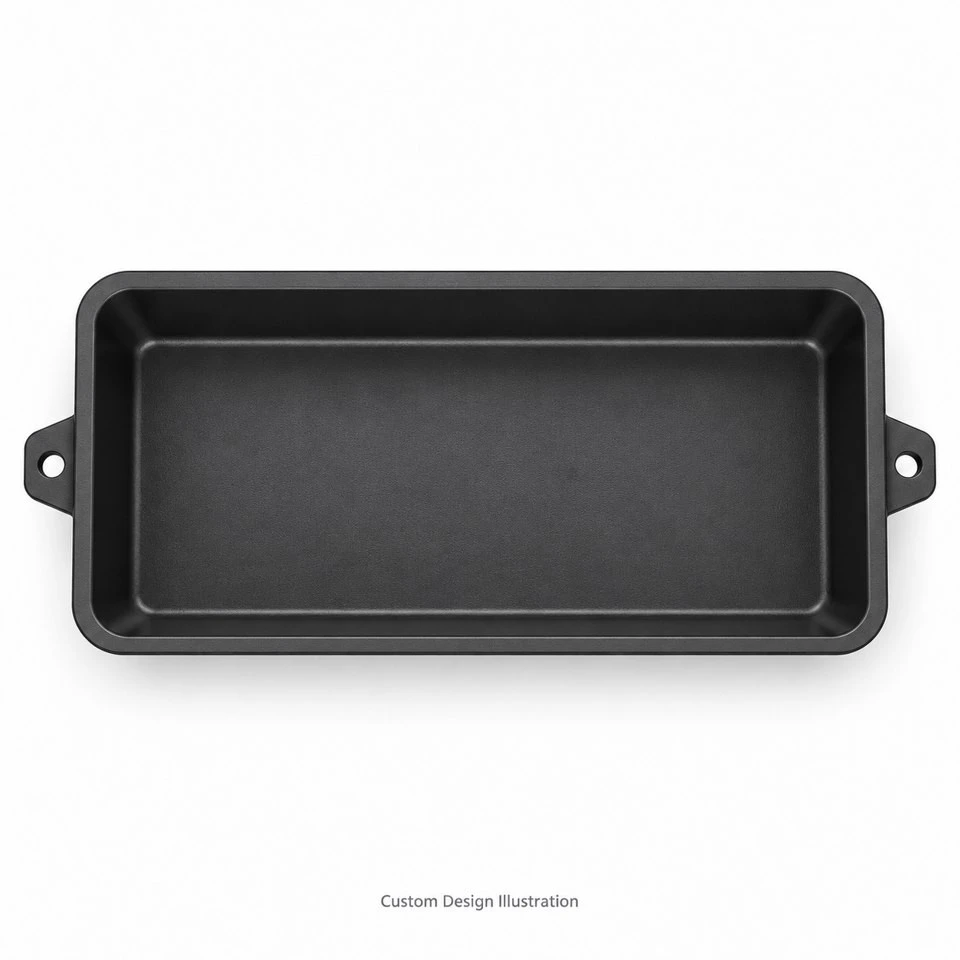
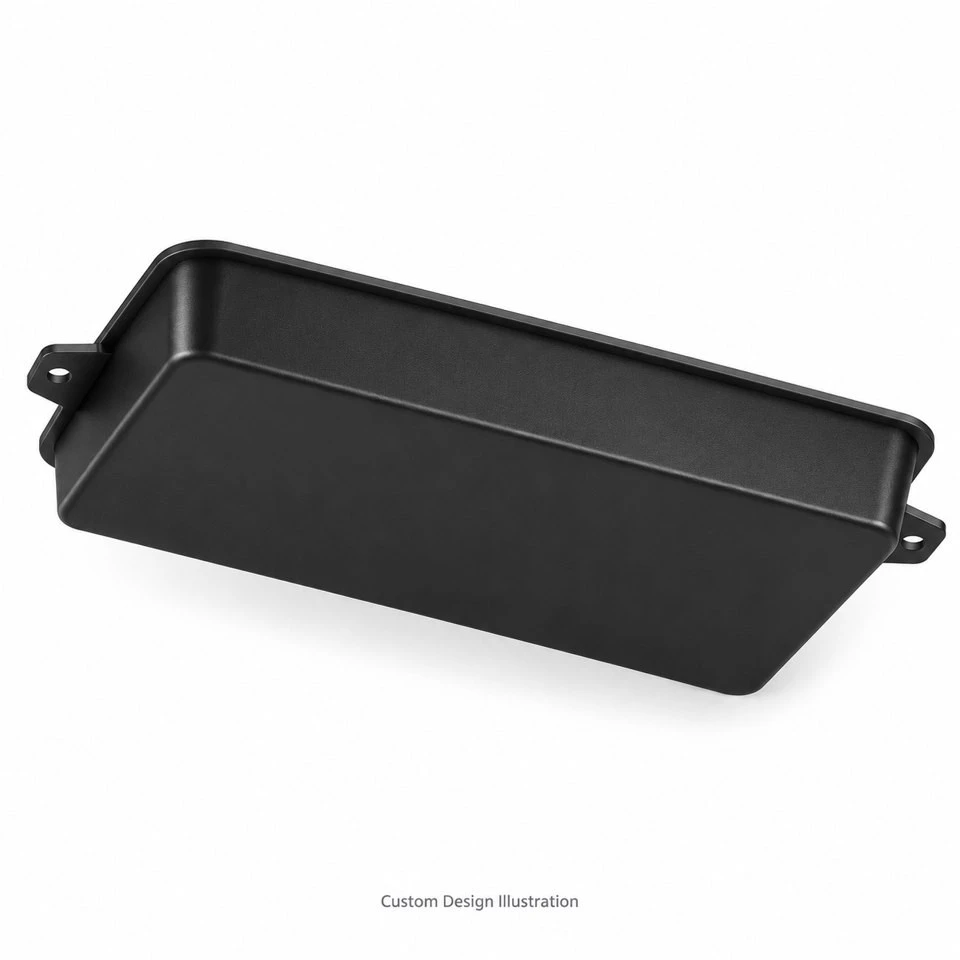
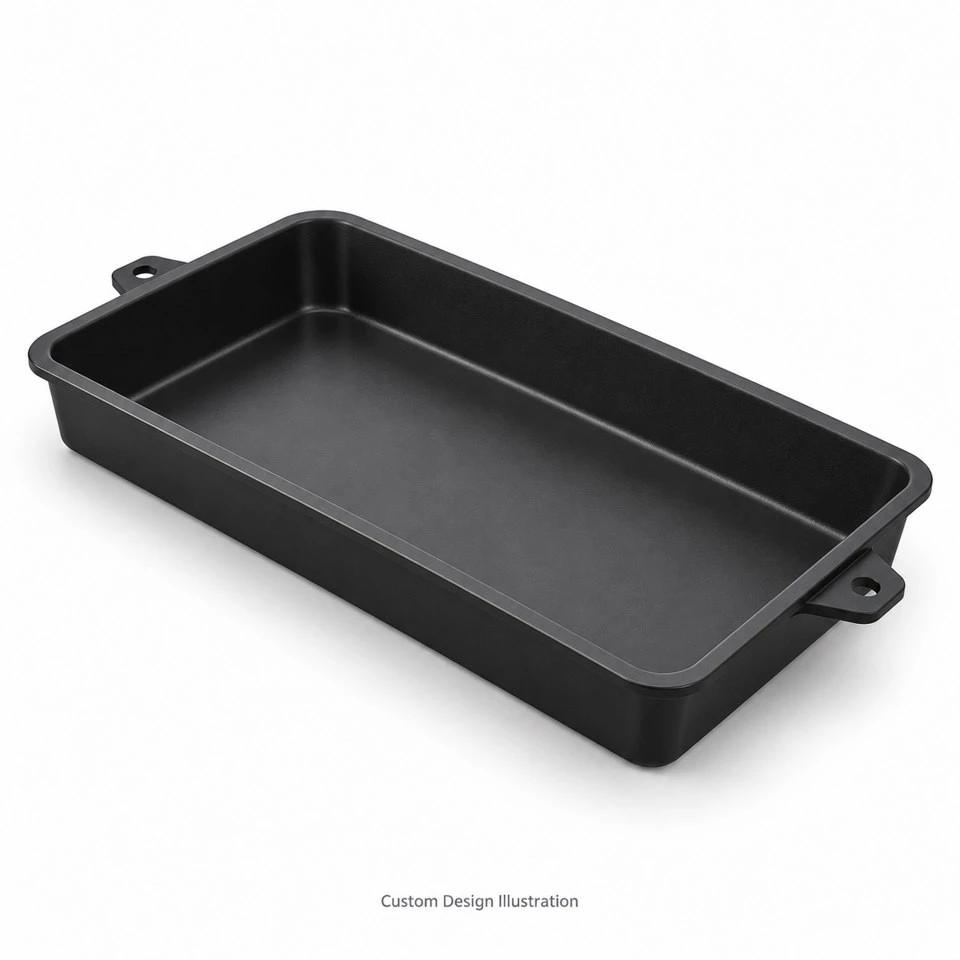
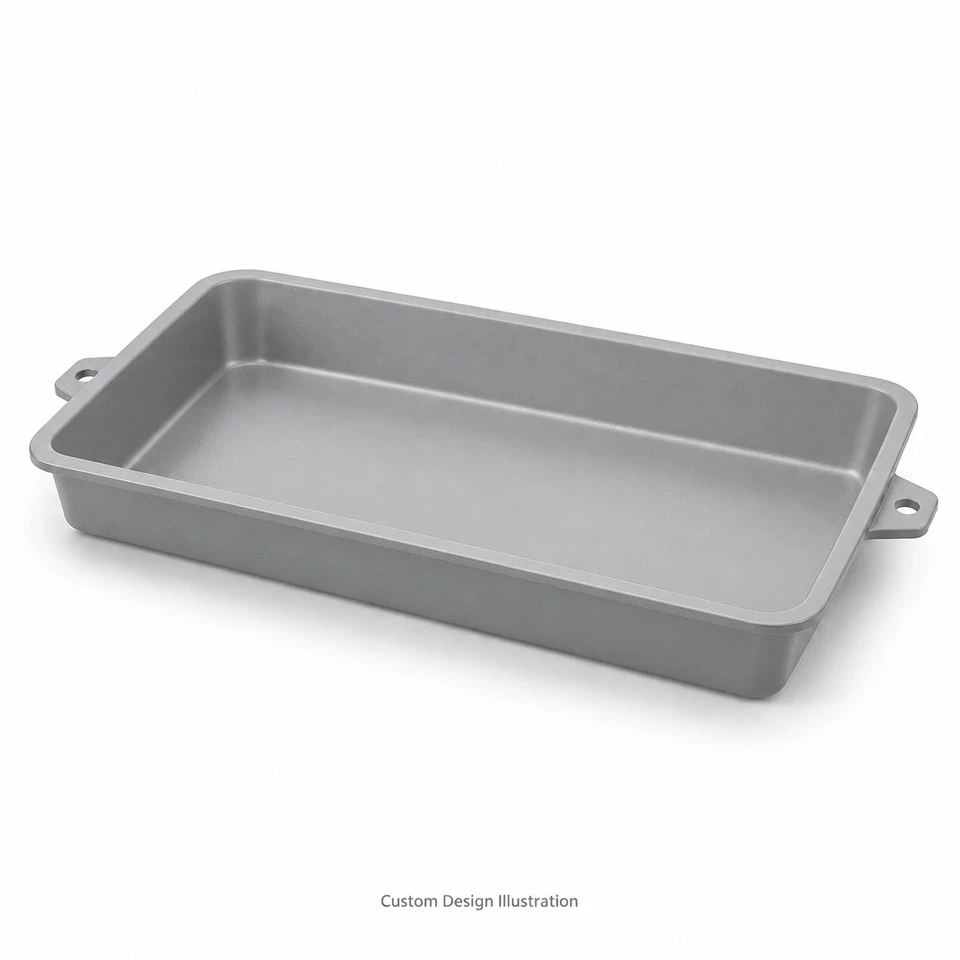
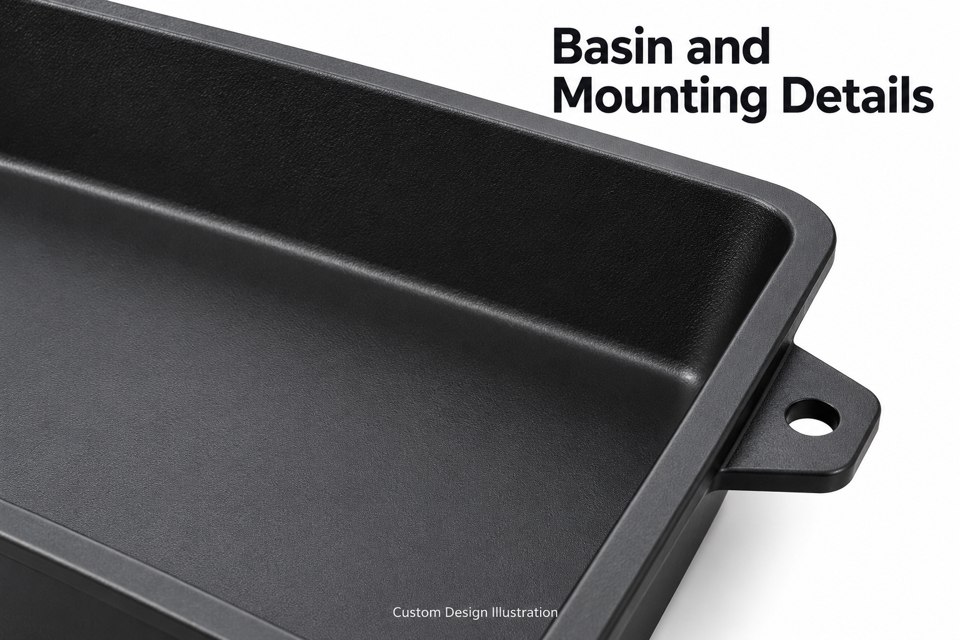
The illustrated concept features a continuous basin, rounded internal corners, a narrow perimeter flange and mounting ears outside the collection area. It demonstrates a possible custom PP tray configuration rather than a stocked product with fixed dimensions. Length, width, depth, mounting positions and surface finish are determined for your project. Send your model and quantity to discuss a tray that fits the space available instead of adapting your equipment around a standard container.
Where Can a Custom Equipment Drip Tray Be Used?
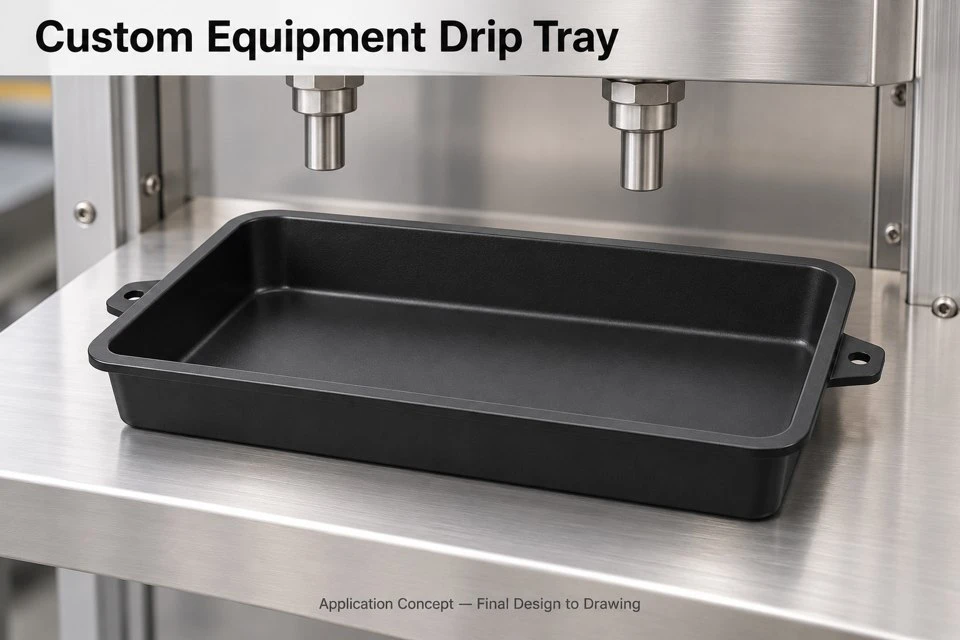
Potential locations include packaging machinery, dosing assemblies, maintenance compartments, pump enclosures and equipment service stations. The purpose may be to catch small residual drips during connection changes, collect liquid released when a component is removed, or provide a removable surface beneath a process area. The equipment designer should define the intended volume and operating conditions. This concept is not presented as a certified spill containment system or a substitute for the machine's required protective measures.
A useful inquiry explains how the tray interacts with the rest of the machine. Identify the source of the drips, the normal direction of flow, access for emptying and nearby moving components. Include the installation orientation and the way operators will handle the part. These details help distinguish a simple removable pan from a permanently mounted collection component and guide the review of mounting features, clearances and inspection priorities.
Which Dimensions and Features Can Be Customized?
The outer envelope can be reviewed against your available space, including the distance between frame members and clearance below the liquid source. The basin shape, rim profile and external mounting ears can be adapted during the design process. If an obstruction requires an offset wall or a shaped edge, provide the surrounding geometry so the proposed tray can be assessed as part of the complete installation.
| Custom Item | What to Specify |
|---|---|
| Overall size | Available length, width, depth and removal clearance |
| Collection area | Usable basin geometry and intended liquid volume |
| Mounting features | Ear positions, hole spacing, fasteners and support surfaces |
| Material and appearance | Approved grade, color reference and surface texture |
| Inspection | Critical fits, flatness needs and agreed functional checks |
Other project details may include a molded part number, orientation marks or a customer logo. Provide the artwork and intended position for review. Mark visible surfaces separately from hidden mounting areas, especially if appearance is part of acceptance. A clear drawing can also identify where molding marks are permitted. These decisions are easier to incorporate before the tooling layout is finalized than after samples have been produced.
Why Should the PP Grade Be Confirmed for the Application?
Polypropylene is a candidate for many molded collection components, but PP is a material family rather than a complete specification. The grade, formulation and actual exposure conditions must be reviewed for the intended liquid and temperature. If your organization already uses an approved resin, include the complete grade designation in the inquiry. When material selection remains open, describe the application so the quotation can identify the proposed candidate and the checks still required.
Our listed molding materials describe the broader custom manufacturing range. They are not interchangeable approvals for this tray. A change from PP to another resin, or between different PP grades, may require a new review of molding conditions, dimensions and service behavior. Any agreed substitution should be documented. Keeping the material definition connected to the approved drawing helps purchasing, engineering and production teams work to the same requirement.
Include the liquid name, concentration, contact duration and temperature when discussing compatibility. Cleaning chemicals may differ from the liquid being collected, so list them separately. If suitable existing information is unavailable for the exact conditions, agree on a representative evaluation before approval. A material described generally as chemical resistant should not be taken as suitable for every fluid or every cleaning routine.
How Should Collection Volume and Handling Be Defined?
External dimensions alone do not establish usable collection volume. The basin profile, internal corner shape and operating orientation all affect how the tray will be used. Specify the intended working volume and any required margin below the rim. If the equipment can tilt or move, explain those conditions. The design should be reviewed for its actual installation rather than assuming that a tray will always sit on a perfectly level bench.
Emptying and removal are equally important. Tell us whether the tray is lifted out by hand, slides along a support or remains mounted during cleaning. Include the expected handling load and any restrictions on bending. If operators need a grip area, identify the available access. A flange used only for locating may require a different design from an edge that is regularly used to lift the tray while it contains liquid.
What Mounting and Support Details Are Needed?
The concept places mounting holes outside the basin so the illustrated collection area remains continuous. Final fastening details follow your drawing. Provide the mounting surface, fastener arrangement and any required clearance under the tray. A support that sits on a broad platform is different from a tray suspended only at its corners. The intended support condition should be established before the floor and rim geometry are finalized.
Fastener tightening and local support should be considered as part of the assembly. Define whether the holes provide location, retention or load support, and whether washers or other components are used. Do not assume that increasing screw torque will improve a plastic joint. The final assembly method should be checked with representative parts against an agreed criterion for retained position, acceptable deformation and ease of maintenance.
How Is the Design Reviewed for Injection Molding?
A shallow tray still benefits from an early molding review. The discussion can cover wall sections, transitions, corner radii, draft, gate position and ejection. For a collection component, the functional surfaces may include the basin, supporting feet and rim. Identify their priorities so tooling decisions can take them into account. The mold approach and the selected material should be reviewed together rather than treating the rendered shape as a finished manufacturing drawing.
Where mounting or sliding fit is important, mark the relevant dimensions and mating parts. Avoid applying unnecessarily tight requirements to every surface when only a few interfaces control installation. Conversely, do not omit a flatness or clearance requirement that determines whether the tray can be removed. A focused specification helps define suitable sample inspection and provides a practical basis for evaluating any proposed tooling adjustment.
Prototype methods should be identified during development. A printed or machined model may help check space and access, while representative injection molded samples are needed to assess the proposed production material and process. Explain which questions each sample is expected to answer. This keeps early form checks useful without treating them as proof of all production characteristics or long-term service behavior.
How Can Sample Inspection and Functional Checks Be Arranged?
Start with the approved drawing revision, material grade and an agreed inspection plan. Relevant checks may include the installation envelope, mounting hole positions, basin condition and fit in the intended support. If a liquid retention check is required, define the liquid, fill condition, duration and acceptance criterion. A photograph of a filled tray is not a substitute for a recorded test performed to the agreed procedure.
Assembly trials should use the intended frame or a representative fixture. Confirm that the tray can be inserted, secured, removed and cleaned with the access available. Include any adjacent components that restrict handling. If repeated removal is part of normal maintenance, discuss that requirement before approving the sample. Recording these observations gives both sides a clearer reference than a general statement that the part looks correct.
For repeat orders, keep the approved drawing, sample identification and material definition together. Agree on how changes to resin, color, tooling or geometry will be reviewed. Inspection requirements should remain connected to the functions that matter in the machine. This supports consistent ordering and makes it easier to compare future deliveries with the configuration your engineering team has already approved.
What Ordering, Packaging and Quotation Details Should Be Included?
Provide the initial quantity and expected repeat demand so tooling and production proposals reflect the actual project. Minimum order quantity, sample cost, tooling cost and lead time are confirmed after review. If a deadline is important, include the required sample approval date and delivery destination. Pricing should be based on the confirmed geometry, grade and order scope, with any unresolved assumptions stated clearly.
Packaging can be discussed around the tray shape, finish and assembly process. Tell us whether nesting is permitted and whether visible surfaces need separation during transport. Include carton quantity preferences, part labels and any requirement to keep revisions or colors separate. Packaging should protect the agreed features while allowing receiving staff to identify and count the components efficiently.
What Should You Send for a Custom PP Drip Tray Quote?
Send your STP, STEP or IGS model, a dimensioned drawing, the intended liquid exposure and the required quantity. Identify installation clearances, mounting requirements, usable volume, material preference and color reference. A photograph of the machine area can help explain the layout when supplied alongside the drawing. If you have only a sample, let us know which dimensions and functions must be preserved so the next review step can be defined.
Images are custom design and application illustrations. Final dimensions, material, construction and suitability are confirmed against the approved drawing and project requirements. No fixed capacity, chemical compatibility rating or certification is implied by the images.
For custom equipment drip trays, send your drawings, material requirements and quantity. Contact: amanda@tjswks.com / 0086-15222707659
Hot Tags: custom injection molded pp equipment drip trays, China, suppliers, manufacturers, factory, bulk, cheap, low price, quotation, pp brittle parts, pp cold resistant parts, pp moisture resistant parts, pp plastic finishing parts, pp plastic integrated parts, pp soft parts


