


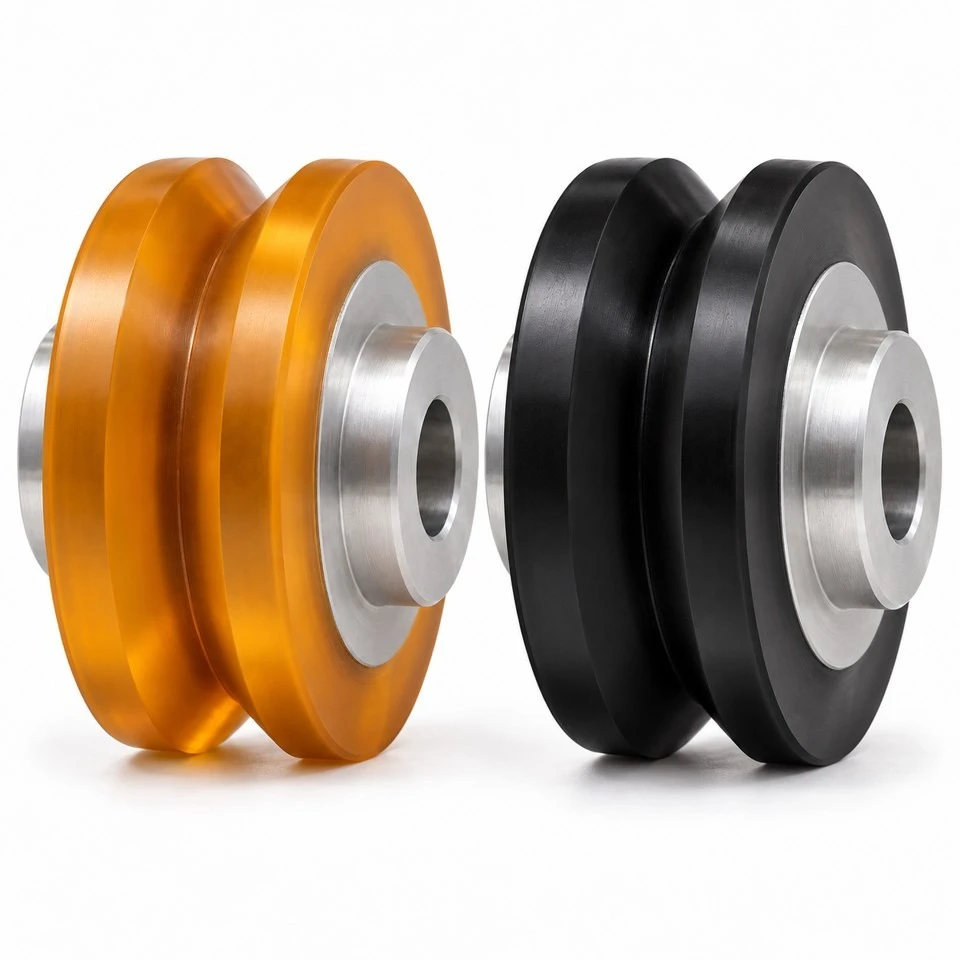
Tianjin SWKS Technology & Development Co.,Ltd is one of the most reliable manufacturers and suppliers of custom polyurethane v-groove guide wheels in China. If you're going to buy bulk cheap custom polyurethane v-groove guide wheels, welcome to get quotation from our factory. Quality products and low price are available.
Custom Polyurethane V-Groove Guide Wheels
A guide wheel is a working component whose profile must match the surface it follows. The outside diameter determines the rolling envelope, the groove defines the contact geometry, and the hub connects the wheel to the machine. When one of these features is chosen without the others, a wheel may fit on the shaft yet fail to guide as intended. SWKS offers custom polyurethane V-groove wheel components made around an agreed drawing and application requirement.
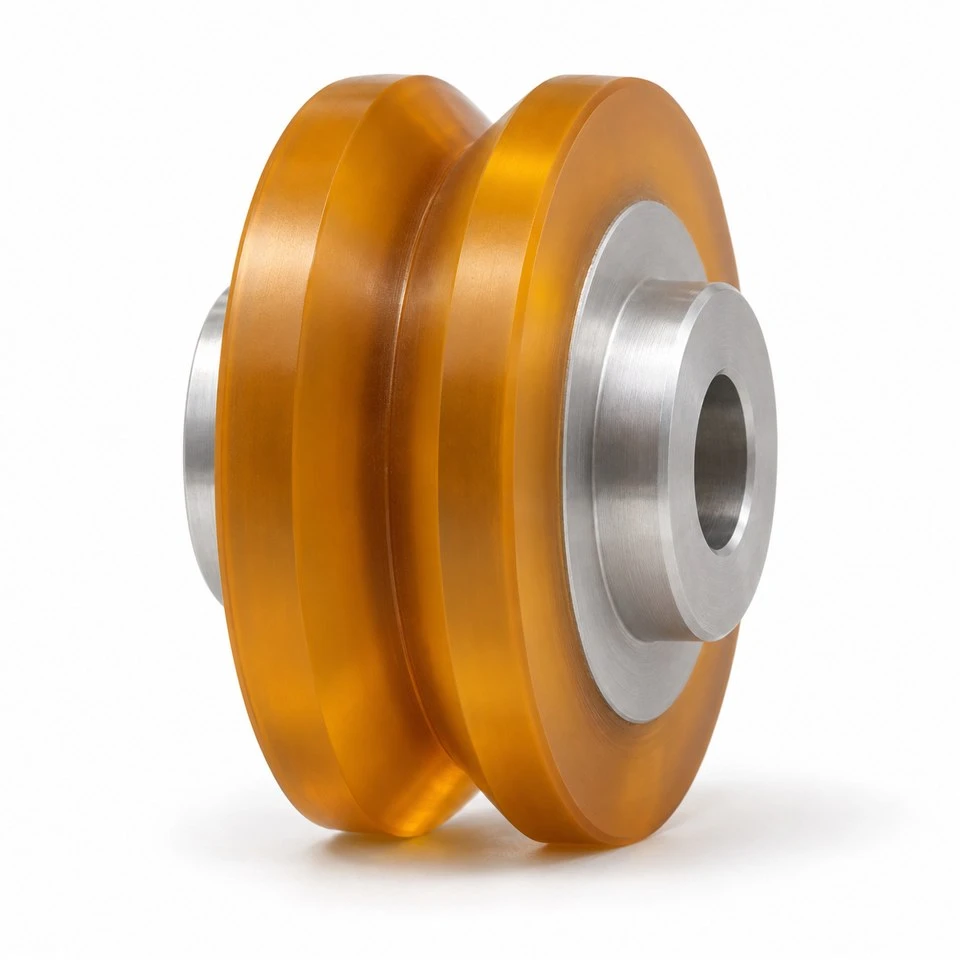
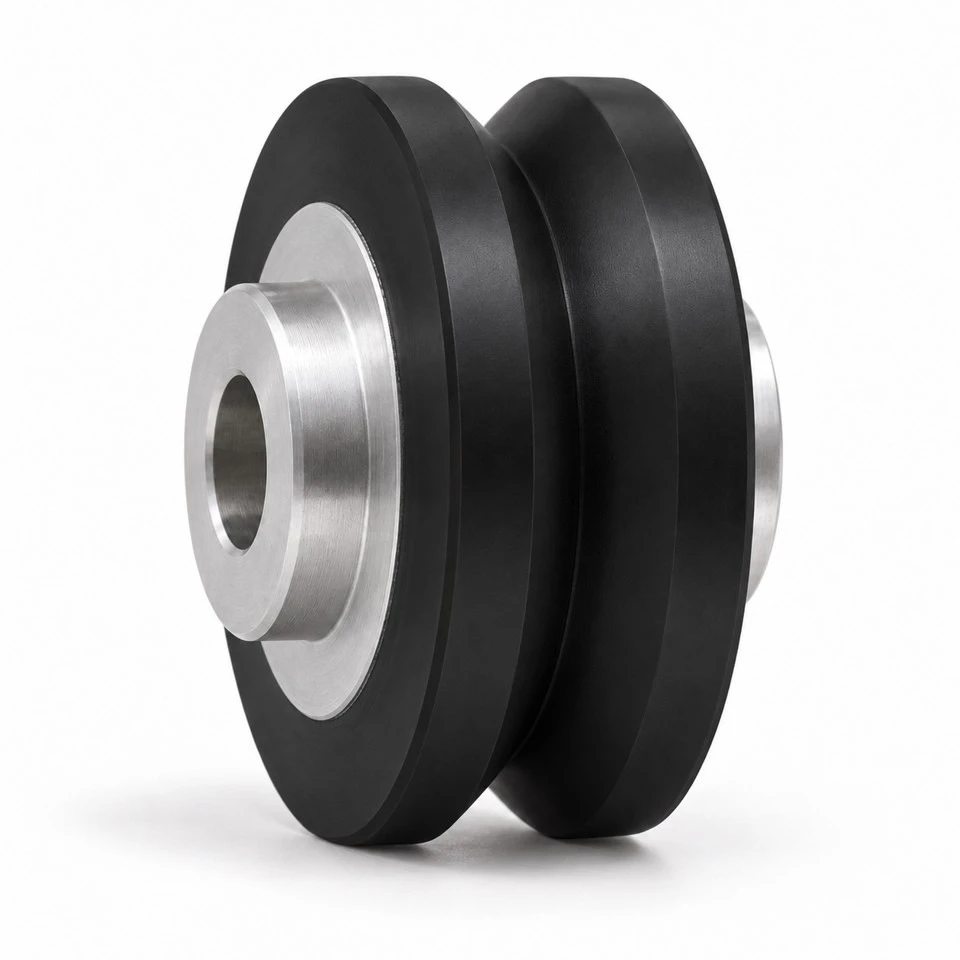
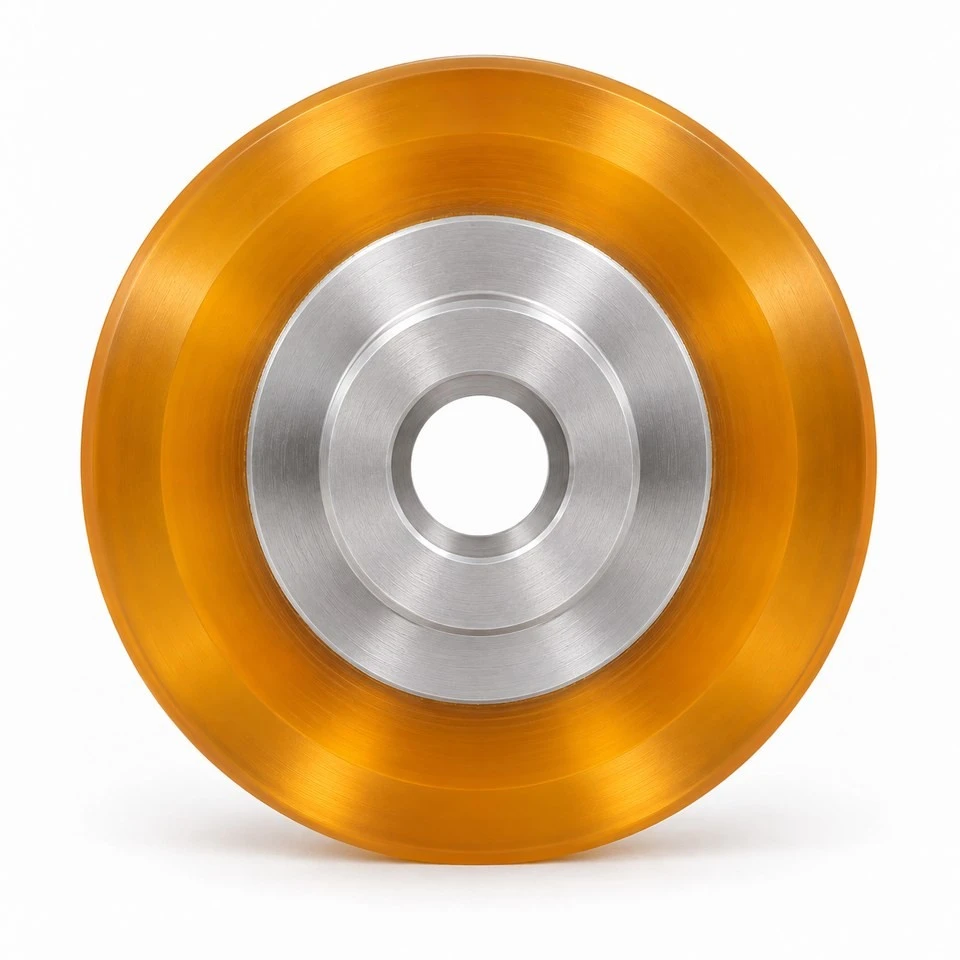
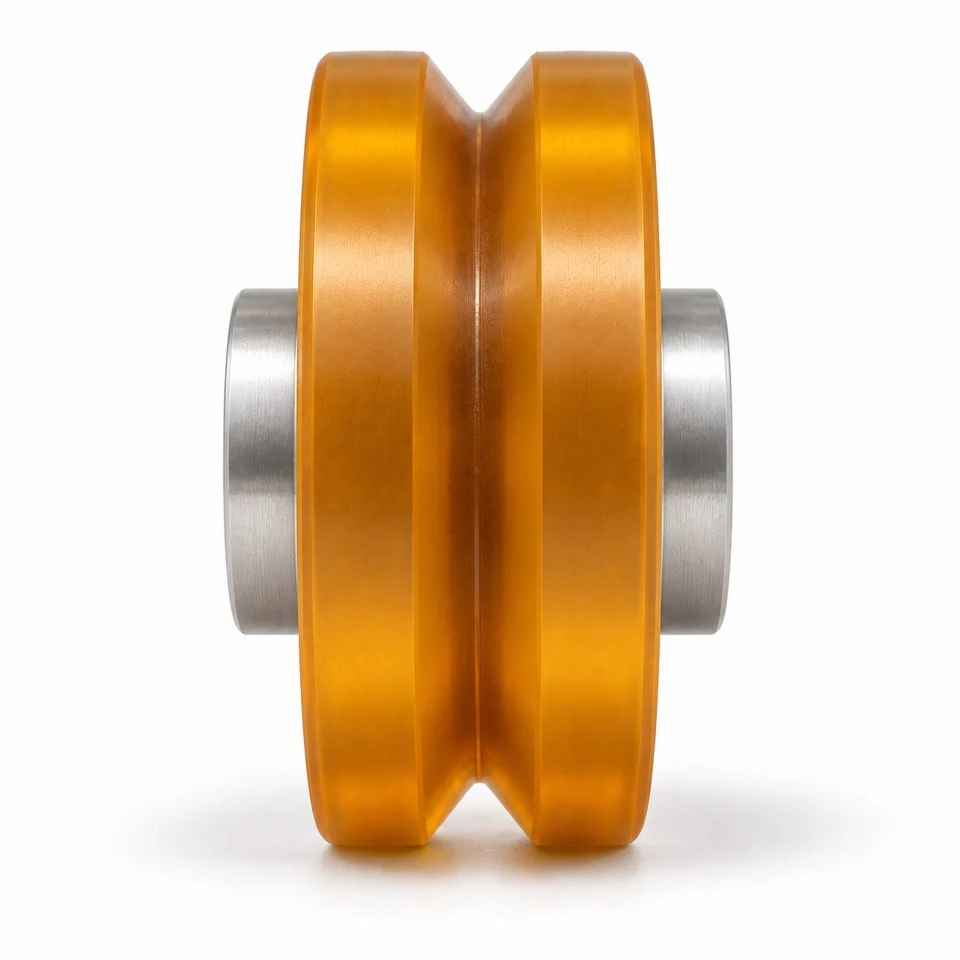
The illustrated configuration combines a polyurethane running surface with a metal hub and a plain central bore. It is a custom design concept rather than a ready-to-install assembly with a published load rating. Wheel diameter, width, groove geometry, hub projection, and bore details can be reviewed for your equipment. Bearings, shafts, spacers, and mounting hardware should be defined separately where they form part of the required supply. Please identify the complete order scope before requesting a quotation.
What makes a V-groove wheel different from a plain roller?
A plain cylindrical roller presents a generally flat running width, while a V-groove wheel has two angled contact faces around its circumference. The groove is intended to cooperate with a matching track or workpiece profile. This changes both the contact arrangement and the dimensions that must be controlled. A wheel selected only by overall diameter does not adequately describe the geometry needed for a guided application.
Potential projects include guided motion in production equipment, positioning fixtures, and material handling mechanisms. Explain whether the wheel supports a load, provides lateral guidance, or performs both functions. The mating surface may be a purpose-designed rail or another controlled profile. Do not assume that any V-shaped wheel will suit any angular track. Share the mating geometry so the proposed wheel can be reviewed as part of the actual mechanism.
Which groove dimensions need to match the track?
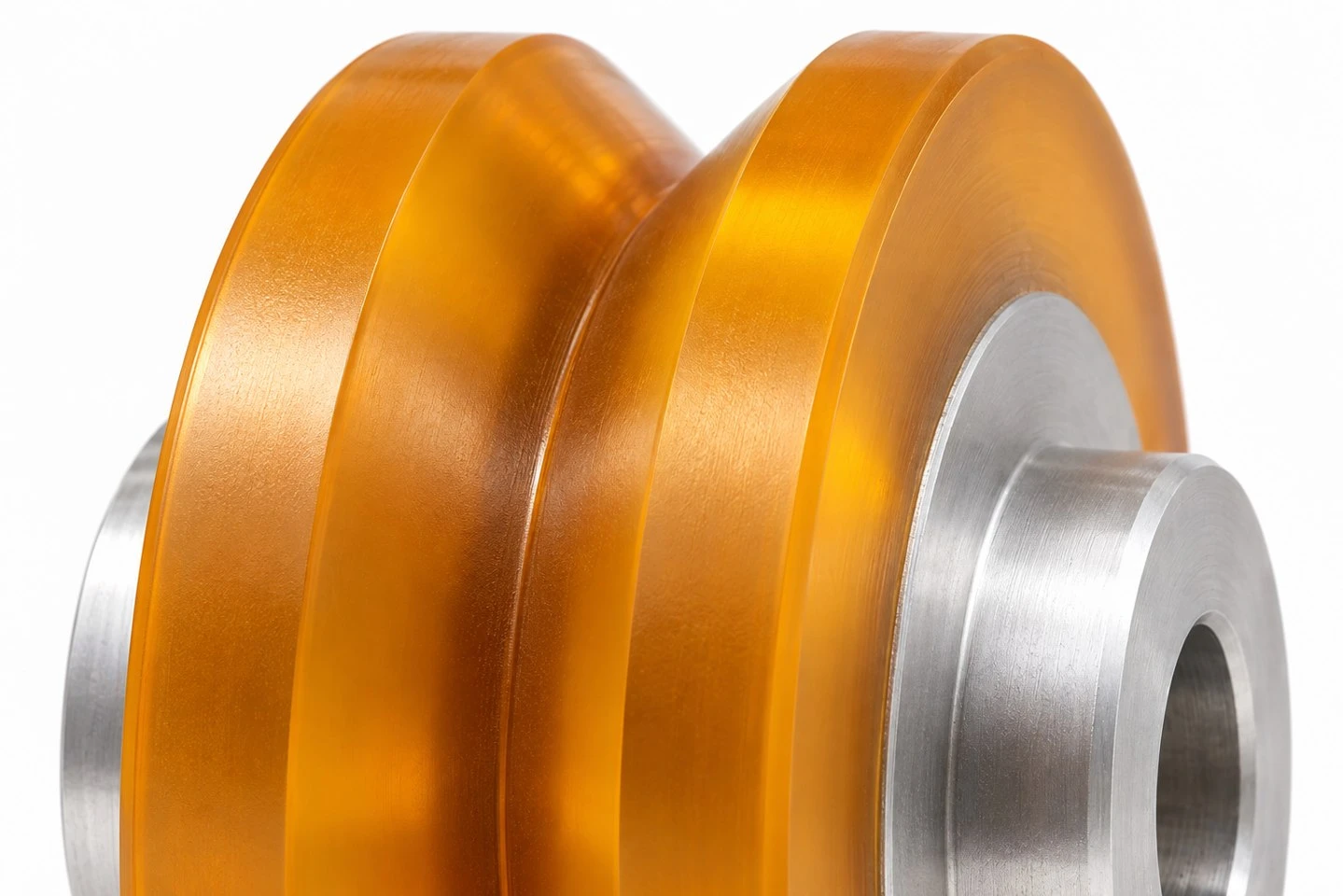
The groove angle, depth, root form, and position across the wheel width should be shown on a section drawing. Include any radius at the groove root and the shape of the outer shoulders. These details establish where the track is intended to contact the polyurethane. A profile drawn as two lines without a defined root can leave an important part of the running geometry open to interpretation.
Provide the corresponding track section, including its corner radius and relevant tolerances. Indicate the intended contact faces and any region that should remain clear. If an existing wheel is being replaced, state whether the track is unchanged and whether the original groove profile has been verified. Measurements from a worn wheel can be misleading, particularly at the contact faces. Use a released drawing or confirm the unworn design dimensions before treating the sample as a production reference.
How should the wheel diameter and running width be defined?
Specify the maximum outside diameter and the total polyurethane width, then locate the groove relative to the side faces. If the part is symmetrical, make that requirement clear. Also show any shoulders, edge radii, or side clearances that affect nearby brackets. A wheel can have the correct groove and still interfere with the assembly if the hub or outer shoulders extend beyond the available space.
Identify the functional reference surfaces used to inspect the wheel. Where runout or concentricity matters, state the requirement and the relevant datum rather than using a general request for high precision. The necessary tolerance depends on the machine and its speed, alignment, and positioning needs. We review the manufacturing scope against the agreed specification; the product photographs do not establish a universal dimensional accuracy for every custom configuration.
What hub and bore arrangement does the machine require?
The hub can be reviewed around the shaft interface, required support, and selected manufacturing route. Provide the hub material specification if one is required. Define the central bore size, fit, hub length, and any projection beyond the polyurethane faces. The example images show a plain bore and short hub bosses, without bearings or a drive connection. Other arrangements require their own drawing and feasibility review.
A plain bore alone does not define how an assembled wheel rotates or transmits torque. If the application needs a bearing seat, bushing, keyway, retaining feature, or a dedicated shaft connection, show those features explicitly. Include the mating parts or their controlled interface dimensions. Do not assume that bearings or hardware visible in a reference assembly are included in the wheel quotation unless they appear in the agreed supply list.
Which operating loads should be included in the inquiry?
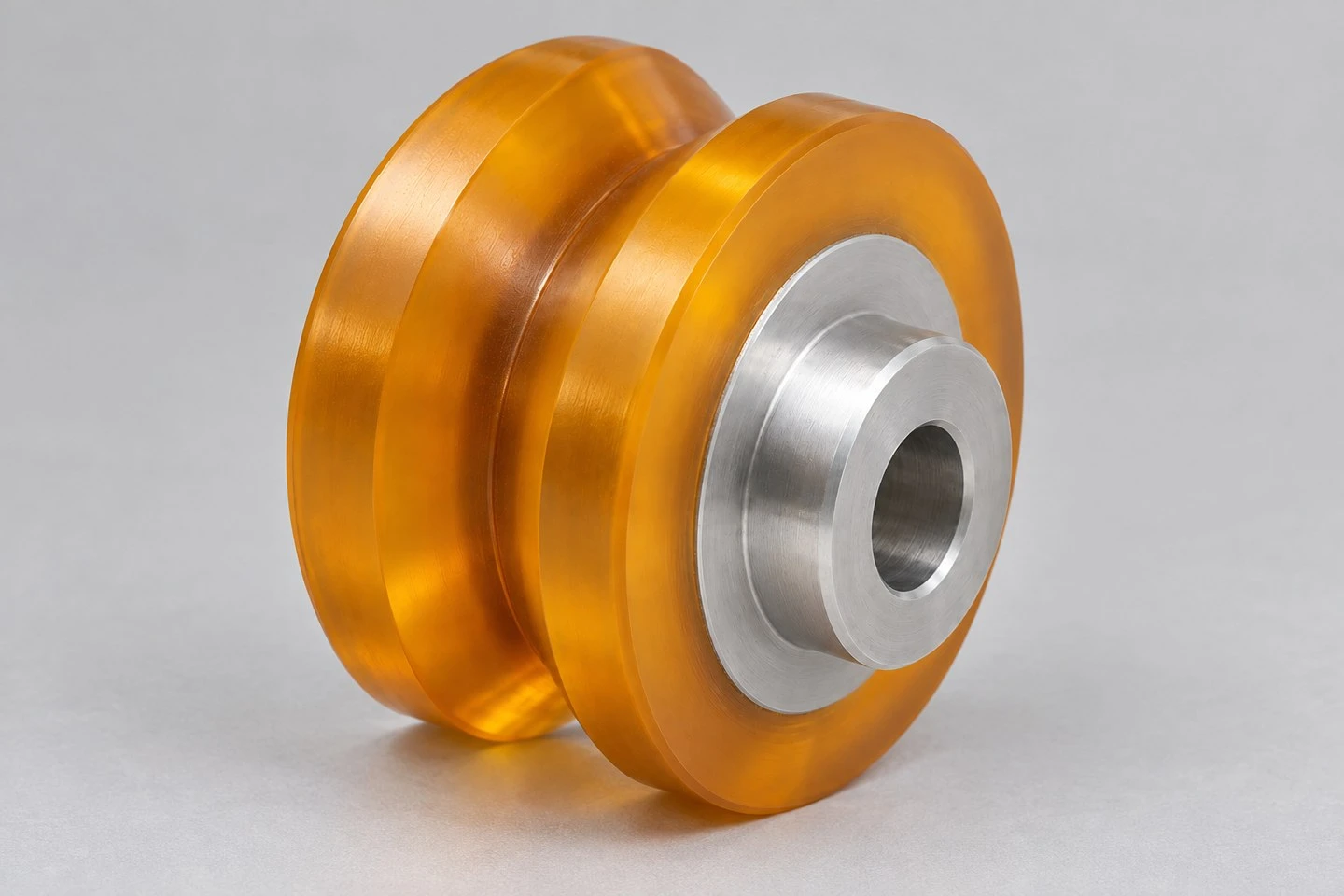
Describe the force acting on each wheel and its direction. State how many wheels share the assembly load and whether the distribution can change during operation. Include starts, stops, changes in direction, and any impact or uneven track conditions. A total machine weight divided by the wheel count may not represent the most demanding wheel position. The equipment designer should provide the appropriate design loading case.
Also identify rotational speed or travel speed, operating time, and periods of continuous running. Load and speed should be considered together with the geometry and environment. A static demonstration does not establish suitability for continuous movement. No load capacity, speed limit, or service life is claimed for the illustrated concept. Those requirements must be reviewed and validated for the specified wheel and complete mounting arrangement.
How is the polyurethane running surface selected?
Start with an approved polyurethane specification where one exists. Otherwise, describe the contact surface, the required behavior, and the conditions in which the wheel will operate. State the requested hardness with its measurement scale and acceptable range. Hardness is useful information, but it does not by itself define the full material performance or prove suitability for a particular load and running speed.
Different polyurethane formulations can be selected for different operating requirements. Color is an appearance choice rather than a complete material specification. Share requirements related to wear, deformation, surface marking, or contact with oils and cleaning agents so they can be reviewed explicitly. If a property needs a certificate or test result, include the relevant requirement before sample approval. Generic PU wording should not replace the material details needed for a controlled production order.
Why should the polymer-to-hub interface be considered?
A composite wheel combines materials with different functions. The metal hub provides the mechanical interface, while the polyurethane forms the running profile. The design and manufacturing proposal must account for the connection between them. Hub condition, geometry, material selection, and the intended operating duty should therefore be considered together. The appearance of a smooth polymer sidewall does not establish the quality or strength of that connection.
Tell us whether the project requires new hubs or evaluation of an existing hub design. If a customer intends to provide hubs, their drawings, condition, and inspection requirements need review before acceptance. Do not send production components on the assumption that any existing hub can be coated without changes. Where the interface needs a particular acceptance test, agree on its method and criteria as part of the specification and sample plan.
What environmental and assembly conditions matter?
Describe normal and occasional temperatures, wet or dry service, exposure to chemicals, and the cleanliness of the track. Include outdoor exposure or cleaning procedures if relevant. Debris, misalignment, and unexpected contact can change how a guided wheel behaves. Provide available observations from the current assembly, including where wear occurs and whether the wheel contacts nearby structures during movement.
Installation should preserve the intended freedom of movement and alignment. The equipment drawing should define spacers, bracket clearances, and retention so the wheel is not unintentionally clamped through the wrong surface. The wheel manufacturer cannot infer the complete assembly from a single close photograph. A section through the installed wheel and shaft can often explain more than several exterior views, especially when hub length and bracket spacing are critical.
How should the first wheel samples be evaluated?
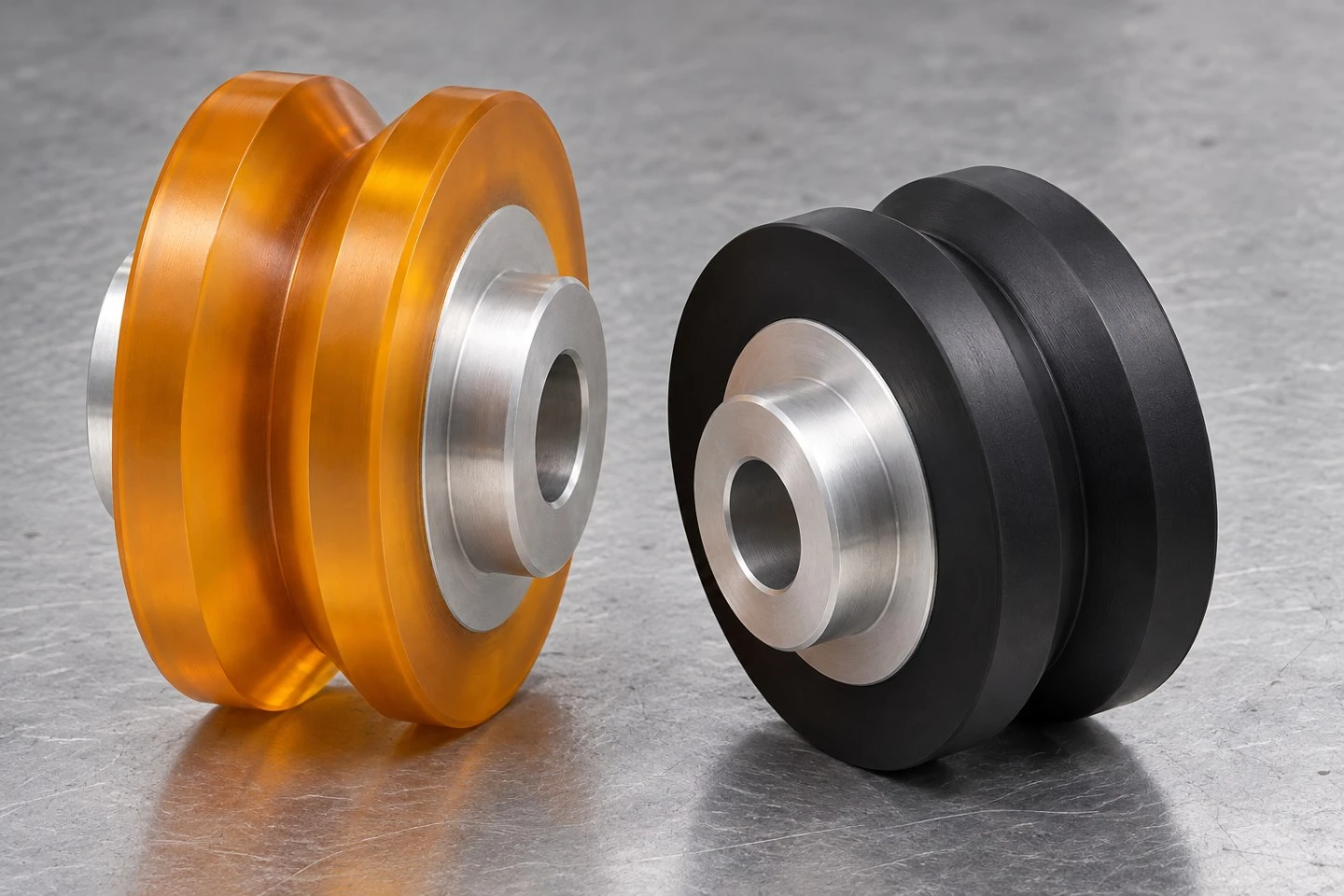
Inspect the dimensions that control fit before beginning an operating trial. Check the bore or specified hub interface, overall envelope, groove profile, and agreed running tolerances. Fit the sample to the intended shaft arrangement and verify clearance from surrounding components. Keep the drawing revision and material reference with the inspection record so the evaluation is tied to a clearly defined design.
A representative trial should use the actual mating track and planned operating conditions. Observe the contact pattern, guidance, wheel movement, and the condition of the polyurethane and hub interface over the agreed evaluation period. Record any abnormal events or changes in setup. Sample approval should be based on defined acceptance criteria. A short trial or a smooth hand rotation is useful evidence for its limited purpose, but it does not establish an unlimited operating life.
What should you send for a custom guide wheel quotation?
Please provide the wheel drawing, mating track profile, material requirements, and quantities. Identify whether the inquiry covers the composite wheel only or includes additional assembly items. If no complete drawing is available, send a sketch and sample photographs first so missing dimensions can be identified. Pricing and lead time should be confirmed after the required geometry and manufacturing scope are understood.
| Wheel feature | Required information |
|---|---|
| Running profile | Outside diameter, width, V angle, groove depth, root radius, mating track |
| Hub interface | Hub material, bore or bearing seat, overall hub length, retention details |
| Service conditions | Load per wheel, direction, speed, duty cycle, temperature, exposure |
| Order planning | Drawing revision, material specification, samples, initial and repeat quantities |
Welcome to send your drawings, polyurethane and hub material requirements, application details, and quantities for a custom V-groove guide wheel inquiry. Contact: amanda@tjswks.com
Hot Tags: custom polyurethane v-groove guide wheels, China, suppliers, manufacturers, factory, bulk, cheap, low price, quotation, polyurethane extrusion, polyurethane manufacturing, polyurethane medical parts, polyurethane products, polyurethane reliable parts, pu electrical parts


