


Table of Contents
- A K 2025 Technology Review for Industrial Molders
- Automated Inspection in the MacroPower Exhibit
- Robotics Across Several Operations
- Material History and the Connected Workcell
- MES Functions and Traceable Production Orders
- What Buyers Can Ask During a Cell Review
- From Demonstration to an Injection Molding RFQ
A technical review of WITTMANN's K 2025 automation exhibits and digital manufacturing approach, with practical implications for custom injection molded industrial components.
A K 2025 Technology Review for Industrial Molders
WITTMANN's K 2025 exhibits brought molding machines, automated handling and inspection together around complete production examples. The event took place in Düsseldorf in October 2025. This article reviews the published exhibit information from the perspective of industrial component purchasing and production planning. WITTMANN presented its technologies under the theme Smart Choices – Smart Savings, with a common group stand in hall 15. The demonstrations provide concrete examples of how robotic handling, process observation and product information can fit around an injection molding operation.
For an industrial buyer, the practical question is how the complete cell supports a released part drawing and an agreed inspection plan. A robot can transfer an item between stations while a camera or production record provides another type of evidence. Those steps have to be specified together. The following analysis relates the published demonstrations to sourcing and qualification questions for custom molded components. Exhibition examples show a particular configured application, so the scope for a buyer's equipment is established through a separate technical review.
Automated Inspection in the MacroPower Exhibit
WITTMANN described a MacroPower 500/3400 producing a PP box using in mold labeling and automated removal. A thermal camera checked the molded items against a reference, with software evaluating deviations and a robot directing items outside the configured thermal tolerance away from the accepted flow. The example links an observation to a handling decision while the part is still moving through the cell.
The purchasing implication is to define what that observation establishes for the required component. A thermal check can be part of process observation, while the drawing still defines tooth geometry, bore position or mating height. In a supplier trial, name the reference, the permissible deviation and the action triggered by an exception. Ask how the check is validated against the actual quality characteristic. A part that is routed for review should retain the identity needed to explain why it was separated and what happens before the lot is released.

Illustrative rendering for technical discussion.
Robotics Across Several Operations
The VPower 160/525 R 1600 demonstration used robotic handling around a decorated structural component. WITTMANN's exhibit description included loading a prepared insert, molding, subsequent handling, printing and a camera check before transfer to a conveyor. The relevance extends beyond extraction from an open mold. Handling connects each operation to the orientation and support needed at the next station.
For an industrial injection molding order, identify the surfaces the gripper may touch and how the part should sit in an inspection fixture. A thin lip, polished guide band or finished tooth flank can require a different support arrangement from the bulk body. The fixture designer and molder can agree which cavity, orientation or product variant is being transferred. During acceptance, follow representative samples through the complete sequence and check whether the final part still meets the dimensional and appearance criteria specified on the order.
Read our guide to molded parts for industrial automation for related design requirements.
Material History and the Connected Workcell
Another K 2025 example paired an EcoPower machine with a WX robot for a container using recycled feedstock. Its published description also covered a material identification approach. This illustration puts material history alongside the molding and handling sequence, an important distinction when a customer requires a controlled resin and documented production lot.
WITTMANN's broader digital manufacturing framework connects the machine and associated equipment within a workcell and relates production information to higher level systems. Its published WITTMANN 4.0 description covers machine, workcell, service and production functions. When reviewing a proposed installation, ask which auxiliaries are connected, what values are captured and how a configuration change is recognized. The useful evidence is a record that identifies the equipment present during the relevant run. A buyer can request an example with one real work order and an agreed material and tool revision.
| Cell function | Published context or sourcing question | Evidence for a buyer review |
|---|---|---|
| Automatic inspection | The K 2025 MacroPower example connected a thermal check to routing | Agreed reference, deviation criteria and handling of rejected output |
| Multi step handling | The VPower display linked several operations | Part orientation, gripper contact zones and fit after downstream handling |
| Connected equipment | WITTMANN 4.0 describes workcell data integration | Connected auxiliaries and configuration identified for the production run |
| MES and order information | TEMI+ describes monitoring, planning and quality functions | One pilot order linked to tool, material, inspection and release records |
MES Functions and Traceable Production Orders
WITTMANN's published TEMI+ portfolio describes production monitoring, planning and performance information. Additional functions cover alarms, quality records and ERP exchange, depending on the selected package. These capabilities provide background for the company's digital manufacturing approach. They should be considered with their configured scope and the equipment connections available at a specific site.
An industrial molding program can use a pilot order to establish what each record means. Start from the customer part number and released drawing, then identify the mold, material lot and quantities delivered to the next operation. Decide where inspection results are attached and what happens when an order pauses or changes machines. If a cavity is held for review, the order history should help staff identify the affected output. The integration review can include the data already used by the plant so the pilot answers a real production question.
What Buyers Can Ask During a Cell Review
Choose one component and follow it from setup through packaging. Establish how the first accepted part is identified, how normal production is monitored and who releases the finished lot. When an automated check is proposed, ask which part characteristics it measures, its reference and how out of tolerance items are handled. Confirm what is recorded if an operator intervenes. These questions translate a demonstration into a specification that can be checked with the supplier.
For gears and rollers, the trial can connect cavity and run information with dimensional checks made in the stated material condition. For brackets or sliding inserts, the record may need a fitted fixture check. The production system and physical inspection can then describe the same samples. If energy performance is included in a proposal, ask for the measurement boundary, trial duty and accepted output. Those definitions help compare equivalent runs and prevent setup time or shared equipment from being assigned inconsistently.
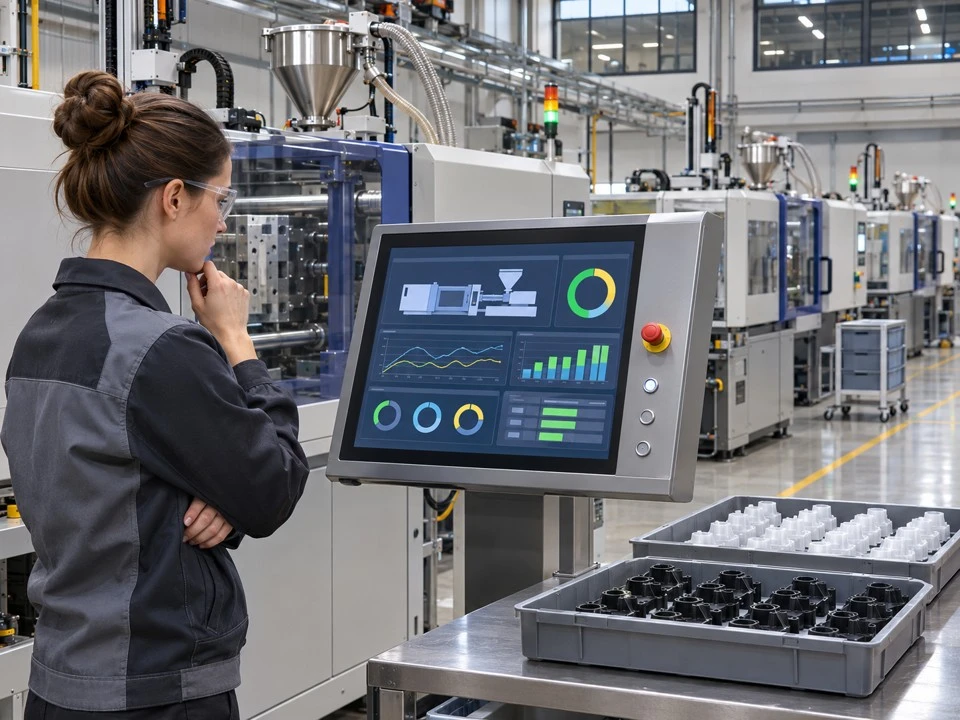
Illustrative rendering for technical discussion.
From Demonstration to an Injection Molding RFQ
The K 2025 examples show why tooling, handling and inspection should be discussed together at the start of a custom program. A purchaser can provide a model, dimensioned print, mating interfaces and the intended validation sequence. Identify the surfaces that carry position or contact so the tool and gripper proposals can be checked against them. If downstream assembly or inspection limits the line, include its timing and release conditions in the discussion.
A first quotation can state the mold scope, samples, production quantities and agreed evidence for acceptance. Record what the equipment maker will qualify and what the component supplier will inspect before shipping. Discuss which records should accompany repeat deliveries and which changes require a new review. This offers a practical way to apply the exhibition's automation and data themes to industrial components with a defined drawing and operating envelope. The supplier's actual machine configuration and validated process determine what can be offered for the individual order.
Explore our custom plastic injection parts for industrial equipment projects.
Discuss Your Molding Project With SWKS
Send your STEP, STP or IGS drawing, mating part information, operating conditions and expected quantity to amanda@tjswks.com or call 0086-15222707659. Include the material grade already approved for your equipment or identify the properties to be evaluated during selection and sampling.
Technical retrospective prepared in November 2026 using WITTMANN's published K 2025 exhibit descriptions and its WITTMANN 4.0 and TEMI+ product information. The equipment photographs on this page are illustrative renderings.