


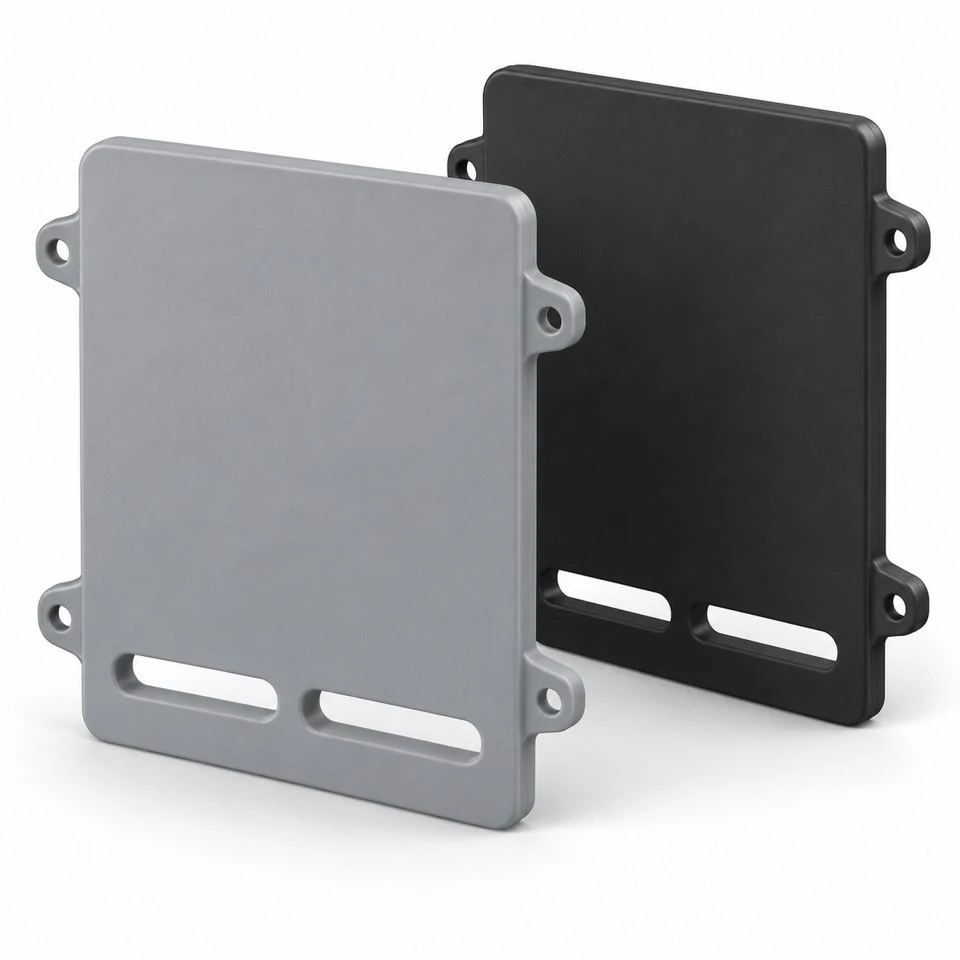
Tianjin SWKS Technology & Development Co.,Ltd is one of the most reliable manufacturers and suppliers of custom pp tank baffle plates in China. If you're going to buy bulk cheap custom pp tank baffle plates, welcome to get quotation from our factory. Quality products and low price are available.
Custom PP Tank Baffle Plates
A reservoir can have enough capacity and still deliver an uneven supply at its outlet. The inlet may discharge too close to the pickup, returning liquid may disturb the surface, or movement of the equipment may send liquid across the tank. A molded partition gives the equipment designer another way to arrange that internal space. SWKS supplies custom injection molded polypropylene tank baffle plates developed from the customer's layout. Send the tank section, liquid description and expected quantities to amanda@tjswks.com so the proposed plate can be reviewed with its surrounding equipment.
Material: ABS/POM/PA66/PP/PC/PA/PU/TPE/TPU etc.
Processing Service: Injection
Drawing: STP/STEP/IGS
Contact: amanda@tjswks.com / 0086-15222707659
What is the plate expected to change inside the tank?
Start by identifying the unwanted behavior. A partition intended to separate an inlet from an outlet has a different job from a plate intended to reduce the distance that liquid can travel during equipment movement. Another design may need to hold a cable away from the pickup region or keep a return stream away from a level sensor. Mark the intended function on the tank drawing. Adding a large panel simply because an enclosure has spare space does not establish a useful flow path.
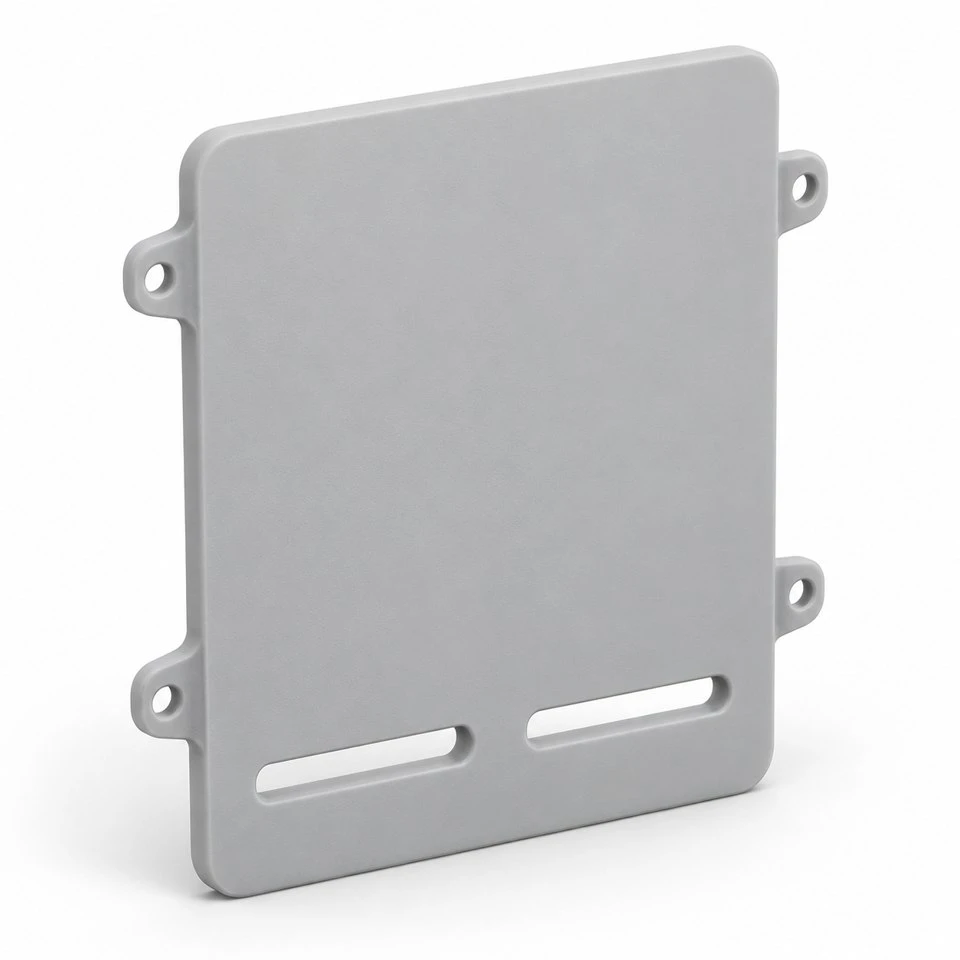
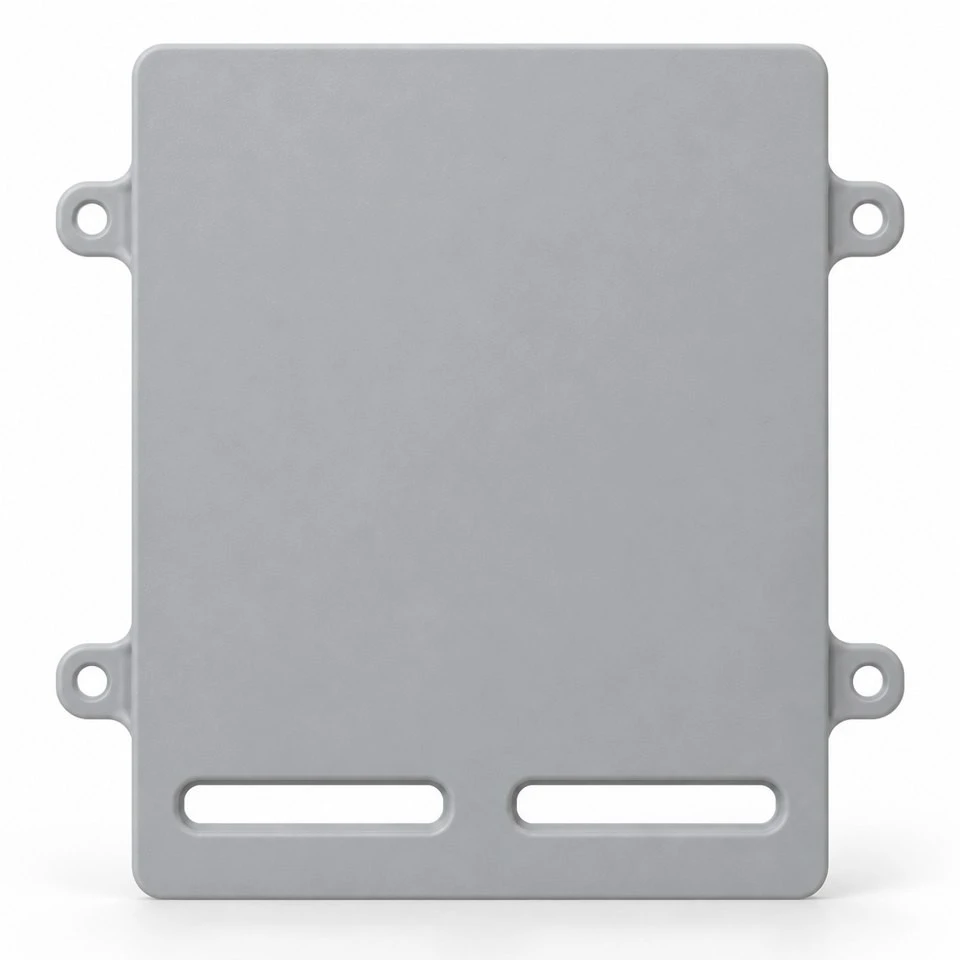
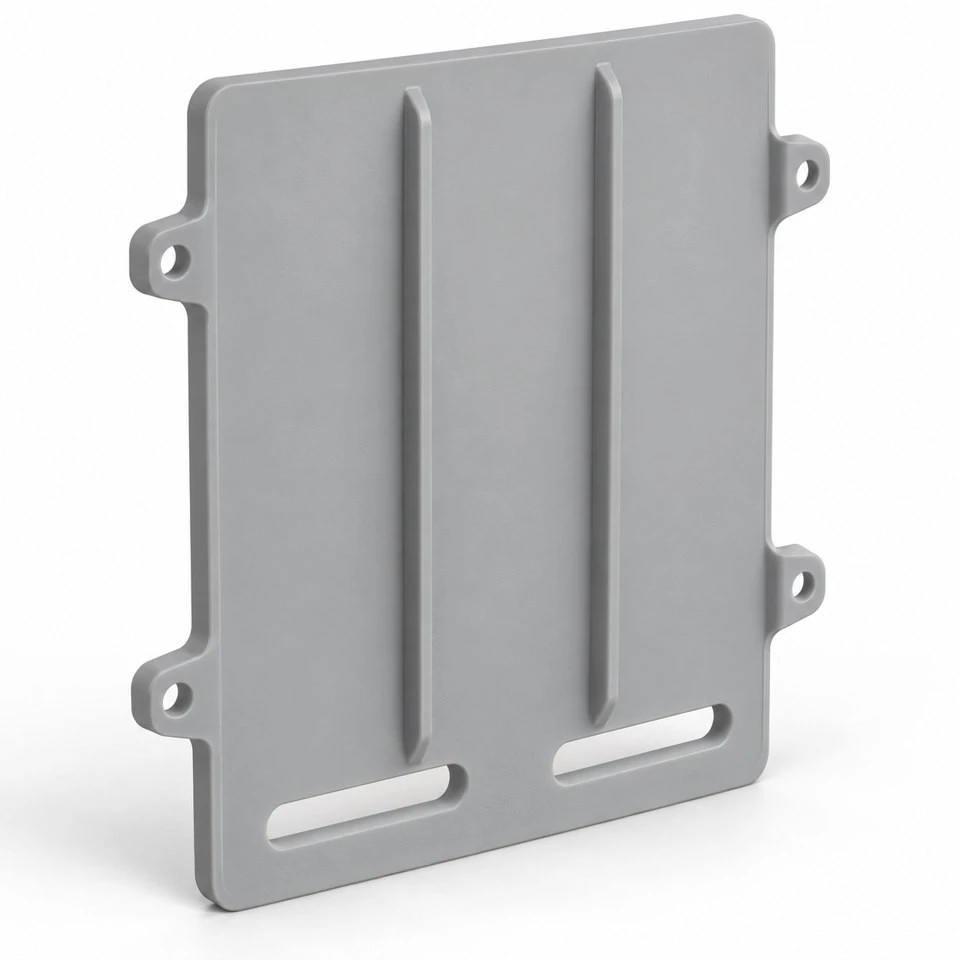
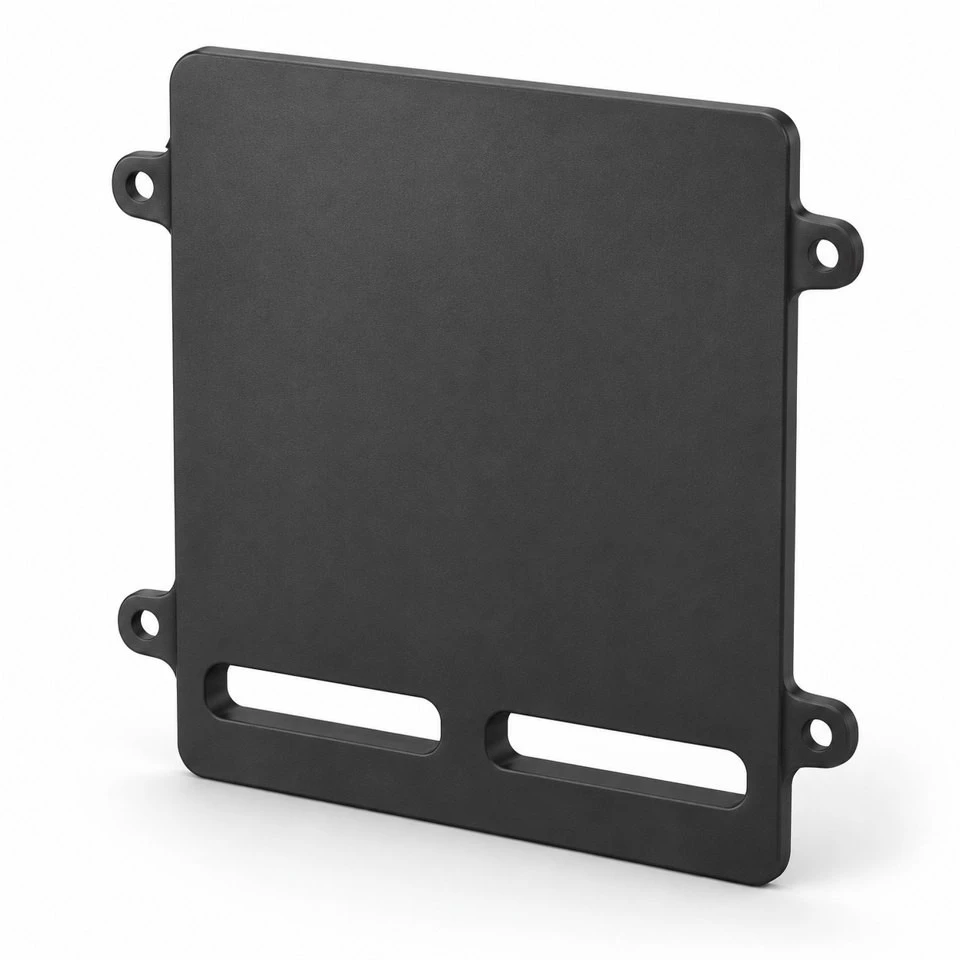
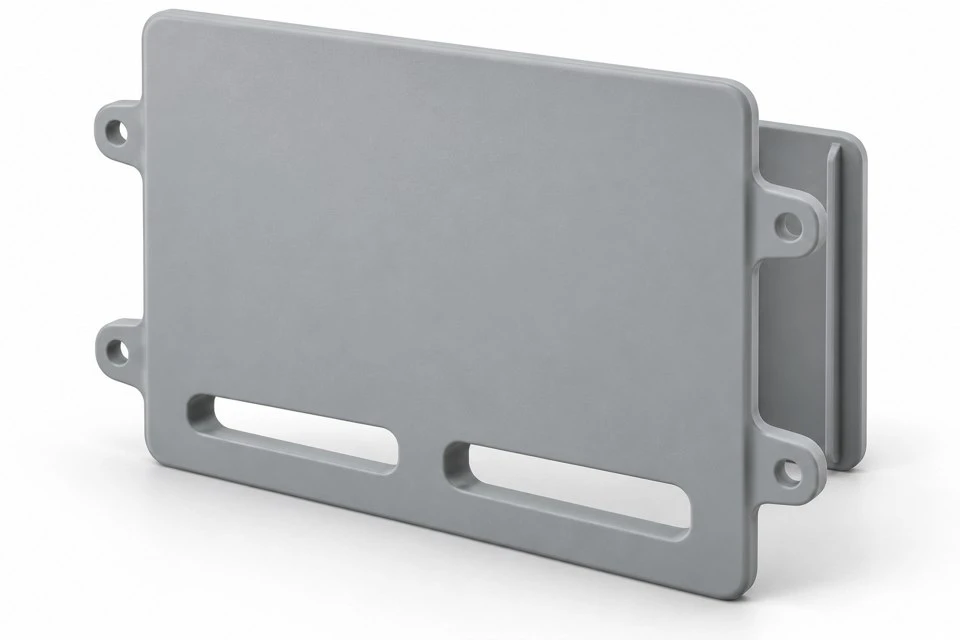
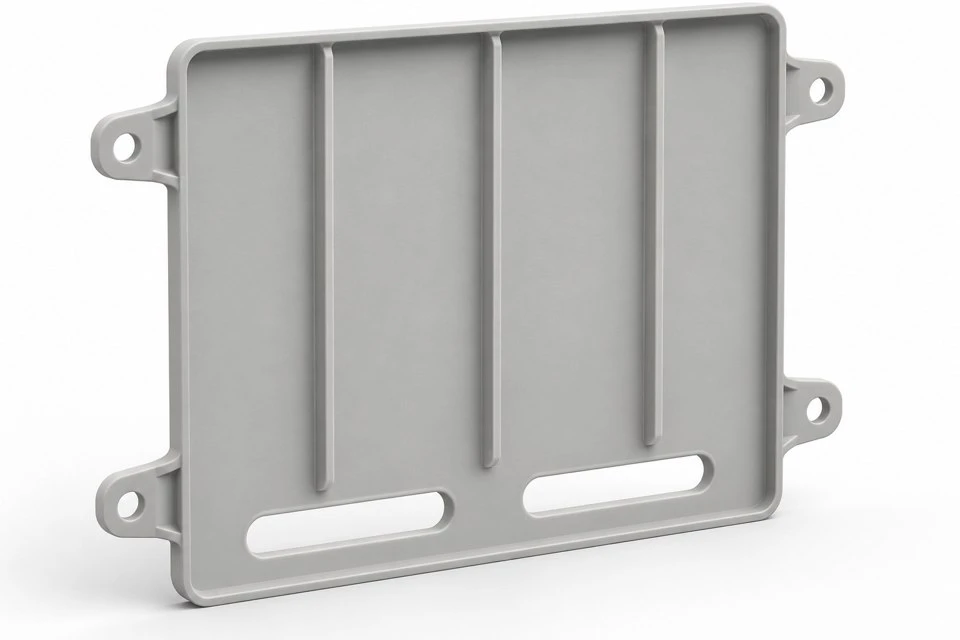
The illustrated component is a custom molded panel with lower bypass openings, side mounting ears and rear reinforcing ribs. Its shape is a starting concept, not a tested tank assembly. It is not a pressure vessel wall, filter element or certified spill barrier. The tank designer remains responsible for establishing the flow arrangement and acceptance criteria. Hardware, tank bodies, pumps and sensors are outside the molded plate supply unless they are expressly included in the quotation.
Where should the bypass openings sit relative to operating levels?
Show the minimum operating level, normal fill level and maximum level on the same section as the plate. An opening below the normal surface may become exposed near the end of a batch. Conversely, a high opening can leave the two sides of a tank poorly connected at low fill. Locate the pickup, inlet and any drain on this section as well. A plate viewed on its own cannot show whether a passage remains useful throughout the equipment's operating cycle.
Separate the space required for circulation from the space required for emptying. A lower slot may let liquid move between compartments while still leaving a small retained volume behind a mounting ledge. Include the slope of the tank floor and the position of the lowest drain. If complete drainage matters, define what residual liquid is acceptable and how it will be measured. The outline can then be adjusted around a real drainage requirement instead of an assumed flat tank base.
How much open area does the equipment actually need?
Slot count alone is an incomplete description of a baffle. Record the clear opening dimensions and any obstruction introduced by fasteners, ribs or neighboring components. Several narrow slots can have the same nominal area as one wide window while presenting a different route for debris and cleaning tools. Rounded slot ends can also make the drawing easier to interpret and remove sharp internal corners from the concept. The useful area is the unobstructed passage in the installed assembly.
Provide the required flow range and the conditions under which it occurs. Pump startup, return flow and rapid emptying may not resemble steady operation. The number and location of the openings should be established by the equipment designer through suitable analysis or trials. SWKS can review whether the selected geometry is practical to mold, but a visual rendering does not establish pressure loss, mixing performance or the amount of surface movement that a finished tank will exhibit.
Why should mounting be reviewed before the plate outline is frozen?
A plate that fits through the service opening may still be impossible to fasten once it is inside. Show the installation sequence, access direction and tools needed at each mounting ear. A top-access screw arrangement can be convenient, but only if the lid opening and nearby pipework leave room for the driver. If the plate is retained in tank grooves, provide the groove width, depth, lead-in and permitted variation rather than only the distance between the tank walls.
Polypropylene should not be treated as a rigid metal shim under a heavily tightened screw. The attachment needs a defined seating surface and an agreed method of controlling compression. A broad support, washer or separate compression limiter may be appropriate depending on the assembly. Those items should appear in the mounting layout. Specify whether the plate must be removable for service; permanent retention and repeated removal can lead to different ear shapes and different inspection priorities.
Which liquid and temperature information is needed for PP selection?
Identify the actual liquid, including additives, concentration ranges and expected contamination. A generic description such as water treatment chemical is too broad for a material decision. Include cleaning solutions and rinsing steps, because those exposures may differ from the liquid normally stored. Provide operating and cleaning temperatures together with exposure duration. The selected resin needs to be reviewed for these conditions rather than chosen from color or a general description of polypropylene.
State a mandatory resin grade before quotation if the equipment specification already names one. Otherwise, the material proposal should be agreed during development. Do not infer food-contact suitability, flame behavior, UV resistance or an electrostatic property from the concept image. Such requirements call for a specific formulation and the relevant documentation. A black sample and a gray sample can illustrate color options without implying that both share an identical additive package or qualification status.
What loads should be considered across a broad plastic panel?
Describe how the equipment moves, fills and empties. A stationary dosing cabinet, a mobile cleaning machine and a transported reservoir impose different conditions on an internal partition. If a level difference can develop across the panel, include that condition in the design review. Also consider handling before installation. A plate that survives normal service may still be damaged when an installer pulls it sideways by a single mounting ear.
Ribs can support a broad molded surface, but their height, position and intersections need to be coordinated with the tank. A rib placed across a drainage route can create a pocket. A rib projecting toward a sensor may interfere with its installation or removal. Mark the functional side of the plate and the available space on both faces. The aim is a panel that meets the agreed deflection and attachment requirements while preserving the intended internal clearances.
How does the chosen mold direction affect holes and slots?
For an initial tooling review, indicate which face is the principal reference and how the part could release from the mold. Through-slots in the main panel and holes through coplanar mounting ears can often be considered together in a simple opening direction. A side-facing latch or enclosed transverse bore introduces another question. Discuss the attachment benefit of those features before incorporating them into a released model. Small changes to fastening details can alter the tooling arrangement.
Draft changes the width of a passage through the thickness, so define where a critical opening is measured. Gate position, ejection and cooling also deserve attention on a wide panel. Raised gate remnants should not interfere with a seating face or a narrow installation groove. The tool proposal should identify those functional surfaces. Cosmetic marks on a concealed rib may be acceptable even when a much smaller projection on a mounting reference would prevent correct assembly.
Can the plate be removed and cleaned without disturbing the tank?
Check the withdrawal route with the lid, pipes and sensor assemblies shown. Removing one fastener does not guarantee that the plate can rotate out of the opening. A tall panel may need room above the tank that the installed machine does not provide. Where removal is required, include the service envelope in the assembly model. For a retained plate, agree how both sides and the lower passages will be accessed during cleaning.
Avoid treating smooth appearance as proof of cleanability. The relevant questions are whether liquid collects at the bottom edge, whether residue can remain behind an ear, and whether the cleaning method reaches rib intersections. Request the surface finish required by the application and identify regions where flash could obstruct a small gap. Any hygiene or validated cleaning requirement belongs in the project specification; it should not be inferred from the use of PP alone.
Which dimensions should be checked on initial molded samples?
Prioritize the mounting pattern, installed envelope, opening dimensions and the relationship between the plate and its support surfaces. Specify how the sample is supported during measurement. A broad molded panel measured freely on a bench may not present the same shape as one located in its intended grooves. Where flatness or bow is important, state the reference condition and acceptance limit on the drawing. A general request for perfect flatness is not an inspection method.
Use a representative tank for assembly approval and run the operating conditions that motivated the baffle in the first place. Observe filling, minimum-level operation, draining and removal. Record the drawing revision, resin grade and test conditions with the sample decision. If the openings need adjustment after trials, review the change before production quantities are released. That creates a clear link between the approved flow arrangement and the mold configuration used for repeat orders.
What should be included in a quotation request?
Send a STP, STEP or IGS model where available, supported by a drawing that marks the attachment references, slot sizes and important clearances. A concept sketch can begin the discussion, but the tank section and service opening are equally useful. Include the liquid and cleaning exposures, temperature range, preferred color, trial quantity and expected batch quantities. State whether tooling and the molded components should be quoted separately.
When replacing an existing partition, photographs of its installed position help explain which surfaces perform a function and which are incidental. Identify the problem to address, such as liquid retained near the drain, difficult removal or a mounting ear damaged during service. Keep the sample and drawing revisions aligned as the design changes. Contact amanda@tjswks.com with drawings, material requirements and quantities for a custom PP tank baffle plate quotation.
Hot Tags: custom pp tank baffle plates, China, suppliers, manufacturers, factory, bulk, cheap, low price, quotation, pp cold resistant parts, pp consistent parts, pp electrically insulating parts, pp movable parts, pp plastic polishing parts, pp plastic simple parts


