


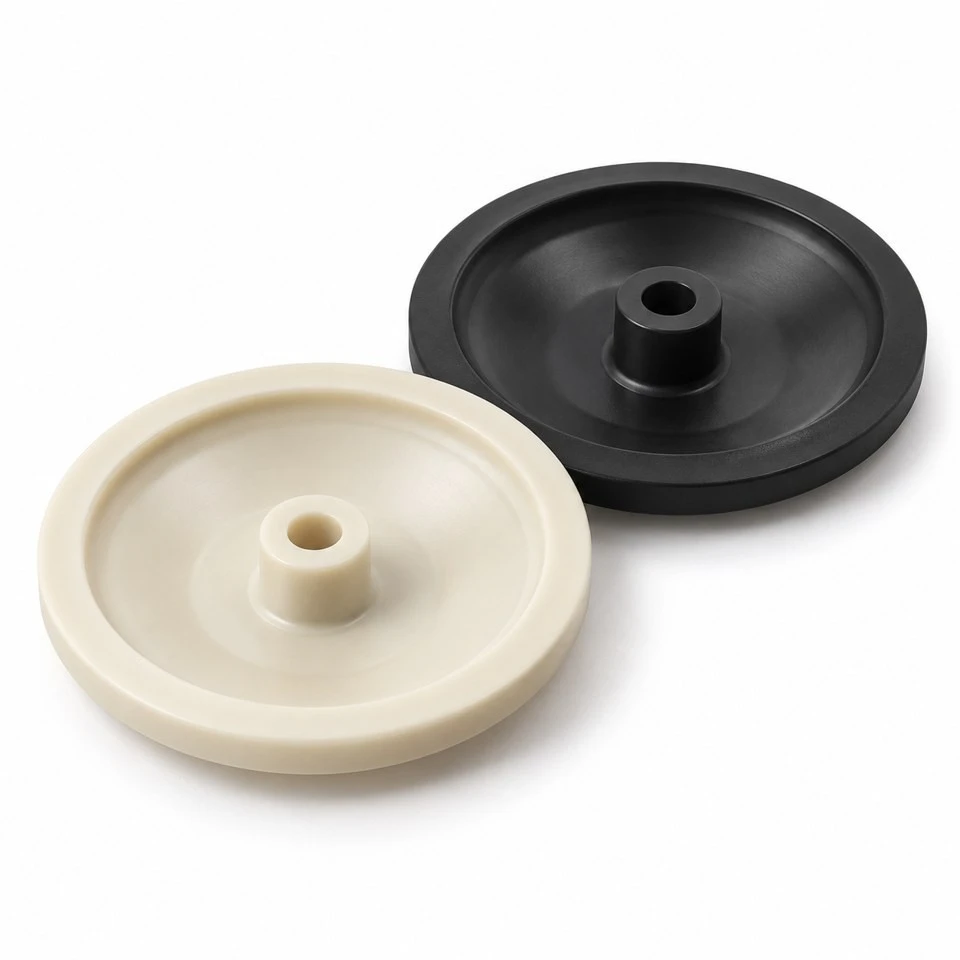
Tianjin SWKS Technology & Development Co.,Ltd is one of the most reliable manufacturers and suppliers of custom pp diaphragm backing plates in China. If you're going to buy bulk cheap custom pp diaphragm backing plates, welcome to get quotation from our factory. Quality products and low price are available.
Custom PP Diaphragm Backing Plates
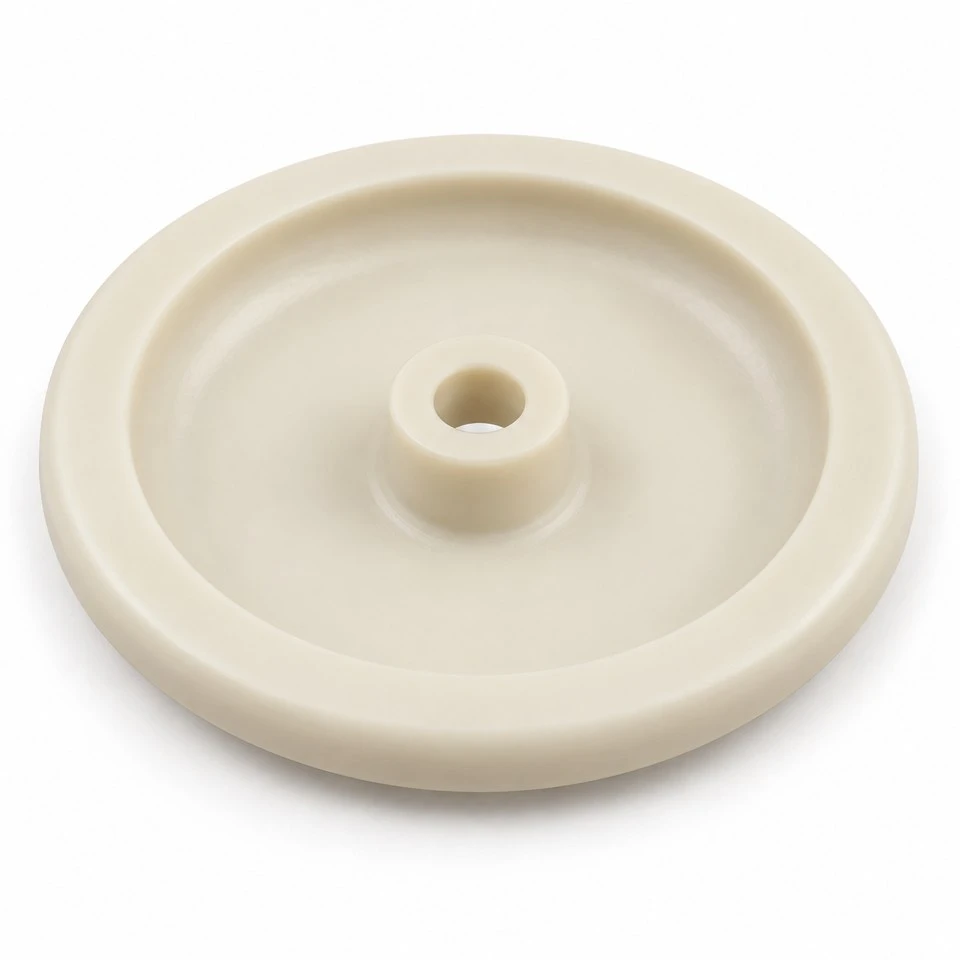
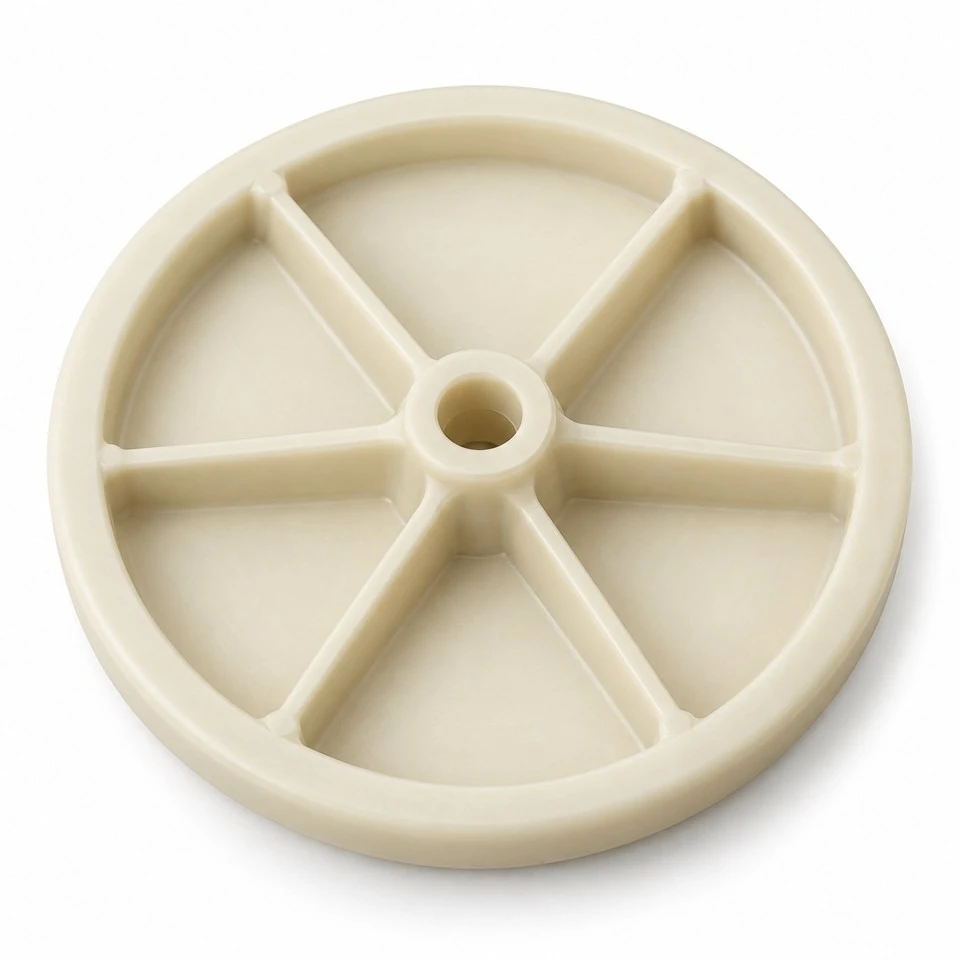
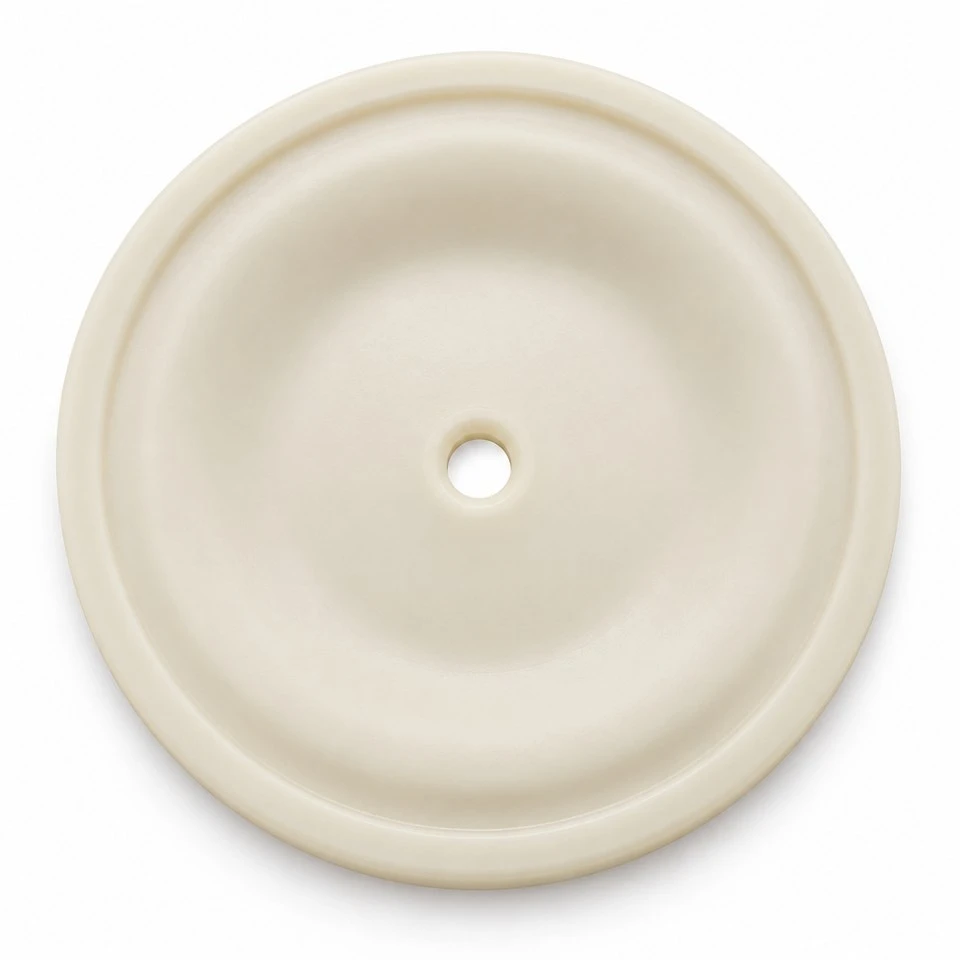
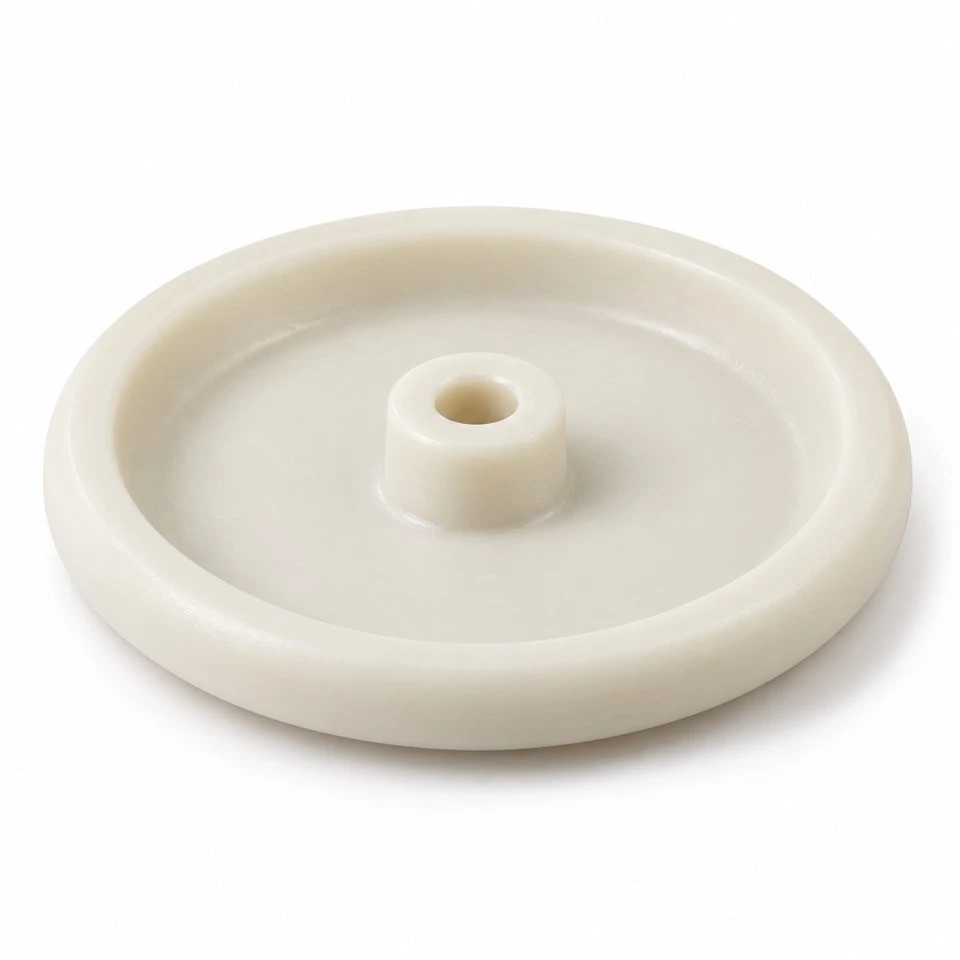
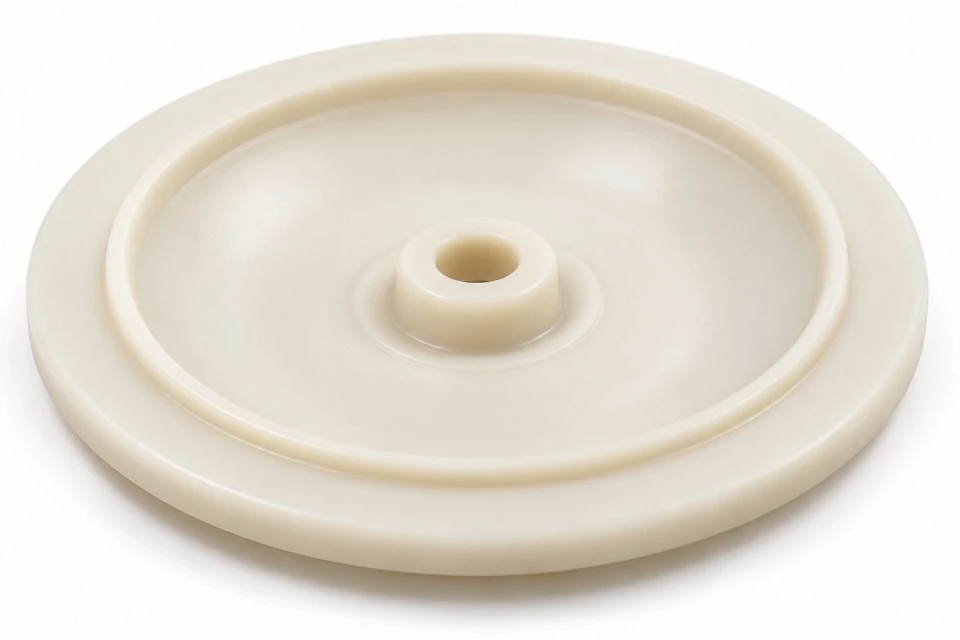
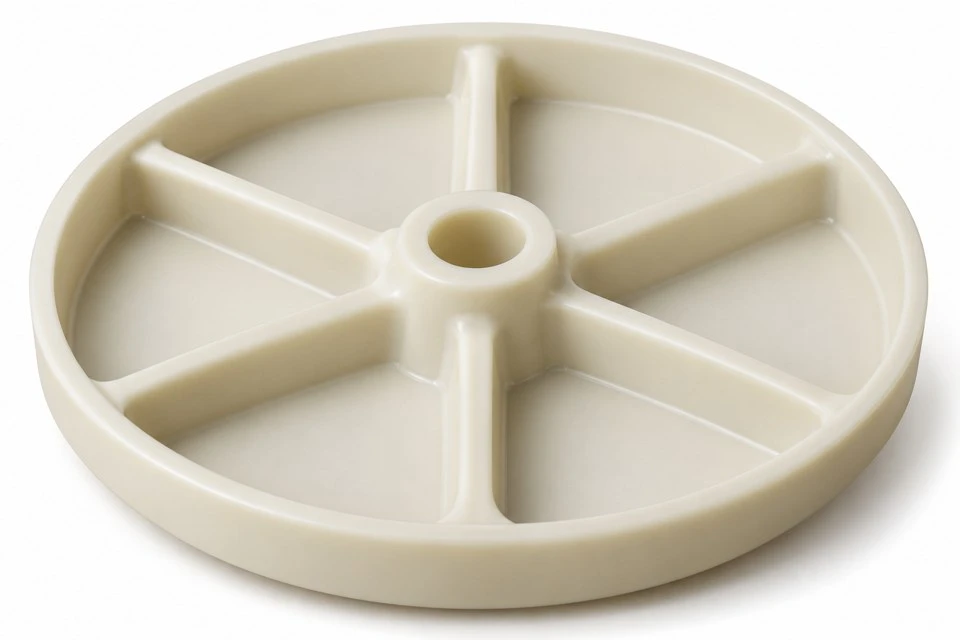
SWKS develops custom injection molded polypropylene diaphragm backing plates around the membrane, shaft and housing used in the customer assembly. The illustrated concept combines a shallow circular support face, a central through bore and reinforcement on the reverse side. Final dimensions and material grade are agreed from the application requirements. Send your drawings and assembly information to amanda@tjswks.com for review and quotation.
Material: ABS/POM/PA66/PP/PC/PA/PU/TPE/TPU etc.
Processing Service: Injection
Drawing: STP/STEP/IGS
Contact: amanda@tjswks.com / 0086-15222707659
What does a diaphragm backing plate support?
A diaphragm backing plate transfers a central mechanical input across a defined area of a flexible membrane. Its contact profile determines which region is supported and where the diaphragm remains free to move. A broad annular face may suit one assembly, while another requires a curved support or a relieved region. These details should be developed from an assembly section rather than selected from the outside diameter of an otherwise generic disc.
This component is a structural support, not the flexible sealing diaphragm. It does not independently establish the pressure capability of a pump or actuator. Pressure, stroke and force need to be reviewed with the membrane and housing. The illustrated shallow dish, central bore and reverse ribs represent a custom design concept. They do not identify a tested stock component or an approved replacement for a particular equipment model.
Which membrane dimensions define the contact face?
Provide the membrane drawing, thickness, molded profile and allowed variation at the support interface. Include its resting position and the relevant travel limits. A backing contour that appears suitable at rest may interfere when the membrane moves. Identify the area intended to carry load and the areas that must remain clear. The support diameter and edge profile should follow that movement envelope rather than an assumed standard proportion.
A flat diaphragm and a molded rolling diaphragm do not necessarily require the same backing geometry. Show the actual flexible part and explain how it is restrained in the housing. If an existing sample is supplied, identify whether it is approved or whether its fit needs correction. The plate drawing should define the part dimensions, while the assembly drawing explains how those dimensions relate to the flexible member.
Why should the perimeter have a controlled radius?
The support perimeter lies close to the transition between supported material and moving material. Specify the required radius and surface condition in that region. Flash, a sharp parting line or a raised trimming mark may create an unwanted contact point. Mark the membrane-facing annulus as a functional surface so the mold designer can consider it when placing the parting line, gates and ejectors.
Rather than asking for every surface to have an unspecified smooth finish, identify the locations where surface quality affects the interface. A texture acceptable on the reverse side may be unsuitable against the diaphragm. If sliding or rubbing occurs, agree the inspection and functional acceptance method with representative materials. A polished appearance alone cannot establish durability through repeated movement, cleaning or temperature exposure in the customer's equipment.
How is the center hole connected to the shaft?
Supply the shaft, bolt or other mating hardware drawing. State whether the center hole provides clearance, location or part of a separate fastening arrangement. The small plain bore shown in the concept does not imply a thread or a universal shaft fit. Include washers, shoulders, nuts and sleeves that determine how the hub is supported, compressed and retained during installation and operation.
The tightening method should be considered together with the bearing area around the hub. Excessive local compression may distort the plastic, while insufficient retention can permit unwanted movement. If the assembly needs a metal sleeve or another load-spreading feature, define that requirement explicitly. Neither the fastening torque nor the connection strength should be inferred from a catalog illustration. Those values belong to the approved assembly specification.
What load and stroke information should be supplied?
Describe the direction and magnitude of applied force, travel, cycle and loading at each travel limit. For a pressure-loaded diaphragm, explain how that force reaches the plate and which regions are supported elsewhere. Identical outside dimensions can conceal different force paths. Include enough information about the assembly to distinguish a freely moving support from a plate pressed against a fixed housing surface.
Identify any defined abnormal condition that the equipment specification requires the assembly to tolerate. An installation load or a stalled position may require a separate check. A custom plastic plate should not be assigned a universal load rating without evaluation. Initial samples should be tested with representative mating components, with results associated with the drawing revision, resin grade and assembly method used for that approval.
When is PP a suitable material candidate?
Polypropylene can be considered when its weight, molding characteristics and behavior in the specified environment suit the support function. The complete grade matters. State whether an approved homopolymer, copolymer or another formulation is needed, including any additive and color requirements. A generic PP description leaves important procurement questions unresolved. Material selection should follow the mechanical and exposure conditions rather than the appearance of the illustrated component.
Provide the chemicals or fluids, concentration, temperature and duration of contact applicable to the plate itself. A diaphragm may separate it from process liquid during normal operation, while cleaning exposes the reverse side. Explain that actual arrangement. General chemical resistance descriptions cannot replace review of the selected grade under the specified conditions. Request food-contact or other documentation for the particular material and supply scope where required.
How do reverse ribs reinforce the shallow dish?
The concept uses radial ribs between the central hub and the outer portion of the plate. Their purpose is to support the dish within the available installation space. Rib thickness, root radii and the junction around the hub need molding review. A heavy intersection may affect cooling and the opposite surface. The design should balance the structural requirement with control of the membrane-facing contour.
Show the clearance behind the plate and the movement of nearby hardware. A taller rib may improve stiffness in one area while creating interference with the housing. If another part supports the reverse face, identify the intended seating areas separately from the reinforcement. Dish depth, hub height and rib arrangement should be reviewed together. Any structural assessment should use the released geometry and defined loading rather than an approximate illustration.
Which molded features need dimensional inspection?
The drawing may control outside diameter, dish profile, bore size and position, hub height and the relationship between the contact face and shaft axis. Select tolerances according to the function of each interface. Applying an equally tight tolerance to every surface can obscure the features that determine assembly fit. Define inspection datums and explain how the plate should be supported during measurement.
A shallow circular part may also need a shape or runout check. State whether this is measured freely or in a specified fixture and identify the sample condition. The inspection method should avoid forcing the part into the desired profile before measuring it. Assemble initial samples with the actual membrane and center hardware to verify the controls are meaningful. Record revisions whenever a fit change is accepted.
Can the geometry be changed for another machine?
Customization can include the support diameter, dish curvature, central interface, hub height, rib pattern and color. A project may need another fastening arrangement or an asymmetric locating feature. Provide the complete interfaces when requesting a change. Altering the center connection can affect the force path and available rib space, so it should be reviewed as part of the complete component rather than an isolated cosmetic detail.
Black and natural-colored views illustrate possible appearances, not separate certified material specifications. Agree the resin designation, color and any marking before tool release. The images are design visualizations, with the final dimensions defined by the buyer's approved drawing. SWKS quotes the molded component against that drawing and the agreed supply scope, including the initial order, expected repeat quantities and any required inspection records.
Before placing a repeat order, confirm that the diaphragm supplier, shaft geometry and housing interface remain unchanged. A replacement membrane with a different thickness or molded contour may require another fit review even when the backing plate drawing has not changed. Advise SWKS of those changes when requesting the next batch. Where several assembly versions use similar plates, assign distinct component numbers and packaging identification to reduce the chance of mixing them during installation or maintenance.
What supports quotation and repeat production?
Send an STP, STEP or IGS model and a dimensioned drawing where available. Include the diaphragm section, mating hardware, working stroke, loads, exposure conditions and inspection priorities. Specify the PP grade and color, initial quantity and expected annual demand. If development starts with a physical sample, explain which features must remain and which problems the replacement part should resolve before a mold is commissioned.
The sample approval plan can cover dimensions, contact finish, center fit and operation in the customer's representative assembly. Define test methods and acceptance criteria before comparing results. Packaging should protect the contact face and prevent deformation or contamination during handling. Keep the approved drawing revision aligned with the membrane and hardware used for testing. Clear records help repeat production follow the same interface and quality requirements.
Contact amanda@tjswks.com to discuss a custom PP diaphragm backing plate for your equipment.
Hot Tags: custom pp diaphragm backing plates, China, suppliers, manufacturers, factory, bulk, cheap, low price, quotation, pp chemically resistant parts, pp flexible parts, pp heat resistant parts, pp plastic drilling parts, pp plastic machining parts, pp uv resistant parts


